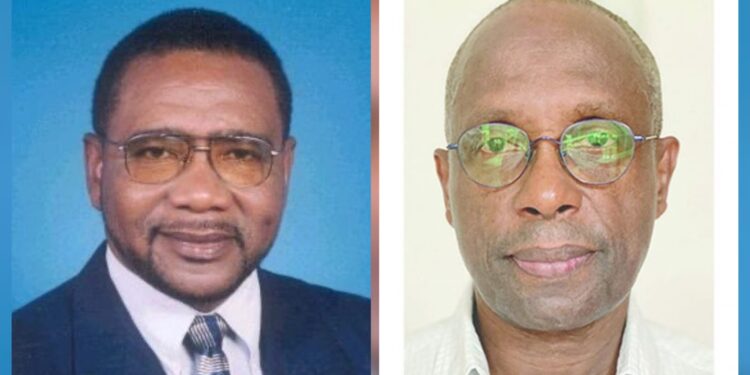
By Mark DaCosta-In a climate rife with political tension, local airline Roraima Airways has sparked controversy by denying travel to Azruddin Mohamed, an opposition politician facing sanctions from the United States. The airline’s decision follows closely on the heels of actions taken by several banks against candidates linked to Mohamed’s party, We Invest in Nationhood (WIN). This sequence of events has raised concerns among observers, who see a troubling pattern of political influence permeating local businesses.
Roraima Airways announced its refusal to operate flights for Mohamed on August 6th, citing a commitment to comply with the sanctions issued by the U.S. Department of the Treasury in 2021. Gerald Gouveia Jr., the airline’s Director of Aviation, emphasised that the decision was founded on rigorous internal assessments to align with legal obligations. However, critics of this rationale argue that the refusal to transport Mohamed serves a more insidious purpose, particularly given the absence of specific identification of any local and/or international regulations that would be violated, and coming on the heels of the banks that have recently shut down accounts belonging to various WIN candidates.
Reports indicate that the Guyana Bank for Trade and Industry, Demerara Bank, Citizens Bank and the New Building Society have reduced their services to individuals aligned with WIN, further complicating the party’s efforts to operate in a political environment. The closures raise significant questions about the motivations behind such decisions. While the banks maintain that these actions fulfil legal protocols in response to the sanctions issue, it is imperative to investigate the extent to which political influence might be intertwined in their operational choices.

Many believe that the swift action taken by these financial institutions and the subsequent denial of services by the airline reflect a concerted effort to stifle political dissent and suppress a growing opposition movement. It appears that the ruling People’s Progressive Party (PPP) is utilising its sway over both the banking sector and aviation to strategically isolate Mohamed and his party. Analysts contend this situation is more than a mere regulatory response; it is indicative of a calculated attempt by the PPP to maintain control over the political narrative in our nation.
The increasing popularity of Azruddin Mohamed and WIN has reportedly unsettled the PPP. As the party grasps at its political dominance, its leaders seem willing to leverage any means necessary to marginalise the opposition and deter dissent. There is a growing sentiment that the PPP has a vested interest in limiting the influence of those who represent alternative political ideologies, especially given Mohamed’s ability to connect with constituents and articulate their frustrations towards the current regime.
What emerges is a broader narrative of political repression in our society, where fundamental freedoms — such as the right to express dissent and engage in political discourse — are increasingly jeopardised. The airline’s refusal to provide service to Mohamed, compounded by the banks’ earlier decisions, hints at a chilling effect on civic engagement. This underscores how intertwined politics and commerce can be, particularly in a context where the ruling party seems intent on undermining its rivals.
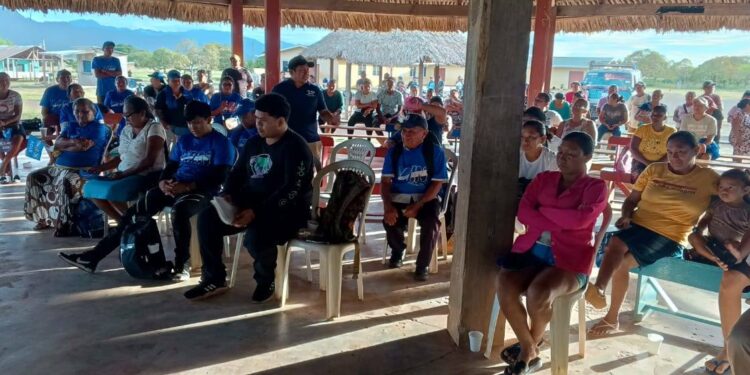
The ramifications of Roraima Airways and the banks’ actions extend beyond mere logistical hindrances. They convey a broader chilling message to constituents who may be drawn to WIN’s platform. The implication is stark: dissent could have tangible consequences, thereby discouraging individual participation in the political process. Voters might hesitate to align themselves with WIN, fearing potential repercussions — both social and economic.
As the opposition ramps up its campaign activities, it faces an increasingly hostile environment say analysts. Calls for action among WIN’s supporters to mobilise against the perceived injustices are gaining momentum as individuals rally around the narrative of political victimisation.
While Roraima Airways and the banks assert that their decisions are about compliance with international regulations and legal obligations, the perception among many is that they are succumbing to political pressure, consciously or unconsciously aligning themselves with the PPP’s efforts to project power over the democratic processes of our nation.
The manipulation of businesses to suppress dissent is troubling, as it raises fundamental questions about the autonomy of private companies in a politically charged climate. The conflation of political affiliation with business operations creates a precarious environment for both political entities and citizens seeking to partake in the democratic landscape, say observers. The operational decisions of these companies appear to reflect a culture of fear, whereby political alignments dictate commercial relationships.
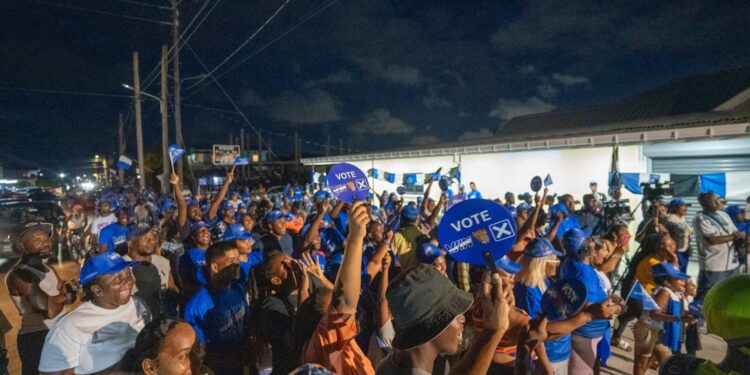
As Mohamed continues to navigate these challenges, his call for supporters to stand firm gains urgency. The notion of solidarity and the need to vocalise dissent resonate with many who perceive their democratic rights as being under threat. The unfolding saga illustrates the extent to which political influence can permeate various societal facets, forcing individuals and entities to consistently evaluate their affiliations and actions in an increasingly contentious environment.
Moreover, the actions of Roraima Airways and the banking sector serve as a cautionary tale regarding the fragility of democratic institutions in an era where politics and economics are deeply intertwined.
As tensions escalate and divisions deepen, the actions of local businesses within this political environment highlight the pivotal role they play in either preserving or undermining democratic values. The looming specter of business operators aligning themselves with political agendas poses serious implications for our country’s future.