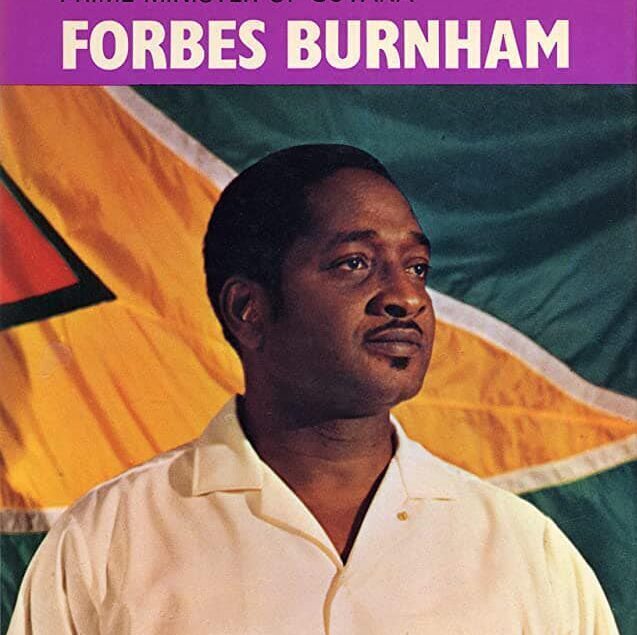
Forty years after his passing on August 6, 1985, Linden Forbes Sampson Burnham remains one of the most influential, complex and commanding figures in Guyana’s history. As the nation reflects on his life and work, it is clear that Burnham’s legacy is not confined to politics alone. It is woven into the cultural, ideological and psychological fabric of modern Guyana.
This commentary offers only a broad overview of the man, not a comprehensive account of his triumphs or controversies. But any honest reckoning must begin with this truth: Burnham imbued Guyanese people with a profound sense of self-worth. He insisted that Guyanese, long conditioned under colonial rule to believe in the superiority of foreign systems, cultures and ideals, could define and build their own destiny. Under his leadership, Guyanese were encouraged to walk tall, speak boldly and act with pride on the world stage. And we did.
Burnham became Premier of British Guiana in 1964 following a coalition between the People’s National Congress (PNC) and the United Force (UF), ending the People’s Progressive Party’s hold on government. Two years later, on May 26, 1966, he led the country into independence from British colonial rule. This was not merely a constitutional change but a symbolic and psychological turning point for a people long denied control of their own affairs. Then, on February 23, 1970, under his leadership Guyana became a Cooperative Republic, severing the last vestiges of colonial ties to the British Crown and solidifying Guyana’s status as a sovereign, republican nation.
Regionally, Burnham played a key role in strengthening Caribbean integration. He was one of the founding architects of the Caribbean Community (CARICOM), established in 1973 through the Treaty of Chaguaramas. He believed that small Caribbean states, acting in unity, could command greater respect in international affairs and better defend their economic and political interests. His leadership helped secure Guyana’s place not only as a geographical bridge between the Caribbean and South America, but as a pivotal political and ideological player in regional development.
From the United Nations to the Non-Aligned Movement, Burnham’s foreign policy reflected a fierce independence. He made Guyana a confident, principled voice in international affairs, unafraid to challenge imperialism, defend African liberation or advocate for the rights of small states. He was not merely representing a government; he was representing a people who had come to believe in themselves.
Burnham’s emphasis on cultural sovereignty — from promoting Guyanese arts, music and dress to advancing Amerindian (First Peoples), African and Indo-Guyanese heritage — was part of a deliberate nation-building project. He wanted Guyanese to stop looking outward for validation and instead look inward with pride. His policies of self-sufficiency, like the “Feed, Clothe and House the Nation” initiative, were not just about economics. They were about dignity. About standing on our own two feet.
Before he became Premier, Burnham was a leading figure in the Guyanese trade union movement. As a co-founder of the PPP and later PNC, and member of the British Guiana Labour Union (Guyana Labour Union), Burnham emerged from the ranks of labour with a deep understanding of the working class and its struggles.
Burnham was committed to improving conditions for workers, expanding access to education and ensuring the spoils of independence were not hoarded by a privileged few. His roots in the trade union movement helped shape his political ideology, one that championed the ordinary man and woman-“make the small man a real man.”
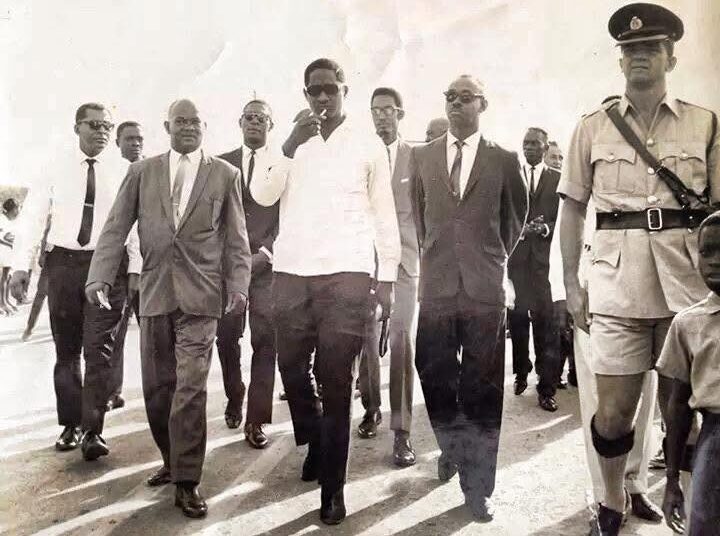
A remarkable yet little-known fact is that it was Burnham himself who coined the names of both the People’s Progressive Party and the People’s National Congress — two of the most enduring political forces in Guyana’s history.
Critics have scrutinised his record, and rightly so in a democratic society. Issues of press freedom and fight against cultural imperialism, internal political upheavals, and economic challenges in later years are not to be dismissed. But those who knew Burnham, and even many who opposed him, agree on this: he was a leader of towering intellect, razor-sharp wit and unshakable belief in Guyana’s potential.
He governed with purpose. He spoke with gravity. And he moved with the certainty of a man who knew history was watching.
Today, as Guyana finds itself in a new era of opportunity and challenge, it is worth remembering the foundational work of Forbes Burnham, not as nostalgia but as guidance. His call for national unity, intellectual development, cultural pride and self-reliance remains relevant in an age of global complexity and rapid change.
Forty years on, Burnham is still a giant, not without flaws but without question.