By Mark DaCosta-As Guyana approaches the General and Regional Elections scheduled for September 1, 2025, a significant step has been taken by four of the six participating political parties. They have officially adopted the Ethnic Relations Commission’s (ERC) Code of Conduct, which emphasises ethical campaigning and peaceful interaction during the electoral period. This agreement signals a collective commitment to uphold respect, fairness, and decorum in the lead-up to what is anticipated to be a contentious electoral contest.
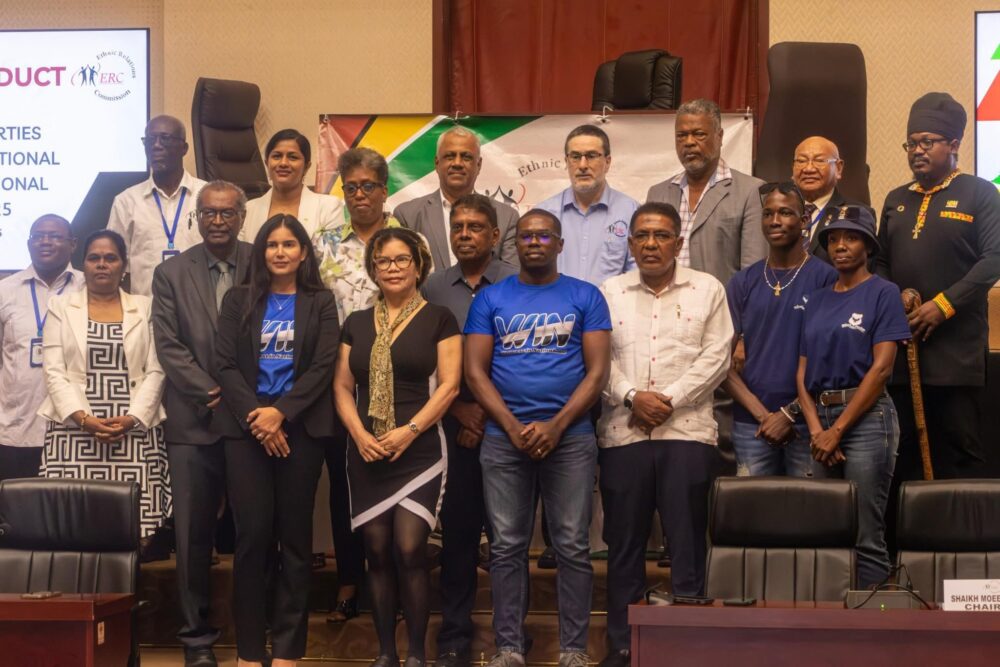
At the ceremony held on Tuesday at the Arthur Chung Conference Centre in Liliendaal, representatives from the People’s Progressive Party/Civic (PPP/C), Alliance For Change (AFC), Assembly for Liberty and Prosperity (ALP), and the We Invest in the Nation (WIN) party formalised their alignment with the ERC’s principles. The Code of Conduct calls for signatories to actively avoid any acts of intimidation, harassment, or threats, while promoting mutual respect among political opponents. The ERC has been instrumental in fostering a more cohesive and tolerant political culture in our nation, especially in light of past electoral tensions.
Absent from the signing were the A Partnership for National Unity (APNU) and the Forward Guyana Movement, led by Amanza Walton-Desir, a former member of the People’s National Congress/Reform (PNC/R). ERC Chairman Shaikh Moeenul Hack assured that both parties would have opportunities to sign the code in the future, as the Commission plans to establish a deadline for final registration. He articulated the importance of unanimous support for the Code, highlighting the need for collaboration among all political factions to ensure a peaceful electoral environment.
The ERC plays a crucial role in ensuring that political discussions and campaigns are conducted within a framework that acknowledges our nation’s diverse fabric. This body is dedicated to promoting harmony among our varied ethnic groups and ensuring that political discourse contributes to, rather than detracts from, national unity. Hack emphasised that the rule of law is paramount, declaring that democracy cannot thrive without it. The ERC’s initiative comes at a pivotal moment, as apprehensions surrounding voter inducement and inflammatory political rhetoric continue to rise as the elections draw near.
Following the signing, party representatives expressed their dedication to fostering a culture of ethical campaigning. AFC’s Khemraj Ramjattan characterised the signing as a significant move towards ensuring proper conduct among contesting parties.
Khemraj admitted the imperfections inherent in our electoral system but underscored the necessity of adhering to the Code to effect genuine change. Eon Thomas from the ALP highlighted the need for equality and harmony within the nation’s diverse ethnic communities as a cornerstone of their campaign. WIN’s Hana Mohamed similarly reaffirmed her party’s commitment to peace and respect, decisively denouncing racial and religious discrimination.
Zulfikar Mustapha, representing the PPP/C, labelled the event as timely and reiterated the ruling party’s commitment to constitutional reform and fostering national unity. Such pledges come amidst an atmosphere rife with concern, reflecting the instability that can manifest during political campaigns. With the ERC’s Code functioning as a moral compass, the expectation is that it will steer political parties away from divisive strategies that have historically plagued elections in our country.
The absence of APNU and Forward Guyana from the signing may raise questions regarding their future political strategies and whether they view the ERC’s Code as a beneficial guideline or a constraining framework. The general sentiment conveyed by the ERC indicates that their commitment is not merely ceremonial. Violation of the Code could lead to serious legal implications, thereby underscoring the necessity for all parties to embrace and adhere to its principles.
As our nation stands on the verge of a crucial electoral decision, these developments represent a beacon of hope for many voters who yearn for an electoral process that prioritises peace, respect, and accountability. It’s through such collective commitments that political leaders can begin to rebuild trust among constituents, fostering a climate of collaboration instead of contention. The ERC’s endeavours will undoubtedly face challenges, particularly in curbing divisive rhetoric and ensuring compliance among all parties. However, with the newly signed commitments, there is potential for a more inclusive and respectful political atmosphere leading up to the polls.
Ultimately, the true test will lie in the execution of these pledges, with the hope that all parties join hands to create an environment where democracy flourishes, and the voices of every citizen are heard and respected. As we prepare for these elections, the path forward will depend significantly on the commitment shown by all political players to uphold the values enshrined within the ERC’s Code of Conduct.