MONTEGO BAY – Prime Minister Andrew Holness finds himself fighting an uphill battle to salvage four decades of preferential trade relations as Trump’s “Liberation Day” tariffs threaten to shatter the Caribbean’s economic lifeline to America.
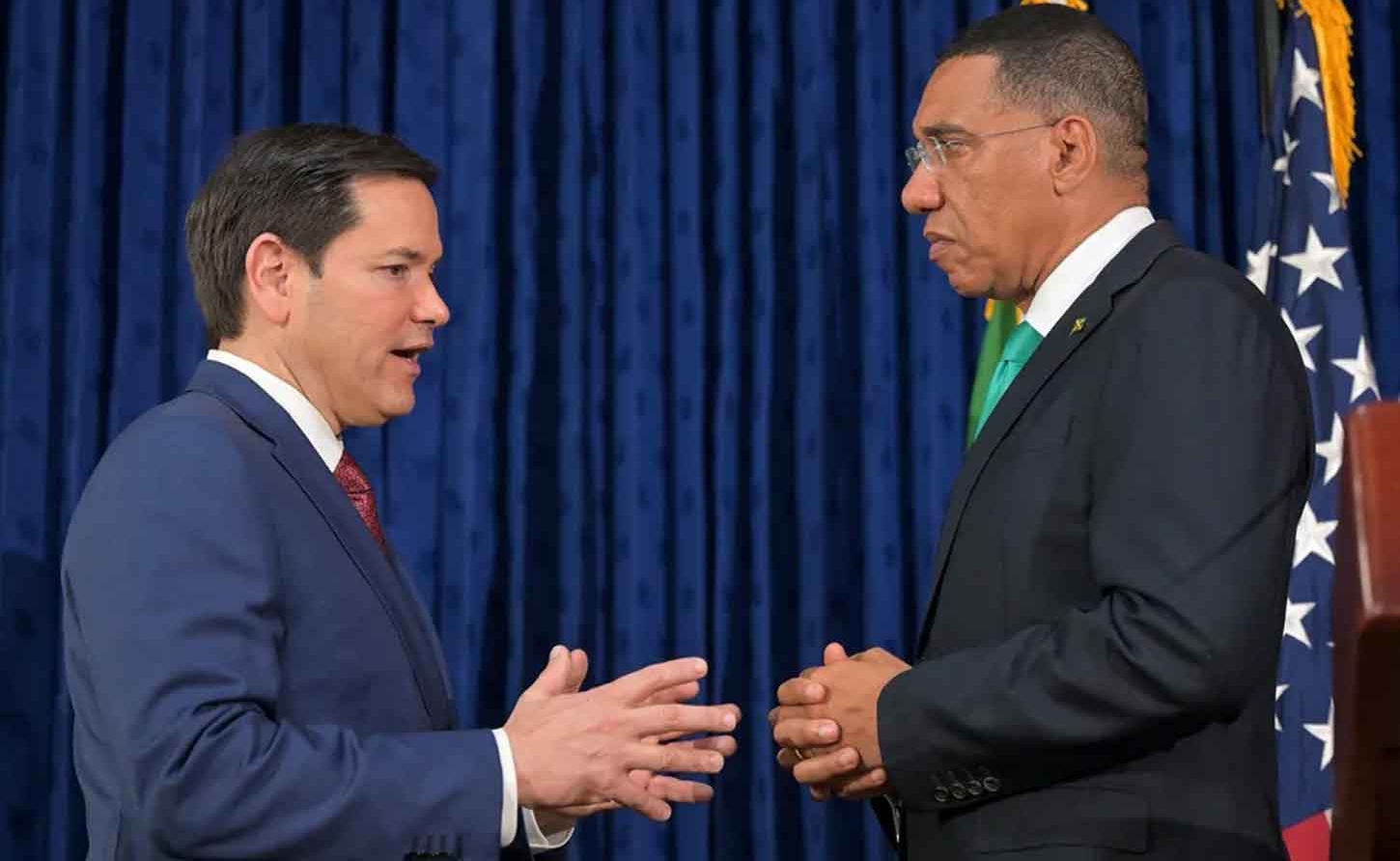
Just days after US Secretary of State Marco Rubio’s charm offensive across the Caribbean—complete with promises of partnership and cooperation—President Donald Trump delivered a stinging blow that has left regional leaders reeling.
On April 2, Trump announced sweeping tariffs on nearly all US trading partners, slapping a 10 percent levy on most Caribbean nations while hammering Guyana with a punishing 38 percent rate.
For Jamaica and its Caribbean neighbors, the tariffs represent more than just another trade spat—they mark the potential death knell of the Caribbean Basin Initiative, a cornerstone of regional economic policy that has provided duty-free access to US markets since 1984.
The CBI, launched in 1983 through the Caribbean Basin Economic Recovery Act, was designed to facilitate economic development and export diversification across the Caribbean Basin economies, providing 19 beneficiary countries with preferential treatment that has been “vital to competitiveness” of regional exports.
Prime Minister Holness, speaking to regional business leaders at a Leadership Breakfast on Tuesday, struck a tone of measured defiance while acknowledging the gravity of the situation.
As Chairman of CARICOM’s External Negotiation Mechanism, he assured the business community that Jamaica is “meeting with and lobbying with the United States on a regular basis,” including direct engagements with the US Trade Representative.
But beneath the diplomatic veneer lies a harsh reality: the Caribbean sends around 40% of its exports—including petroleum, agriculture, and manufactured goods—to the US market.
The new tariffs, justified under Trump’s “Reciprocal Tariff Policy” and implemented through the International Emergency Economic Powers Act, have rattled a region already grappling with climate vulnerability and economic fragility.
Barbados Prime Minister Mia Mottley captured the regional sentiment, describing the policy as “a blindsiding blow to our economic stability,” while Trinidad and Tobago’s energy sector began frantically evaluating the impact on its competitiveness in US markets.
The timing couldn’t be worse—coming just as the region was beginning to recover from pandemic-induced economic devastation.
The irony is palpable. Trump used aggressive rhetoric to justify the measures, claiming “our country has been looted, pillaged, raped and plundered” by other nations—language that rings hollow when applied to small island states whose combined economic output barely registers on the global scale.
The “reciprocal” nature of the tariffs is based on the fact that Jamaica levies a 10 percent duty on US commodities under CARICOM’s Common External Tariff structure, a standard trade practice that hardly constitutes economic pillaging.
Guyana faces the steepest punishment, with its crude oil, rums, gold, timber, fish, shrimp, and agricultural products now subject to a devastating 38 percent tariff—a rate that could cripple the country’s export-driven economy.
The Private Sector Commission warned that Guyana would be “severely affected by the protectionist measure,” while President Irfaan Ali’s administration scrambled to understand why their country was singled out for such harsh treatment.
The regional response has been a mixture of diplomatic caution and barely concealed frustration.
Trinidad’s Prime Minister Stuart Young declared he was “prepared to sit across the table and negotiate regardless of who is on the other side,” while Foreign Minister Amery Browne warned of “spiralling instability in global trade and economic policy” that would have “significant negative repercussions, particularly for smaller nations.”
What makes the situation particularly galling for Caribbean leaders is the abrupt reversal of decades of bipartisan US support for regional trade preferences.
The CBI was specifically designed to benefit US manufacturing, as biennial US International Trade Commission reports have consistently shown, making Trump’s characterization of the relationship as exploitative demonstrably false.
The Caribbean now finds itself caught in the crosshairs of Trump’s broader trade war strategy, collateral damage in a campaign primarily aimed at economic giants like China and the European Union.
China faces 34 percent tariffs while the EU confronts 20 percent levies—rates that dwarf those imposed on most Caribbean nations but provide little comfort to economies heavily dependent on US market access.
Holness’s promise to achieve “the best results” on behalf of regional business interests rings with determination, but the Prime Minister faces a formidable challenge.
The tariffs are set to remain indefinitely until Trump determines that conditions have been “satisfied, resolved, or mitigated”—language that offers little clarity on what concessions might secure relief.
The stakes couldn’t be higher. For a region already battling climate change, limited economic diversification, and the lingering effects of the pandemic, the loss of preferential US market access could prove economically devastating. As Caribbean leaders prepare for what promises to be intense negotiations, they face the sobering reality that four decades of carefully cultivated trade relations hang in the balance of one man’s protectionist agenda.
Whether Holness and his CARICOM colleagues can navigate this crisis will determine not just the future of Caribbean-US trade relations, but the economic survival of small island states caught in the undertow of America’s retreat from multilateral engagement. WiredJA