MONTEGO BAY, Jamaica – After languishing for over a year in financial limbo despite full compliance with international standards, Jamaica and Barbados have finally been freed from the European Union’s anti-money laundering blacklist—a victory that exposes the institutional machinery that treats small Caribbean states as expendable pawns in global finance.
The European Parliament on Wednesday endorsed the European Commission’s recommendation to remove both nations from its list of high-risk third countries for anti-money laundering and counter-terrorism financing, marking the end of a bureaucratic nightmare that persisted long after both countries had proven their regulatory mettle.
The timing tells a damning story. Jamaica was removed from the Financial Action Task Force (FATF) grey list in June 2024, while Barbados earned its delisting in February 2024—the global gold standard for anti-money laundering compliance.
Yet the EU, ostensibly a champion of multilateral cooperation, kept both nations trapped on its parallel blacklist for months, forcing Caribbean financial institutions to endure enhanced due diligence measures that increased compliance costs and hampered cross-border transactions.
Prime Minister Andrew Holness, speaking as CARICOM Chair, hailed the decision as validation of Jamaica’s “hard work to strengthen its financial systems.”
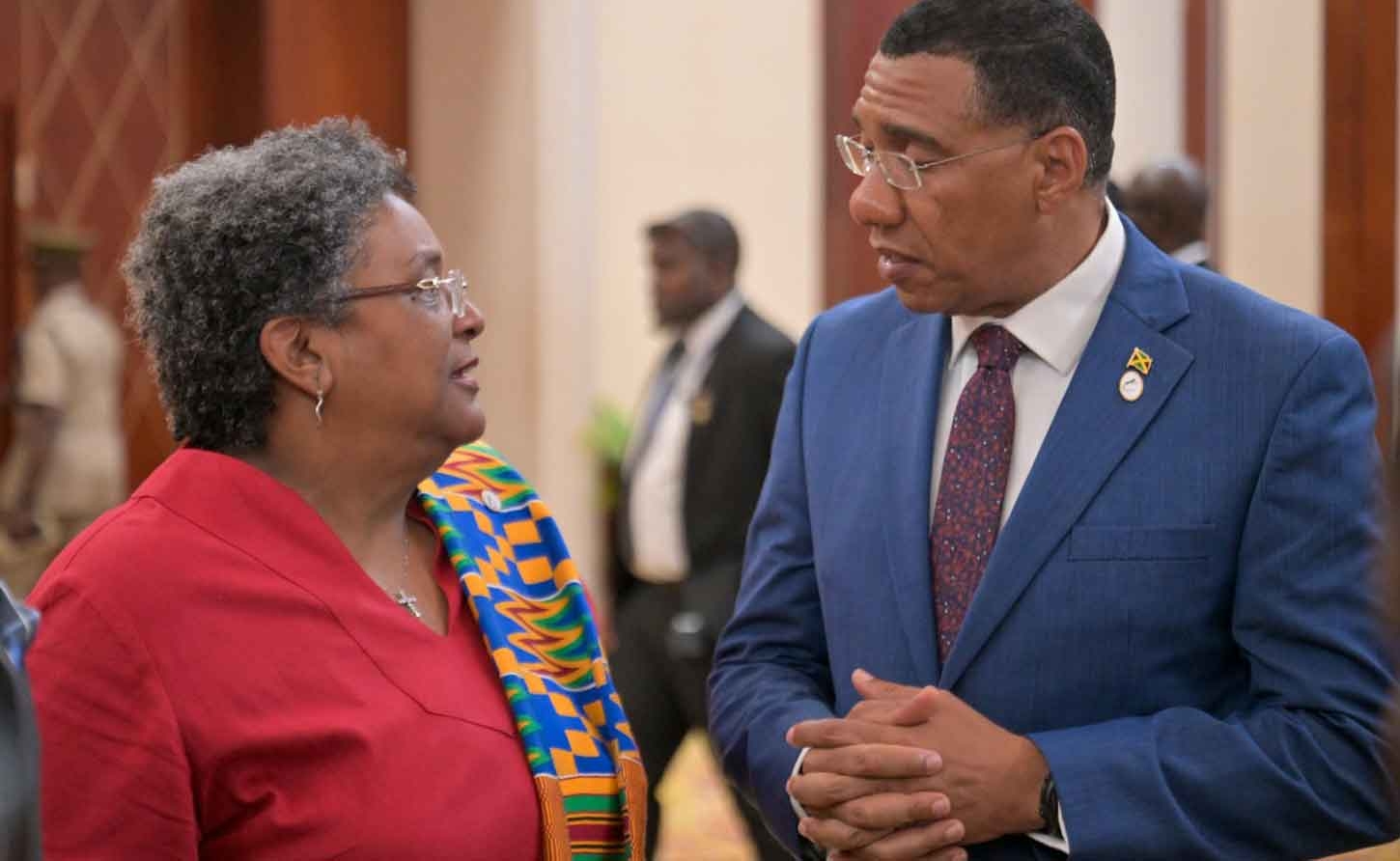
But his measured diplomatic tone barely concealed the frustration that bubbled over at the recent CARICOM Summit, where Barbados Prime Minister Mia Mottley delivered a scathing indictment of the EU’s approach.
“Despite Barbados being removed from the Financial Action Task Force’s monitoring list in February 2024 and Jamaica following in June, both nations remain trapped on the European Union’s parallel blacklist,” Mottley declared, her voice heavy with exasperation at what she characterized as systematic discrimination.
Her assessment cuts to the bone: this isn’t administrative incompetence—it’s institutional racism masquerading as technical procedure. The EU’s anti-money laundering blacklist hasn’t aligned with the FATF’s assessments for over a year and a half, creating what EU Commissioner Maria Luis Albuquerque admitted were “significant irritants with international partners.”
The Caribbean’s ordeal illuminates a broader pattern of how global financial governance operates. Small island states, despite investing heavily in regulatory reforms and achieving international compliance, find themselves subject to prolonged punishment while geopolitically significant players receive swifter consideration.
The same EU decision that freed Jamaica and Barbados also removed the UAE, Gibraltar, Panama, the Philippines, Senegal, and Uganda—a roster that reveals how financial diplomacy intersects with strategic interests.
For Jamaica, the delisting carries profound economic implications. Financial institutions within EU member states will no longer be required to apply enhanced due diligence to transactions involving Jamaica, reducing compliance burdens and improving cross-border financial flows.
Minister of Foreign Affairs Kamina Johnson Smith emphasized that the decision “strengthens Jamaica’s investment climate and signals the EU’s confidence in Jamaica’s financial architecture.”
The road to redemption was paved with sustained advocacy at every level. As recently as the closing session of the 49th CARICOM Heads of Government meeting, Holness reiterated Jamaica’s call for delisting, demonstrating how regional solidarity amplified individual voices on the global stage.
Yet beneath the diplomatic celebrations lies a sobering reality about power dynamics in global finance. Mottley’s reference to being “trapped on delegated lists along with countries like Gibraltar and UAE” revealed the arbitrary nature of classifications that can devastate smaller economies while barely registering on larger ones.
The European Parliament’s own internal conflicts over the blacklist updates—with MEPs clashing over whether the Commission was merely “copy-pasting” FATF decisions—exposed the political undercurrents beneath technical assessments.
German Socialist MEP Birgit Sippel accused the Commission of lacking independent judgment, highlighting how Caribbean nations became collateral damage in European institutional power struggles.
The delisting represents more than bureaucratic housekeeping—it’s a recognition that small states deserve equal treatment in global financial governance.
But the year-plus delay serves as a stark reminder that in the architecture of international finance, some voices carry more weight than others, and compliance alone isn’t always enough to guarantee justice.
As Jamaica and Barbados emerge from this financial purgatory, their experience should prompt serious reflection about whether global financial oversight serves justice or merely reinforces existing power imbalances.
The technical mechanisms may be colorblind, but their application too often reveals the enduring inequities that still plague international relations. WiredJA