Unanimous London ruling ends a near-decade fight, and puts every Caribbean government still clinging to the savings clause on notice
MONTEGO BAY, Jamaica, |By Calvin G. Brown | WiredJa Online — The law that branded gay Trinidadians criminals in their own bedrooms is dead, and it took a court in London to bury what Port of Spain’s politicians never had the courage to touch.
In a unanimous ruling handed down Tuesday, the Judicial Committee of the Privy Council (JCPC), Trinidad and Tobago’s final court of appeal, struck down the colonial-era provisions criminalising same-sex intimacy, finding them incompatible with the “fundamental individual right to respect for private and family life.”
There is no further appeal. The decision is final.
Delivering the judgment, Lord Sales said laws of this kind could not be justified in any society that properly respects the rights and freedoms of the individual. Sexual orientation, the Board held, sits at the core of human identity, and what consenting adults do in private to express it lies beyond the legitimate reach of the criminal law.
It is the first time the JCPC has ever ruled on a case seeking to decriminalise same-sex intimacy, and the reverberations will be felt well beyond the twin-island republic.
One man against the State
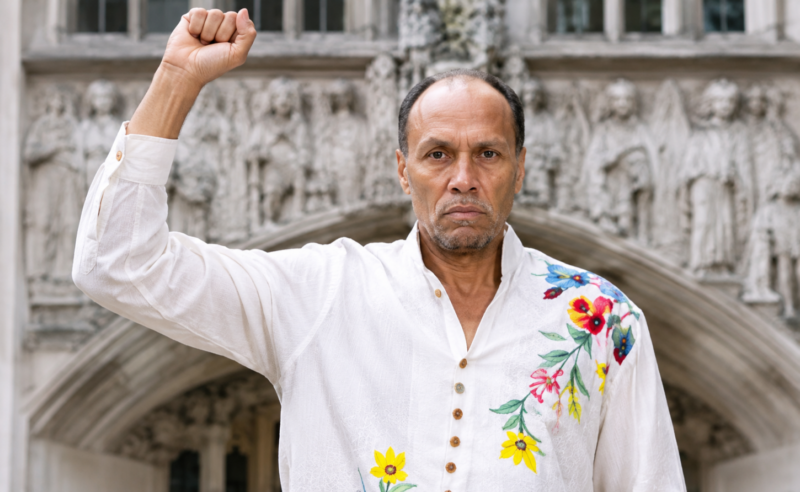
The victory belongs to Jason Jones, 62, a Trinidad-born dual citizen who filed the constitutional challenge in February 2017 and refused to let it die. Jones left the country in 1996, driven out, he has said, by homophobic violence and discrimination.
He targeted sections 13 and 16 of the Sexual Offences Act, which outlaw “buggery” and “serious indecency” and trace their lineage to statutes imposed under British rule. The offences carried up to five years’ imprisonment. They had not been enforced in recent memory, but enforcement was never the point. The statute’s work was stigma: a standing declaration by the State that a class of its citizens stood outside the Constitution’s protection.
Jones won in the High Court in April 2018. The State appealed. In March 2025, a divided Court of Appeal reversed that ruling in part, effectively re-criminalising gay men seven years after they had been freed.
“That message ends today,” Jones said after the ruling, insisting the laws had never reflected a nation that is diverse, multiracial and secular. He hopes the judgment will speed the push for full equality.
His lead attorney, former Attorney General Anand Ramlogan SC, hailed the outcome as a landmark win for gay rights, equal dignity and privacy.
The colonial shield cracks
The State’s defence deserves scrutiny, because the same defence is waiting in the wings across the region. The Attorney General’s central argument was not that jailing consenting adults is just. It was that the courts are powerless to say otherwise.
His weapon was the “savings law clause”, the constitutional device that carried British-era laws into independence and immunised them from human rights challenge. In effect, a sovereign republic went to London to plead that laws written by its former colonial master must remain untouchable.
Jones’s lawyers countered that Parliament forfeited that protection in 1986, when it rewrote the offences and stiffened the penalties. A law remade by an independent legislature, they argued, is no longer a colonial relic entitled to shelter. All five judges agreed.
The irony is hard to miss. The government was backed in this fight by the Council of Evangelical Churches and the Sanatan Dharma Maha Sabha, the country’s largest Hindu body: local institutions defending an imported Victorian morality code as though it were native soil. And it was a British court, the very tribunal Trinidad and Tobago has pushed to replace with the Caribbean Court of Justice, that finally removed it.
Jones was blunt about why the judges had to act. The courts, he told the Associated Press, were forced to step up because the country’s politicians are “toothless.”
Kingston, take note
For Jamaica, this is not a foreign story. The Offences Against the Person Act of 1864 still criminalises buggery here. Jamaica’s Constitution carries its own savings provisions. And Jamaica, like Trinidad and Tobago, still sends its final appeals to the same judges in London.
Grenada and St Vincent and the Grenadines also retain such laws, even as courts in Barbados, Dominica, St Lucia and Antigua and Barbuda have struck theirs down in recent years. Before Tuesday, Trinidad and Tobago was among some 34 Commonwealth states still criminalising homosexuality under inherited British statutes; in some of those countries, on pain of death.
Campaigners now expect fresh challenges armed with Tuesday’s reasoning. Each constitution is worded differently, and no outcome is guaranteed. But the Privy Council has now said, plainly and unanimously, that criminalising private intimacy between consenting adults cannot be squared with fundamental rights. Any government still defending such a law must explain why its citizens deserve less.
That is the real weight of this judgment. For decades, Caribbean leaders have hidden behind the savings clause, behind the pulpit and behind the polls, content to let a colonial statute do their moral policing for them. On Tuesday, the hiding place got considerably smaller.
Jason Jones spent the better part of a decade proving that one stubborn citizen can outlast a State. The question now is which Caribbean parliament will find the nerve to act before its own Jason Jones forces the issue.