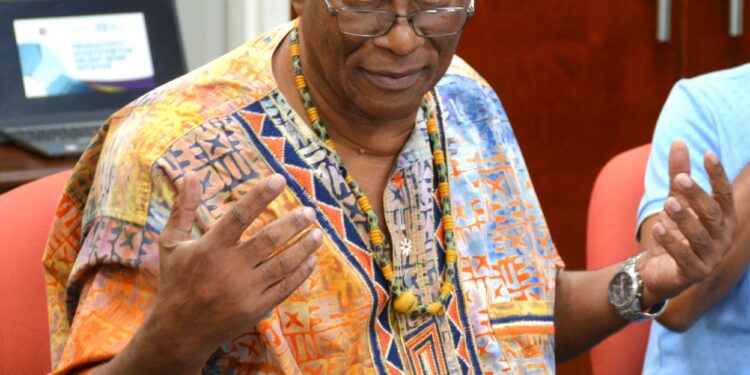
(WiredJA) When Mr. Justice Winston Anderson was sworn in as the Caribbean Court of Justice’s fourth president on Sunday, he inherited more than just a distinguished legal institution – he took charge of the region’s most practical solution to making justice truly accessible to ordinary Caribbean people.
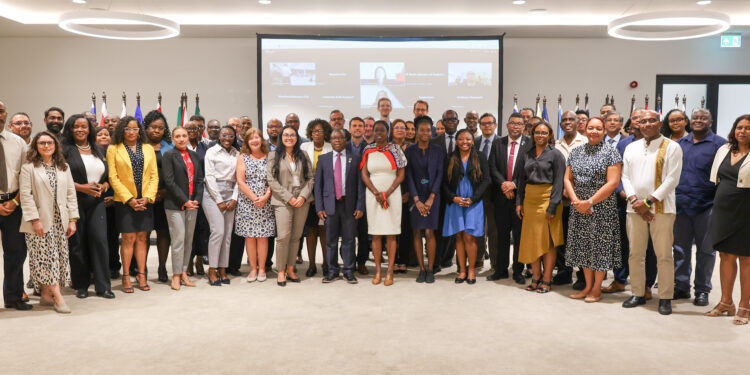
The ceremony at the Jewel Grande Montego Bay Resort & Spa in Montego Bay, St James on Sunday, July 6, marked not just a changing of the guard, but a renewed opportunity for Caribbean nations to embrace a court that eliminates the prohibitive costs and bureaucratic hurdles that have long denied their citizens equal access to final appellate justice.
Anderson, the 65-year-old Jamaican jurist whose remarkable journey from rural Brittonville to the region’s highest court embodies Caribbean legal excellence, brings both scholarly distinction and practical vision to an institution whose time has surely come.
His appointment signals a pivotal moment for Caribbean nations still clinging to an outdated colonial arrangement that places justice beyond the reach of most citizens.
The stark reality facing Caribbean litigants seeking Privy Council appeals reads like a catalog of systemic barriers. Legal costs alone can reach hundreds of thousands of dollars, effectively creating a two-tiered justice system where only the wealthy can afford final appeals.
Add the bureaucratic nightmare of visa applications for London travel, the expense of transatlantic flights, and extended stays in one of the world’s most expensive cities, and the Privy Council becomes what critics rightly call “justice for the privileged few.”
By contrast, the CCJ represents everything a regional court should be: accessible, affordable, and attuned to Caribbean realities. Appeals can be heard virtually or through the court’s innovative itinerant sittings, bringing justice directly to the people rather than forcing them on expensive pilgrimages to distant shores.
Anderson’s pledge to intensify these mobile sessions demonstrates his understanding that justice delayed by financial barriers is justice denied.
The five nations that have embraced the CCJ’s appellate jurisdiction – Barbados, Belize, Dominica, Guyana, and most recently St. Lucia – have discovered what progressive Caribbean leaders already know: homegrown justice works better than imported alternatives.
Their citizens enjoy faster resolutions, lower costs, and decisions rendered by judges who understand Caribbean law, culture, and circumstances without needing tutorials on local customs.
Outgoing Chair of CARICOM, Barbados Prime Minister Mia Mottley, welcomed Justice Anderson as president of Caribbean Court:
Anderson brings impeccable credentials to this transformative mission. His doctoral work at Cambridge University, combined with decades of teaching at the University of the West Indies and international institutions, has produced scholarship that bridges Caribbean legal tradition with global best practices.
His seminal work “The Law of the Sea in the Caribbean” demonstrates exactly the kind of regionally-focused expertise that makes CCJ decisions more relevant and practical than distant colonial-era pronouncements.
Prime Minister Andrew Holness’s recognition of Anderson as bringing “a distinguished legal mind” and “profound commitment to Caribbean jurisprudence” reflects growing regional appreciation for the CCJ’s evolving role.
As Holness noted, Anderson’s experience as founding Chairman of the CCJ Academy for Law positions him perfectly to expand the court’s educational mission while strengthening its practical accessibility.
The CCJ’s growing influence extends well beyond its formal membership. Legal experts across the Caribbean routinely cite CCJ decisions because they address regional concerns with regional sensibilities.
From landmark rulings on CARICOM free movement rights to decisions protecting constitutional freedoms, the court has built a jurisprudential foundation that speaks directly to Caribbean experiences.
Anderson’s vision of intensified public engagement recognizes that justice must be visible to be trusted. His commitment to bringing the court closer to Caribbean communities through technology and mobile sittings addresses legitimate concerns about institutional distance while building the grassroots support necessary for democratic expansion.
The economic argument for CCJ membership has never been stronger. As Caribbean economies face mounting pressures, spending scarce foreign exchange on London legal proceedings becomes increasingly indefensible.
The CCJ offers world-class judicial services at regional prices, keeping legal fees circulating within Caribbean economies rather than enriching British barristers.
For nations still weighing their options, Anderson’s presidency offers fresh momentum toward a more practical and principled approach to final appeals. His scholarly reputation, combined with his deep Caribbean roots, positions him to demonstrate that regional justice isn’t second-class justice – it’s simply justice that works for Caribbean people.
As Anderson settles into his Port of Spain chambers, he carries the hopes of millions of Caribbean citizens who deserve justice that doesn’t require mortgaging their homes or navigating visa bureaucracies. His leadership promises to transform the CCJ from an institutional aspiration into an accessible reality.
The Caribbean created the CCJ to serve Caribbean interests. Under Anderson’s stewardship, that founding vision moves closer to full realization.
Justice Anderson succeeds Justice Adrian Saunders and becomes the fourth person to hold the office since the establishment of the CCJ.
The court was established under the Revised Treaty of Chaguaramas and serves both as an international court interpreting the treaty and as the final court of appeal for member states that have acceded to its appellate jurisdiction.
Justice Winston Anderson was sworn in as the Caribbean Court of Justice’s fourth president on July 6, 2025, during the 49th Regular Meeting of CARICOM Heads of Government in Montego Bay, Jamaica.