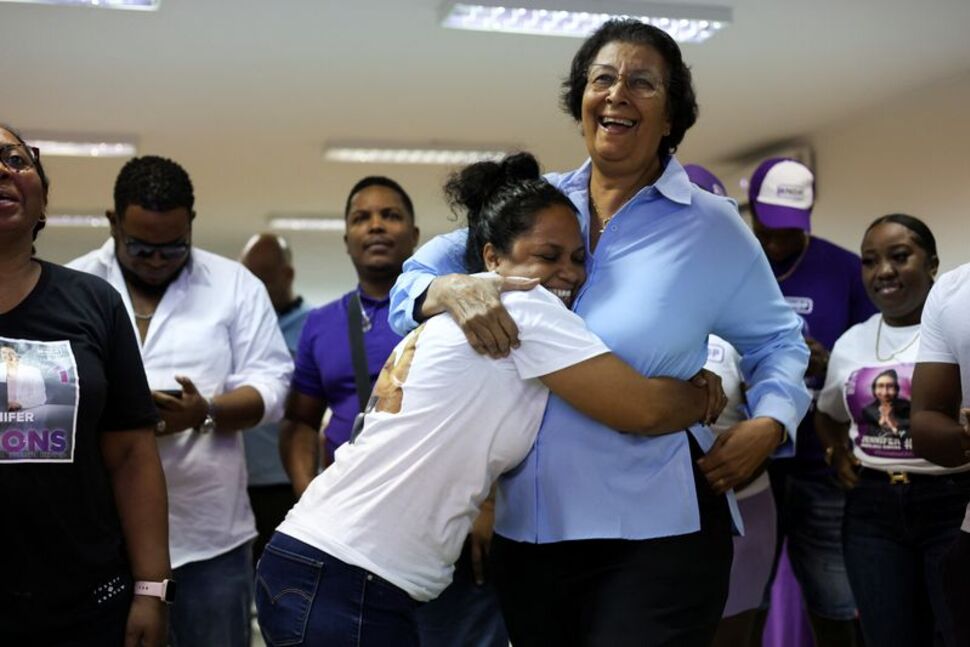
By Mark DaCosta- In an encouraging step towards gender equality on the international stage, Suriname is making history with the election of its first female president. Jennifer Geerlings-Simons’s unopposed ascent to the presidency heralds a notable moment not just for Suriname, but for women’s representation across the region and beyond.
On July 6, the National Democratic Party’s Jennifer Geerlings-Simons, supported by a coalition of parties, is poised to officially take the reins from current President Chandrikapersad Santokhi. Her rise to power is particularly significant, as the absence of rival candidates reflects a broader trend within the political landscape that prioritises inclusivity and gender representation. The opposition Progressive Reform Party, which has held notable influence, made the critical decision not to nominate any candidates for the upcoming elections, effectively allowing Geerlings-Simons to lead the country without contest.
At 71 years old, Geerlings-Simons is not just a seasoned politician but also a qualified physician. Her election follows the recent assembly elections on May 25, where her party narrowly secured a majority in the National Assembly with 18 seats, complemented by alliances with five other parties yielding a total of 34 seats essential for the presidency. This coalition-building reflects strategic political engagement, paving the way for changes in governance in a country that has seen its fair share of challenges.
Chandrikapersad Santokhi has been at the helm since taking office in 2020, a tenure marked by significant economic difficulty and corruption scandals. The Economy of Suriname, largely overshadowed by its vast tropical rainforests and natural resource exploitation, has faced turmoil, leading to agreements with the International Monetary Fund to stabilise its finances. Despite hopes pinned on the recently discovered offshore oil reserves, expected to start production by 2028, Santokhi’s administration faced severe public unrest due to austerity measures.
With reservations about his lack of electoral support, Santokhi’s decision to retire from the political race allows for a seamless transition of power, as he acknowledges that cooperation is key in ensuring stability for Suriname. In the coming days, preparations are underway for Geerlings-Simons to be inaugurated at the Anthony Nesty Sports Hall in Paramaribo, promising a dignified start to her presidency.
Geerlings-Simons’s significance extends beyond her gender; she embodies a new direction for Suriname, which, despite its riches, remains one of the poorest nations in the region. The discovery of oil reserves poses an opportunity for economic revitalisation, and Geerlings-Simons has already positioned herself as an advocate for environmental regulations, particularly as the country grapples with the repercussions of illegal mining and logging practices popular in tropical ecosystems. Given her record of championing ecological preservation during her time in the National Assembly, expectations are high that she will address these pressing challenges head-on.
Also noteworthy is the historical context surrounding Geerlings-Simons’s party, founded by former dictator Dési Bouterse. Memories of his authoritarian rule, characterised by human rights violations, linger in the political consciousness. The hope is that Geerlings-Simons will offer a different vision for the future, one that emphasises cooperation, accountability, and the well-being of Surinamese citizens.
The potential ripple effects of her presidency could inspire neighbouring countries in the region to embrace gender equality in political representation. Acknowledging women’s leadership can foster new conversations about empowerment and change, aligning closely with the global push for gender parity in all sectors.
In brief, with Geerlings-Simons set to make history as the first female president of Suriname, the nation stands at a pivotal intersection, promising hope and a new beginning for its citizens while inspiring broader movements for equality and representation.