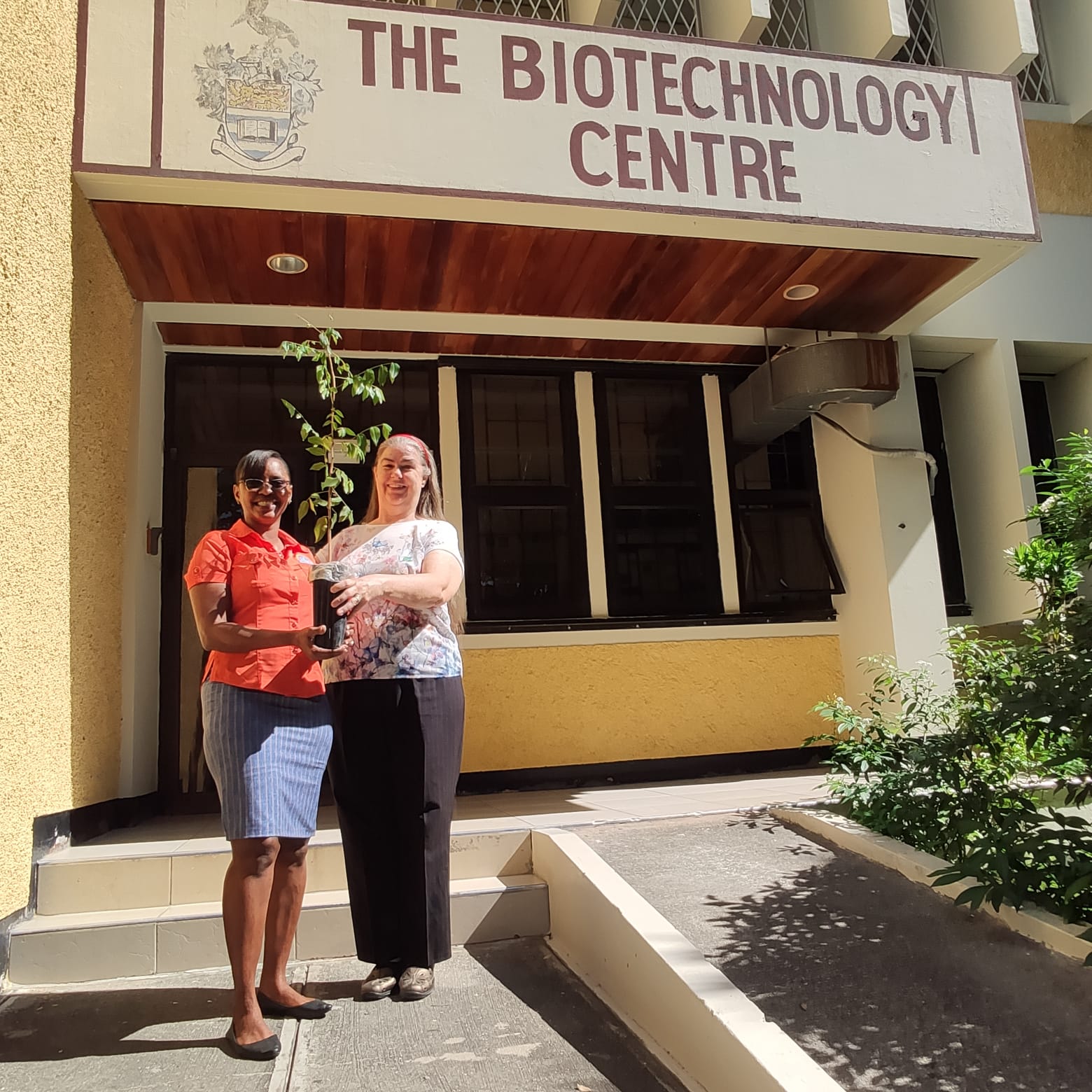
The current shortage of mature Jamaican mahogany trees in the region could soon be a thing of the past, as recent scientific research has led to large-scale propagation of true-to-type seedlings.
Experts agree that the development is anticipated to be a boon for Jamaica’s economy through the lumber and forestry sectors, as the country could become a large exporter of authentic Jamaican mahogany.
The mahogany genus, which has three species, is a medium-sized semi-evergreen growing to 30–35 metres (98–115 ft) tall. It produces straight-grained, reddish-brown timber that is highly sought after due to its colour and durability. One of the three species, scientifically called Swietenia mahagoni, is native to the wider Caribbean, including Jamaica, Cuba and the Bahamas, but it is now near-threatened due to excessive land clearance and cutting for furniture making.
To avoid further risk, efforts to re-commercialise the species will have to ensure compliance with the global frameworks designed to regulate international trade of wildlife and timber – the Convention on International Trade in Endangered Species of Wild Fauna and Flora (CITES) and the European Union Timber Regulation (EUTR) standards.
It is within this context that RISE Life Management Services (RISE), under the European Union-funded Improved Forest Management and Livelihoods for a Better Jamaica (IFMAL) project, spearheaded a DNA analysis to isolate and propagate the native Jamaican species. This was done in partnership with Tulloch Estates and the Forestry Department.
The analysis confirmed that 35 local mahogany trees were not hybrids as they did not feature DNA material from the Honduran species, Swietenia macrophylla, which is native to Mexico, Central America and northern South America.
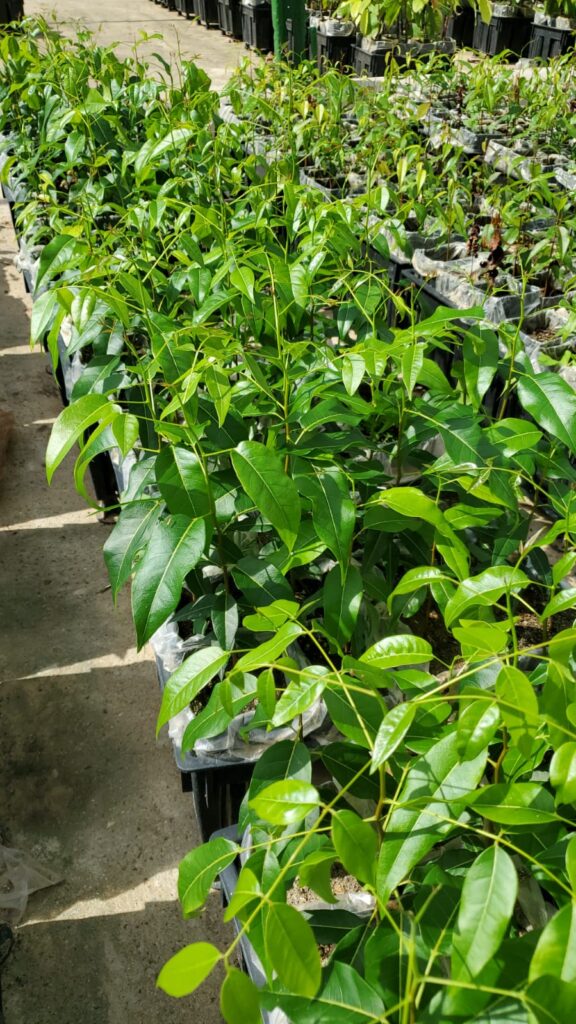
Under the IFMAL project, a nursery was established at Tulloch Estates to grow the certified seedlings. Owner of Tulloch Estates, Roger Turner, noted that prior to the study, there was uncertainty about the genetic identity of mahogany seedlings on the island.
“The status before the analysis is that we had mahogany trees that appeared to be true-to-type but we had no proof that the seeds were true-to-type and would bear lumber that was true Jamaican mahogany. Before, no one could say with any certainty what would happen if we planted the current seedling,” he said.
So far, RISE has facilitated the distribution of several batches to local organisations such as the Forestry Department, the Jamaica Agricultural Society, the Endemic Species Preservation Unit of the Hope Royal Botanical Gardens and the Biotechnology Centre at the University of the West Indies (UWI), Mona.
The parties involved say that the success of the project has implications not only for increased exportation of Jamaican mahogany and the production of higher-quality furniture, but also for a potential lifting of the CITES ban on the trade in Jamaican mahogany.
According to Director of Human Resource Management & Administration at Hope Gardens Nature Preservation Foundation, Carla Myrie, it is also expected to have positive implications for rural Jamaica.
“These results will make the Jamaican mahogany more favourable for local lumber users and could shift Jamaica towards becoming a large exporter of lumber. This will positively impact employment and boost cottage industries, likely addressing urban drift,” she stated.
Sharing her perspective, Dr. Sylvia Mitchell, senior lecturer at the Biotechnology Centre, University of the West Indies, emphasised the significance of the mahogany trees for future generations.
“Trees represent the wealth of the future; planted by the present to secure the next generation. They help us maintain a long-term perspective on wealth, which will aid in reducing the prevalent ‘get-rich-quick’ attitude. Notably, the cultivation of trees, especially important species like mahogany, not only adds intrinsic value to the land but also contributes to sustainable prosperity,” Dr Mitchell explained.
She said, further, that the results of the DNA analysis should address critical issues such as illegal logging and climate change.
“Certifying the country of origin for timbers is a crucial measure in combating illegal logging, and this achievement is now a reality for Jamaican mahogany. Consequently, any furniture crafted from this lumber will be certified as originating from Jamaican mahogany.”
She continued: “Beyond this, the promotion of tree planting, particularly of species like mahogany, becomes an imperative strategy in the battle against climate change. Mahogany, in particular, symbolises the restoration of Jamaica’s forests, once sacrificed for sugarcane plantations. Its [population expansion] not only ensures long-term wealth but also brings about positive environmental effects, including the reduction of water and soil run-off.”
In addition to the propagation of Jamaican mahogany seedlings, the initiative will contribute to the advancement of research and conservation efforts for the species. The report of the DNA findings were shared with the Biotechnology Centre to support their continued research on the species. RISE also shared the report with the Forestry Department to further inform its work in improving the genetic variation of Jamaican mahogany, regarded as superior to the Honduran variety.
Through the IFMAL project, the Forestry Department also obtained valuable data which were identified through the sample collection process to facilitate the DNA analysis.
RISE’s Executive Director, Nadine Chambers Goss, explained that the samples for testing were collected from different provenances, considering variations in generation, altitude, soil, and rainfall conditions, and were GPS tagged for accurate tracking. This process facilitated the creation of a detailed map which pinpoints stands of authentic Jamaican mahogany, which will be of significant value to the Forestry Department.
She went on to further state that “not many persons are aware that the Jamaican mahogany is listed as a “near- threatened” species by the International Union for the Conservation of Nature (IUCN) Red List, with a decreasing population trend. Also, unlike other mahogany species, there was very little research done globally on the Jamaican mahogany, which requires about 50 years to mature.”
“However, through this European Union-funded project, RISE was able to make a significant contribution to local efforts to resuscitate the Jamaican mahogany, increase the number of certified seedlings available for planting, and contribute to the body of knowledge available on this species,” Chambers Goss added.
RISE said it intends to publish a joint research paper on its findings as a means of improving the global body of knowledge available on the Jamaican mahogany species.
The DNA analysis of the Jamaican mahogany was carried out over a period of four months at the end of 2022, from September 6 to December 5, by Dr. Céline Blanc-Jolive at the Thünen Institute in Germany.