In May 2023, Guyana’s President Irfaan Ali made an official visit to Qatar, several thousand miles away in the Persian Gulf, and opened his country’s first embassy in Doha. Points of discussion encompassed potential collaboration in the areas of energy, food, infrastructure, and aviation. During the same month, Guyana and Saudi Arabia signed a Memorandum of Understanding (MOU) regarding Saudi Arabian investment in development projects in Guyana. There has also been discussion of Saudi or United Arab Emirates (UAE) money going into offshore oil development or Qatari assistance in developing Guyana’s natural gas industry.
The Guyanese-Gulf States relationship is slowly gaining traction, reflected by the increased number of visits since 2020 by high-ranking Guyanese officials and their Qatari, Saudi and UAE counterparts as well as a series of MOUs covering everything from aviation and cybersecurity to trade and investment. Although the depth of the Gulf States-Guyanese relations should not be overstated, it has momentum and could play a larger role in the development of Guyana’s oil and gas industry as well as the Southern Caribbean Energy Matrix.
The Ali government has made it clear that Qatar, Saudi Arabia and the UAE are the nations Guyana will be using as its role models for effective oil and gas management.. The debate over the management of Guyana’s oil and gas wealth is driven by a deep concern over the commodity curse (also referred to as the Dutch disease) in which hydrocarbon production launches a scramble among elites to secure shares of the profits rather than invest in the construction of roads, power plants, factories, agricultural production capacity and education. Other aspects of the commodity curses include economic mismanagement and corruption, most evident in countries like Angola, Nigeria and Venezuela.
The attraction of using the Gulf States countries as role models is due to five factors. The first is that the Gulf States faced similar development challenges in making their transition from economically underdeveloped countries into affluent societies. Before oil and gas, the three countries were generally considered of marginal economic importance. Despite challenges, the development of the hydrocarbon industry, especially from the 1970s on, accompanied by prudent policy decisions (such as the creation of sovereign wealth funds or SWFs) resulted in long-term sustainable economic expansion. This, in turn, resulted in substantial improvements in the standard of living for most citizens in the three countries.
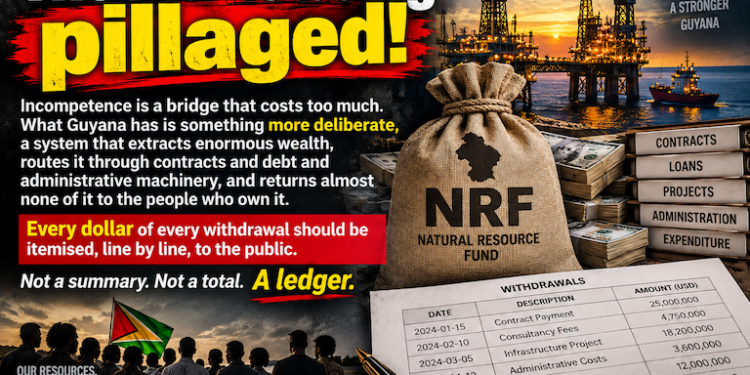
Today, Qatar, Saudi Arabia and the UAE have some of the highest per capita incomes in the world. Considering that Guyana started as one of the poorer countries in the Americas and is now becoming one of the most dynamically expanding economies in the world, many of the issues earlier faced by the three Gulf States have resonance. Certainly, the experiences of the Gulf State SWFs also factored into the creation of the Caribbean country’s SWF, the Guyana Natural Resource Fund, which reached $1.4 billion at the end of January 2023.
The second factor is that the Gulf States are aggressively looking over the horizon at a post-hydrocarbon future, which is driving diversification. In Saudi Arabia, the $600 billion sovereign wealth fund, the Public Investment Fund, has been purchasing sports teams and electric vehicle makers and other assets as it moves to accumulate $2 trillion in assets by 2030, all part of the government’s Vision 2030 plan. Its major objectives are to stimulate inward investment, access new technologies, and develop local industries.
The UAE has also launched its own diversification plan to reduce reliance on oil and transform its economy into one based on knowledge and technology. Considering the global push to zero carbon, this is certainly a major issue for Guyana. A major difference, of course, is that Guyana making the transition from an agricultural/mining economy to a petrostate to a post-petrostate economy in a much more compact period, which enhances the value of looking at the Qatari, Saudi and UAE experiences.
The third factor is that Guyana, like the Gulf States, must deal with large foreign multinational energy companies as well as larger, more powerful neighboring countries, some of them potentially hostile. Today, Qatar, Saudi Arabia, and the UAE work for regional integration through the Gulf Cooperation Council (which also includes Bahrain, Kuwait and Oman) and have become important international actors with their own spheres of influence within the Middle East, Horn of Africa, and Western Asia. The rising Guyanese petrostate shares many of the same challenges with how to work within regional bodies, in this case the Caribbean Community (CARICOM), the development of the Southern Caribbean Energy Matrix which includes Suriname and Trinidad and Tobago, and the on again-off again hostility of Venezuela which claims a large portion of the country. Guyana also must contend with other geopolitical issues, one of the most significant being the U.S.-China New Cold War.
The fourth factor is diversification. The wider the platform of investors, the less dependent Guyana is on any partner or groups of partners. While this may appear to target ExxonMobil (the country’s largest corporate player), such a policy would reduce the risk of potential dominance of corporates from other countries, such as China. Guyana’s much-awaited auction of 14 more offshore exploration blocks is likely to be a positive sign in this department. Major companies including Shell, Petrobras and Chevron have already expressed interest.
The fifth factor that helps deepen the Guyanese-Gulf State relationship is a shared Islamic identity. Although Guyana’s Muslim population is smaller than its Christian and Hindu counterparts, the country has used the Islamic card to enter the Islamic Development Bank (joined in 2016) and this has probably helped smooth relations with the three Gulf States, especially considering that President Ali is Muslim.
In November 2022, OilNow made the following statement: “If all goes well, Guyana’s move to deepen its Middle Eastern connections will be recorded as one of its most powerful and transformative foreign policy plays.” While this statement was regarded as being over-optimistic and simplistic by some, the trend of a deepening relationship is gaining momentum and the future could see a greater Gulf State advisory and investment role in Guyana.
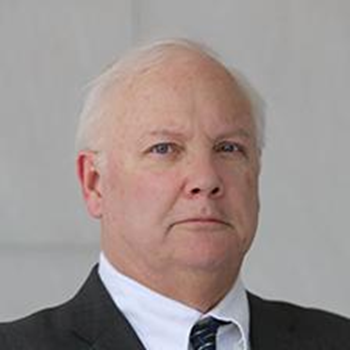
Scott B. MacDonald is the Chief Economist at Smith’s Research and Gradings, a founding member of the Caribbean Policy Consortium and a research fellow at Global Americans. His most recent book is “The new Cold War, China and the Caribbean”.