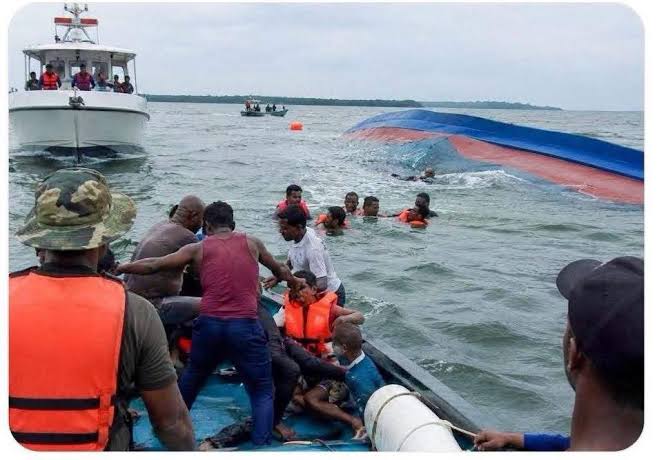
By Aubrey Subner- There comes a point when the repeated establishment of Commissions of Inquiry (COIs) begins to look less like a genuine pursuit of accountability and more like an exercise in deflecting responsibility. The tragic sinking of the MV Barima, which claimed Guyanese lives in those dark waters, raises an uncomfortable but necessary question: What exactly are we investigating that the government and its agencies did not already know?
The central issue is not merely why the vessel sank, but why it was allowed to remain in service despite documented safety deficiencies. Reports emerging from the ongoing inquiry indicate that serious shortcomings, including the absence of radar, an Emergency Position Indicating Radio Beacon (EPIRB), adequate life rafts, distress-signalling equipment and an emergency generator, remained uncorrected even after being identified.
If these deficiencies were documented and brought to the attention of the relevant authorities, why was no effective remedial action taken? Who was responsible for ensuring compliance with safety requirements? Who exercised oversight, and who authorised the vessel’s continued operation?
These are fundamental questions of governmental and ministerial accountability.
A Commission of Inquiry has a legitimate role in establishing facts, examining institutional failures and recommending corrective measures. However, it must never become a convenient substitute for accountability, particularly where official records may already provide compelling evidence of what went wrong. The public is entitled to question whether this expensive exercise is uncovering genuinely unknown facts or merely revisiting failures that should have been addressed long before lives were lost.
The financial implications are equally troubling. Is Guyana so financially comfortable that hundreds of millions of dollars can be committed to lengthy investigative exercises while the needs of bereaved families, healthcare, education and other pressing national priorities remain competing demands?
Every dollar spent by the State belongs to the people. The expenditure associated with these inquiries must therefore demonstrate clear public value. The families of those who perished cannot have their loved ones returned, but government has a moral obligation to provide meaningful assistance and ensure that their loss is not compounded by neglect or indifference.
Would it not be more constructive to balance the pursuit of accountability with practical, sustained support for those whose lives have been devastated?
This is not an argument against discovering the truth. It is an argument against allowing the pursuit of truth to become an expensive substitute for acting upon information already available.
The comparison with the Mahdia Secondary School dormitory fire, which claimed the lives of 20 children, is difficult to avoid. That tragedy also resulted in a Commission of Inquiry and exposed serious institutional and operational shortcomings. Yet the larger question remains: Are the lessons of these national tragedies being translated into meaningful improvements in public administration, oversight and accountability?
We cannot continue conducting post-mortems on national tragedies while failing to demonstrate that the institutional weaknesses which contributed to them have been decisively addressed. The recurring pattern of tragedy, public outrage, official announcements, commissions, recommendations and eventual public silence must be confronted.
Government is not simply about exercising authority, announcing projects or celebrating expenditure. Its foremost responsibility is to protect citizens, safeguard their interests and ensure that public institutions discharge their obligations. The responsibility of public office begins long before tragedy strikes, through proper oversight, enforcement of regulations, maintenance and timely intervention when warning signs emerge.
Where negligence is established, those responsible must be held accountable. No official or institution should be shielded from scrutiny because of political position, influence or proximity to power.
Martin Luther King Jr. captured the wider principle when he declared in his Letter from Birmingham Jail: “Injustice anywhere is a threat to justice everywhere.” The loss of life in one community, aboard one vessel or within one public institution is a national concern. It cannot be dismissed as somebody else’s misfortune.
Nelson Mandela similarly reminded us: “Education is the most powerful weapon which you can use to change the world.” An informed and engaged citizenry is indispensable to building a society in which public officials are answerable for their decisions and public resources are managed in the people’s interests.
But responsibility does not rest with government alone. We must also confront our own collective reluctance to demand accountability. When will Guyanese, beyond political and partisan divisions, find a collective voice and insist that those entrusted with public responsibility answer for institutional failures and the loss of innocent lives?
Why should accountability become a partisan issue? A life lost is a life lost, irrespective of political affiliation, ethnicity, geography or economic circumstances.
We cannot remain silent in the face of troubling evidence, wait for another tragedy and then express collective outrage. Democracy requires much more than casting a ballot every five years. It demands continuous public scrutiny, informed participation, independent institutions, a free press and citizens prepared to question those who exercise authority in their name.
We must abandon the notion that change will arrive by some miracle. Change requires collective will, civic courage and sustained action. We are not powerless spectators in the affairs of our country. We are citizens, stakeholders and, importantly, agents of change.
The fundamental question, therefore, is this: When will the government move beyond commissions and expressions of sympathy and demonstrate, through decisive action, that it accepts responsibility for preventing such tragedies?
The MV Barima demands answers, transparency and accountability. The families deserve justice, the travelling public deserves protection, and the people of Guyana deserve a government that understands that public office carries obligations, not immunity from scrutiny.
We must not allow the memory of those who perished to disappear beneath mountains of official reports, legal arguments and administrative explanations.
And we, the people of this dear land, must finally recognise that things will change not by wishing for them to change, but by exercising our collective democratic will to make them change.
The question is no longer simply what happened to the MV Barima. It is whether those entrusted with protecting Guyanese lives will finally be held accountable.