The Global Afrikan Congress accuses regional leaders of trading solidarity for accommodation. A fractured UN vote, and one prime minister’s candid admission, suggest the charge has teeth.
(WiredJA) For a generation, the Caribbean’s vote against Washington’s embargo on Cuba was the surest thing in regional diplomacy. On October 28 at the United Nations, that certainty died in public.
Seven CARICOM states voted to end the embargo. Jamaica, Guyana and Haiti abstained. Antigua and Barbuda, Dominica and St Lucia — whose prime minister currently chairs the Community — were marked absent. And Trinidad and Tobago did what no CARICOM member had ever done: it voted No, shoulder to shoulder with the United States.
That is the wreckage into which the Global Afrikan Congress (GAC) stepped on Thursday, November 12, with a statement titled “CARICOM at a Crossroads: Sovereignty, Solidarity, and the Question of Cuba”. Its central question, aimed squarely at the region’s Heads of Government, is brutally short: “Does regional solidarity end where U.S. pressure begins?”
On the evidence of the past nine months, the honest answer is: often, yes.
The guest at the table
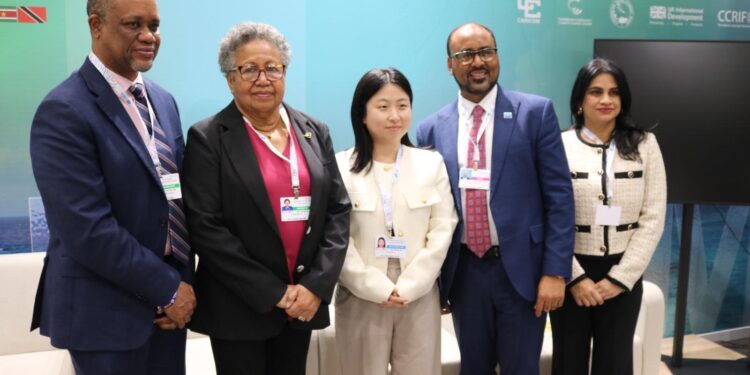
The GAC’s immediate grievance is the decision by CARICOM Heads to welcome US Secretary of State Marco Rubio to their 50th Regular Meeting in Basseterre, St Kitts and Nevis, in February. Rubio arrived weeks after the Trump regime seized Venezuela’s Nicolás Maduro, choked off the oil Caracas sent to Havana, and threatened tariffs on any country that dared to fill the gap. He spoke to the leaders behind closed doors. In the remarks made public, he did not mention Cuba at all.
He had come almost directly from the Munich Security Conference, where his celebration of Western civilisation was read across much of the Global South as a defence of empire, though his admirers heard a call for transatlantic unity. For the GAC, a region whose existence is “rooted in the genocidal destruction of Indigenous peoples and the enslavement of Africans” cannot afford “historical amnesia” about whom it invites to lunch.
The Congress is careful not to demand a boycott. “Diplomacy is necessary. Dialogue is essential,” it concedes. Then comes the blade: “dialogue without principle is submission.”
“Does regional solidarity end where U.S. pressure begins?” — Global Afrikan Congress
An island in the dark
What CARICOM declined to confront publicly in Basseterre has since become the hemisphere’s gravest humanitarian emergency. The oil squeeze has left Cuba’s electricity grid near collapse and produced shortages of medicine, water and fuel. Canadian carriers have suspended flights, gutting the tourism on which the island depends. In June the UN’s senior official in Havana warned that the damage could become irreversible if the fuel blockade continued, and that sanctions were delaying the UN’s own relief shipments.
Washington insists its measures target a corrupt one-party state, not the Cuban people, and points to the fuel sales it permits to the island’s private sector. Even the European Union, which condemns the embargo, says Cuba’s misery is not the embargo’s work alone. Those are fair points. They do not explain why some 11 million Caribbean people must sit in the dark until their government falls. The GAC calls the hardships “manufactured” and asks whether CARICOM intends to treat them as somebody else’s bilateral quarrel.
Solidarity, itemised
Consider the record since Rubio left.
In March, Jamaica ended a Cuban medical programme that had served its hospitals for half a century, sending home a brigade of 277. Guyana’s arrangement, more than 200 doctors strong, collapsed within days. Both governments say they tried and failed to agree terms for paying the doctors directly. Both acted amid a Washington campaign branding the missions forced labour, and Kingston acknowledged the pressure.
CARICOM did promise humanitarian aid, and its then Chairman, Dr Terrance Drew, warned that “a destabilised Cuba will destabilise all of us.” But the money sent to buy the supplies was bounced back three times by sanctions-related banking hurdles; it took until July, and a fourth attempt, to clear. A community of sovereign states was reduced to slipping charity past a blockade it would not name.
Then came the vote and, last weekend, the confession. Antigua and Barbuda’s Prime Minister Gaston Browne told his radio audience that his government had intended to back Cuba until the State Department telephoned to warn that doing so would undermine negotiations over US visas for Antiguans. “So we changed our position,” he said.
There it is, without varnish. In St John’s, regional solidarity ended with a phone call.
The case for the defence
Fairness demands the other side. These are small, indebted, tourism-dependent states facing a superpower that has shown it will use visas, tariffs and military force as instruments of persuasion. Jamaica’s Andrew Holness publicly urged a collective CARICOM response to Cuba’s crisis. Veteran diplomat Sir Ronald Sanders argued that Basseterre kept a channel open at a moment when Washington and Havana were quietly talking. Trinidad’s Kamla Persad-Bissessar at least owns her vote, arguing that she could not stay silent about oppression in Cuba, a one-party state whose citizens have grievances of their own.
Nor is Cuba a member of CARICOM. It is something older: a member of the Caribbean community of nations and a long-standing partner of CARICOM, which is precisely what the GAC means when it calls Cuba part of “our regional family”. The tie predates the Community itself. In 1972 Michael Manley, Errol Barrow, Eric Williams and Forbes Burnham jointly recognised Havana in open defiance of Washington. Four young states with a fraction of today’s leverage managed what fourteen could not manage in a single afternoon in New York.
Whose CARICOM?
The GAC’s deeper charge is democratic. Why, it asks, are summit sessions closed to the citizens whose food security, remittances, energy and migration prospects are on the table? Why are civil society, labour unions, youth movements and diaspora networks shut out of structured consultation? After six decades of independence, it argues, Caribbean people deserve more than “ceremonial sovereignty” and “a vote every five years”.
The point bites. Antiguans learned why their country vanished from a historic vote not from a communiqué, but because a caller rang a radio programme about her visa.
The Congress invokes an old regional creed, “Touch one, Touch all”, and warns that a region which lets one neighbour be isolated today is rehearsing its own isolation tomorrow. CARICOM, it says, must choose between reaffirming solidarity and normalising accommodation.
The Caribbean people, the GAC insists, are watching. After October 28, they have seen plenty. What they have not yet seen is their leaders, together and in daylight, explaining what was traded, for what, and in whose name.