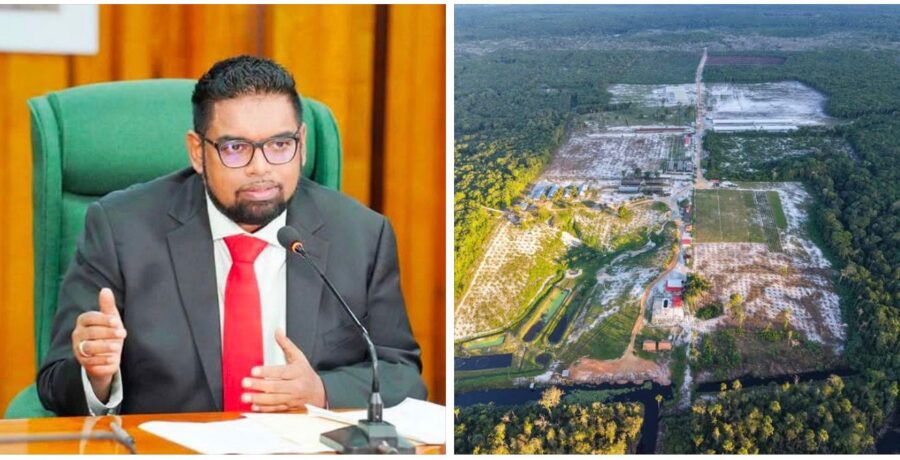
More than three months after President Irfaan Ali promised to take Guyanese on a live tour of his privately owned agricultural farm at Long Creek, the undertaking remains outstanding, with no publicly announced date for the presentation.
The promise came amid mounting scrutiny of the farm’s size, development and financing after Opposition Leader Azruddin Mohamed publicly exposed the property and challenged Ali to resign while demanding answers about how the extensive agricultural operation was financed. The controversy has intensified questions about the source of the funds, the scale of the investment and the transparency expected of a sitting President.
Ali rejected the allegations, insisting that the farm was developed through legitimate means, financed through bank loans and disclosed to the Integrity Commission. However, his commitment to take the public and media to the property has yet to materialise publicly.
On July 9, the Department of Public Information (DPI), the government’s official news agency, reported Ali’s response to the controversy. The President maintained that the property was already known publicly and rejected suggestions that its development involved improper financing or preferential treatment from the State.
“My farm is not a discovery. It is public information,” Ali said.
He also stated that the investment carried substantial borrowing and that the relevant financial information had been disclosed to the Integrity Commission.
“My farm carries a huge loan, and everything has been disclosed to the Integrity Commission. In and out of government. There is absolutely nothing to hide,” he said.
Ali further indicated that he intended to provide live updates from the farm so Guyanese could see the operation firsthand.
“I’ll go live because I want people to learn. I want people to see directly from me the misrepresentation and the mischief, the deception, the lies,” he said, according to DPI.
Farm tour postponed to an unspecified date
The President’s assurances did not end the controversy.
On August 18, when reporters again questioned him about the property, Ali reiterated that he would eventually present the farm to the public but offered no specific date.
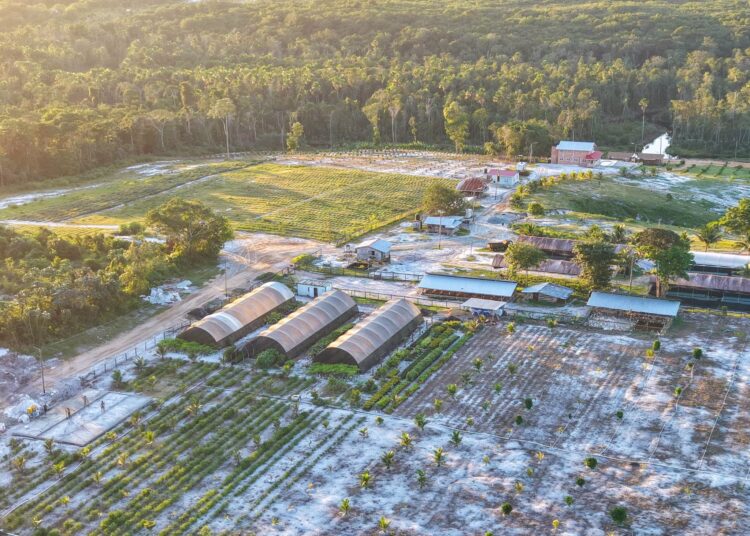
He told the media the farm had been financed through loans, maintained that the assets had been declared to the Integrity Commission and insisted that the promised tour would take place “at the appropriate time.”
The President also disputed Mohamed’s estimate that the property covered approximately 150 acres, saying it was roughly 60 acres.
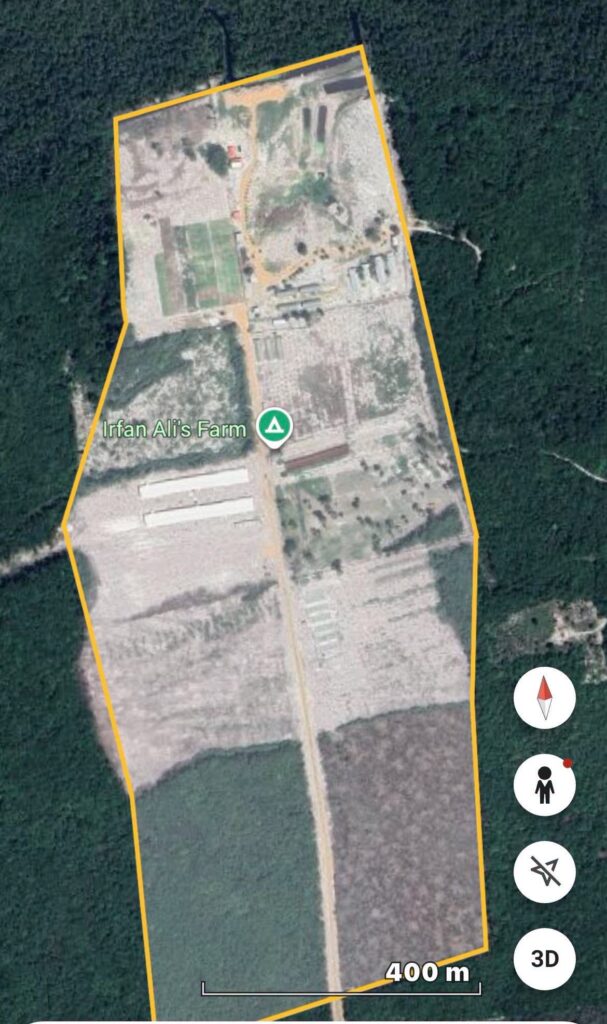
The acreage has become a central point of contention. This publication on July 11 reported measurement of the visibly cleared area using Google Earth’s polygon tool indicated approximately 155 acres, or 627,128.62 square metres.
That satellite-based estimate differs significantly from Ali’s stated figure. However, a Google Earth measurement of visible cleared land does not establish the property’s legal boundaries, which would require appropriate land-survey documentation.
In its August 30 report, Village Voice News returned to the President’s unfulfilled promise, noting that more than six weeks had passed since he committed to a live presentation, without a publicly announced date.
The publication distinguished between Ali’s private visits to the property and the specific undertaking to show the farm’s operations publicly.
Questions of transparency persist
The farm controversy has generated wider debate about transparency, public officials’ assets and the accountability expected of the country’s highest office.
Ali has maintained that the farm predates his presidency, that it was developed through bank financing over time and that he received no special concessions from the State. His statements represent his response to allegations raised by the Opposition Leader, whose estimates of the property’s value and development costs have not been independently verified.
The President’s disclosure assurances also do not, by themselves, allow the public to examine the underlying financial records.
A public tour would not independently establish the farm’s acquisition costs, financing arrangements or legal acreage. Nevertheless, it would give journalists an opportunity to observe the agricultural operation and question the President about his earlier statements.
Ali’s position as Guyana’s head of state places his financial disclosures and public commitments under legitimate public scrutiny. Having promised to take Guyanese on a live tour of his farm to demonstrate its operations and counter allegations about its development, the President has yet to announce a date for the presentation. Until he fulfils that promise, questions about the farm’s size, financing and development will continue to fuel public debate over transparency and accountability.