Guyanese consumers are being asked to wait another six months for relief from an electricity crisis the Government said would have been resolved by August 2024.
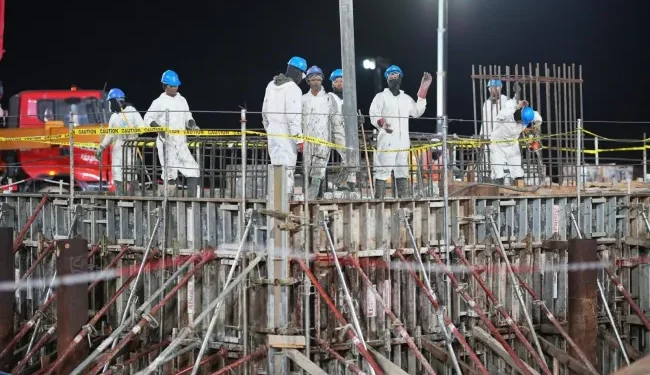
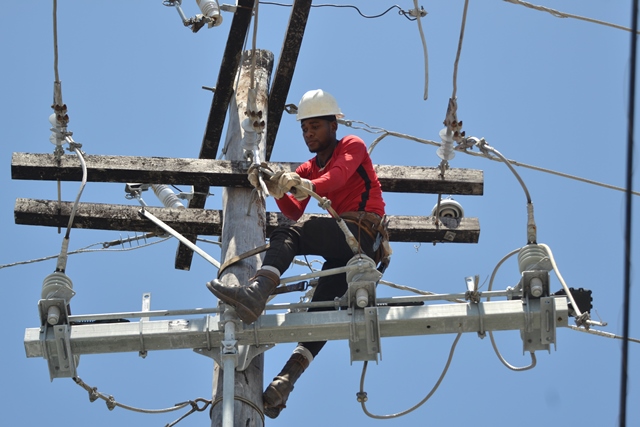
President Irfaan Ali said Friday that the next six months will be “critical” to stabilising the national power supply, with plans to overhaul between 25 and 27 megawatts of generating capacity, add 4.5 MW at critical points and complete a major transmission link between Berbice and Demerara.
The latest timeline comes more than two years after Prime Minister Mark Phillips, who has responsibility for the energy sector, said Guyanese would be freed from unstable electricity and blackouts by August 2024.
In July 2023, Phillips pointed to the PPP/C’s 2020 manifesto, saying:
“We made a promise to the people out there that once and for all, we will solve the electricity problem, the power problem for the households, citizens and the business community.”
He also said Guyanese would be:
“freed from unstable electricity, and blackouts come August 2024.”
The Gas-to-Energy project was projected to generate about 300 MW and reduce electricity costs by roughly 50 per cent.
August 2024 came and went. The blackouts did not.
Consumers Continue Paying the Price
The cost of the crisis extends far beyond the hours when the lights go out.
Households face spoiled food, disrupted sleep, damaged appliances and interrupted work. Small businesses lose operating hours and revenue, while manufacturers, hotels and other electricity-dependent enterprises face production losses. Schools, health facilities and other essential services can also be disrupted.
GPL acknowledged in April that major outages had affected households, businesses and essential services, including one incident that disrupted electricity for tens of thousands of customers.
The financial burden is equally real. Government allocated G$18 billion in 2025 to assist GPL with fuel procurement while maintaining that consumer electricity rates had not increased since 2020.
But a stable electricity rate does not mean consumers are spared the cost of an unstable system. They pay through lost business, spoiled goods, interrupted work, damaged equipment and the expense of alternative power.
Demand Has Exploded, But Infrastructure Has Not Kept Pace
GPL says peak demand has climbed from 221 MW in 2025 to approximately 257 MW in September 2026, more than double the roughly 125 MW recorded in 2020. Its customer base has also grown from about 201,000 to 250,000.
Government attributes the pressure to rapid development, new housing, manufacturing and expanding economic activity.
That may explain the rising demand. It does not remove the responsibility to ensure electricity infrastructure keeps pace with the development Government itself is promoting.
The Public Utilities Commission reported earlier this year that GPL failed to meet six of eight required service standards in 2025, including standards relating to customer interruptions, system losses and billing.
Oil Wealth, Yet Still Waiting for Reliable Power
Ali’s immediate response includes maintaining existing generating units, adding new capacity and completing the Berbice-Demerara transmission connection.
Guyana is generating unprecedented oil revenues and spending billions on infrastructure, yet consumers still cannot depend on something as fundamental as electricity.
Government says it is investing approximately US$800 million to modernise the grid and expects outages to ease by mid-2027.
That investment could strengthen the system, but another future deadline offers little comfort to households and businesses already enduring repeated blackouts.
The issue is no longer whether Government has another plan. It is whether the plans already announced will finally produce results.
Guyana’s oil wealth was supposed to transform the country. Instead, households and businesses are still being forced to organise their lives around unreliable electricity.
After years of investment, more than US$10 billion in oil revenue, and missed deadlines, Guyanese are entitled to ask when reliable power will finally become a reality rather than another target on the calendar.