A Caribbean jurist has warned that the U.S. decision that prevented Guyanese High Court Justice Gino Persaud from boarding a flight through Miami could have implications far beyond the judge himself, raising questions about the vulnerability of judicial independence when foreign executive power intersects with politically sensitive cases.
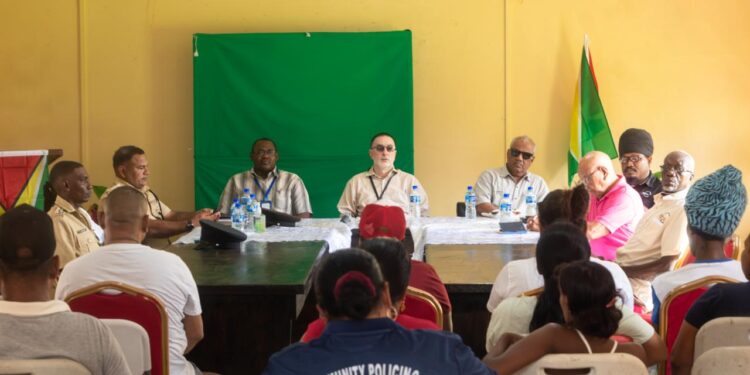
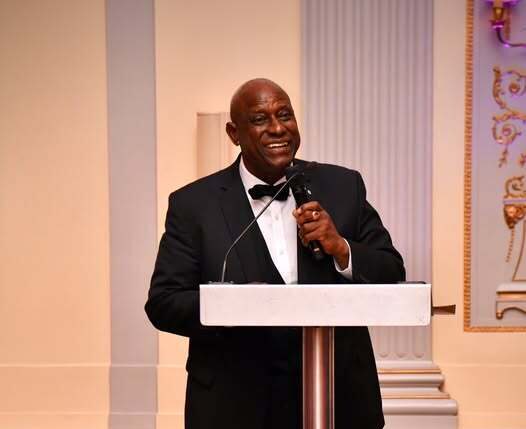
Justice Courtney Abel, a former Belize Supreme Court Judge and Head of the Department of Law at the University of Guyana, made the remarks Wednesday at the Commonwealth Magistrates and Judges Association (CMJA) Annual Conference in Kingston, Jamaica. The conference, held from September 20–24, has brought together more than 430 delegates from 44 countries to examine issues including judicial independence, access to justice and the rule of law.

Abel was speaking during a session on “Current tensions between Judicial Independence and the Rule of Law”, a topic made particularly relevant by the circumstances surrounding Persaud’s attempted journey to Jamaica.
Persaud was reportedly stopped at Cheddi Jagan International Airport last Saturday while attempting to travel through Miami to attend the conference. He was informed that his U.S. visa was under review and was unable to board the flight. He has not publicly commented on the incident.
Abel questioned whether an unexplained foreign immigration action affecting a serving judge can remain merely a private visa matter when it occurs against the backdrop of politically sensitive judicial decisions.
“When an unexplained exercise of foreign executive power materially affects a serving judge after politically sensitive decisions, at what point does a private immigration matter become a public question of judicial independence?”
He said the issue was larger than Persaud and concerned the message such an incident could send to other judges.
“The question is larger than Justice Persaud. It concerns the judge who comes next. What message does the unexplained closing of one gate send to every judge who must later approach another?”
No Proof of Link — But Questions Remain
Persaud’s visa situation has attracted attention because of a recent ruling involving the Guyana Revenue Authority and a tax matter connected to Opposition Leader Azruddin Mohamed’s imported Lamborghini.
The GRA has appealed Persaud’s decision. The U.S. indictment against Mohamed and his father, Nazar Mohamed, separately alleges that the Lamborghini was purchased for approximately US$680,000 but was presented to Guyanese authorities as costing US$75,300, resulting in an alleged avoidance of more than US$1 million in taxes. The Mohameds deny the criminal allegations.
Abel acknowledged that there is currently no proof that Persaud’s judicial ruling caused the U.S. visa review.
He nevertheless argued that the chronology and lack of an explanation warrant scrutiny.
“Suspicion is not evidence, but silence is not an answer either.”
The U.S. Ambassador to Guyana, Nicole Theriot, has said that a visa being “under review” means U.S. authorities have received information prompting reconsideration of whether an individual remains eligible for a visa. She said the U.S. Embassy in Georgetown was not aware of the specific review involving Persaud.
Attorney General Anil Nandlall has also rejected any suggestion that the Guyana Government influenced the U.S. decision, saying neither President Irfaan Ali, Vice President Bharrat Jagdeo nor himself had any influence over U.S. foreign policy or visa decisions.
“Who Protects the Judge Abroad?”
In his presentation, titled “Who Writes the Judgement? The Airport Gate. The Acting Appointment. The Algorithm,” Abel examined less visible forms of pressure that can affect judicial independence.
He argued that pressure does not always come through direct threats or explicit instructions. It can emerge through circumstances that create uncertainty or insecurity around judges while leaving formal judicial structures intact.
The airport incident, he suggested, illustrates another vulnerability faced by judges from smaller states who must sometimes travel through powerful countries to attend international conferences or conduct professional and personal business.
“A constitution may protect a judge from the executive at home. Who protects the judge from the collateral power of an executive abroad?”
The CMJA itself identifies the promotion and understanding of judicial independence across Commonwealth jurisdictions as one of the principal objectives of its conferences.
Abel’s intervention therefore places Persaud’s unexplained travel disruption within a much broader debate about whether judicial independence can be fully protected when judges operate within an international system in which foreign governments retain substantial executive power over their movement.
The visa remains officially described as “under review,” the reason has not been publicly disclosed, and no evidence has established a connection to Persaud’s judicial decisions. But Abel’s warning has shifted the focus from one judge’s disrupted journey to a larger question — how secure is judicial independence when a judge’s ability to travel can be affected by an unexplained decision of a foreign executive authority?