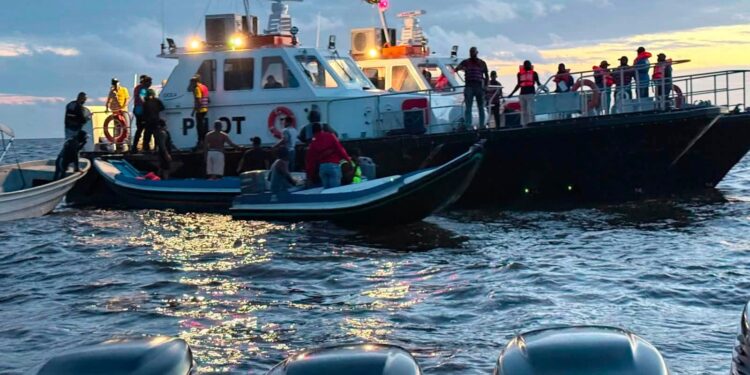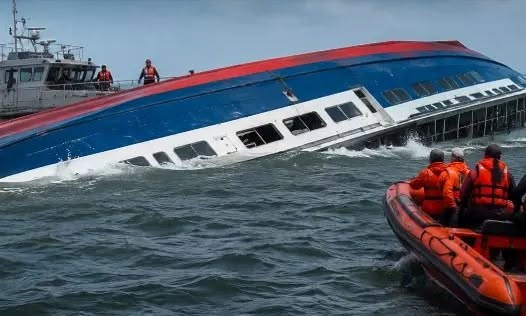
The Government has finally moved to recover the MV Barima from the seabed, weeks after initially appearing reluctant to undertake a full operation to raise the 87-year-old vessel. The decision comes only after mounting public pressure, demands from grieving families for the wreck to be raised and examined and proposal from Opposition Leader Azruddin Mohamed to fund the project in the face of government’s refusal.
In maritime terminology, “salvage” is the broader technical term for the recovery of a vessel or property in danger. It can encompass locating, stabilising, refloating, lifting, towing, recovering cargo or property, controlling pollution and other measures associated with recovering or protecting a wreck. Thus, raising the MV Barima from the seabed would be a central component of the wider salvage operation.
Prime Minister Brigadier (Ret’d) Mark Phillips announced that the Government’s Expression of Interest (EOI) process closed on Friday, August 14, – it was announced August 1- with submissions now set to undergo evaluation before a contractor is selected and negotiations begin.
“Today’s the day, bids come in. Then, they have to go through the bids. They have to do evaluation and then determine who will get the contract. Then we negotiate the contract,” Phillips said.
The announcement represents a significant shift from the Government’s position shortly after the July 18 disaster. On July 28, Phillips said the Government had not contacted anyone to raise the vessel and suggested that it was likely to remain on the seabed as a possible memorial.
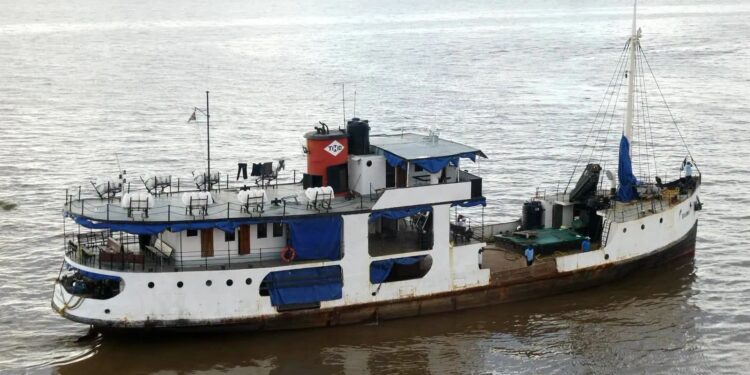
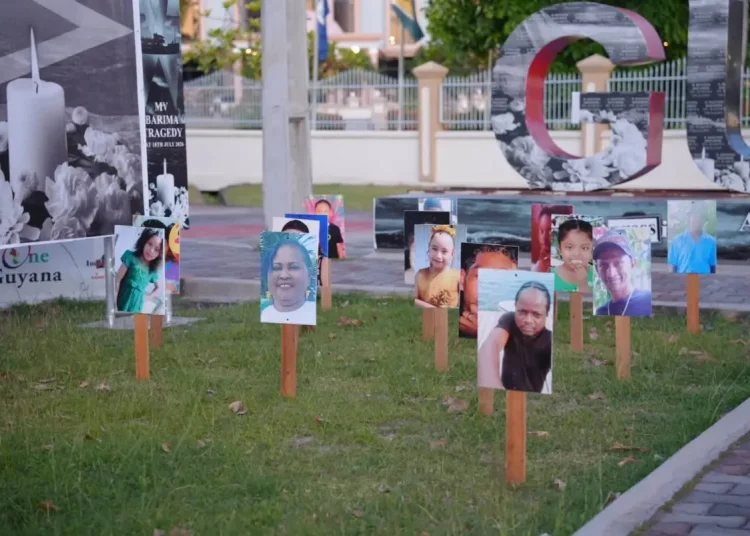
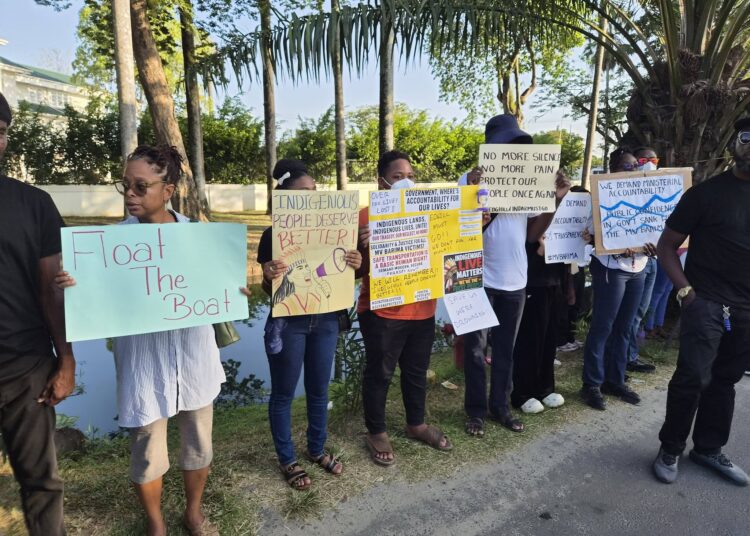
That position was met with intense opposition from grieving families and public criticism, with relatives insisting that every reasonable effort should be made to recover the wreck and any remains still inside. Opposition Leader Azruddin Mohamed also pressed forcefully for the vessel to be raised. As pressure mounted, the Government subsequently moved toward a formal salvage process.
The latest process is being managed by the Ministry of Public Utilities and Aviation through the Maritime Administration Department (MARAD). Qualified firms were invited to demonstrate their ability to undertake what is expected to be a technically difficult operation, with the wreck lying in approximately 13 to 15 metres of water.
Attorney General Anil Nandlall has previously estimated that raising the vessel could cost between US$8 million and US$10 million.
However, questions have emerged about the procurement process and whether the Government’s current EOI exercise represents the first serious attempt to identify a salvage contractor.
Kaieteur News reported on August 5 that the Government had “invited” Dutch company Koole Onshore and Koole Offshore (KMS) to submit a proposal for recovering the sunken ferry. The report stated that KMS had indicated a cost of approximately US$8 million and highlighted its International Organisation for Standardisation (ISO) certification.
KMS is part of the Netherlands-based Koole group, whose offshore division lists salvage and wreck removal among its specialised services. The company also lists an office in Suriname, which could provide a regional base for mobilising personnel and resources for work in Guyana.
The reported prior approach to KMS raises an obvious question: if a specific company had already been invited to provide a proposal and had reportedly quoted a figure close to Nandlall’s US$8 million estimate, what precisely is the role of the broader EOI process now being evaluated?
The Government’s current requirements indicate that the selected contractor will have to provide considerably more than lifting equipment. Firms must demonstrate specialised expertise, equipment and operational capacity, while outlining their proposed salvage methodology, environmental safeguards, implementation schedule, health and safety systems and qualifications of key personnel.
Importantly, the salvage operation must preserve evidence potentially relevant to the Commission of Inquiry established into the disaster.
The contractor must also demonstrate the ability to recover the vessel and maintain it upright on a barge for several weeks following the operation.
The physical recovery of the Barima has assumed enormous importance because the wreck could contain evidence relevant to questions surrounding its seaworthiness, maintenance, loading and the circumstances leading to its capsizing.
The vessel sank off Guyana’s North West Coast on July 18 in one of the country’s worst maritime disasters. Its age and condition have been central to public debate. The vessel, built in 1939, had been operating for decades on the North West route.
The Government’s earlier suggestion that the wreck could remain on the seabed therefore generated concern that potentially important physical evidence might never be examined.
Now, after weeks of uncertainty, the Government says the EOI submissions are in and the evaluation process has begun.
The critical questions are no longer whether the Barima will be raised, but who will do it, at what cost, under what contractual terms—and whether the recovery will finally provide investigators and grieving families with the answers they have been demanding.