Guyana’s rapidly expanding economy requires an education system that is equally responsive, inclusive and capable of preparing citizens for emerging opportunities.
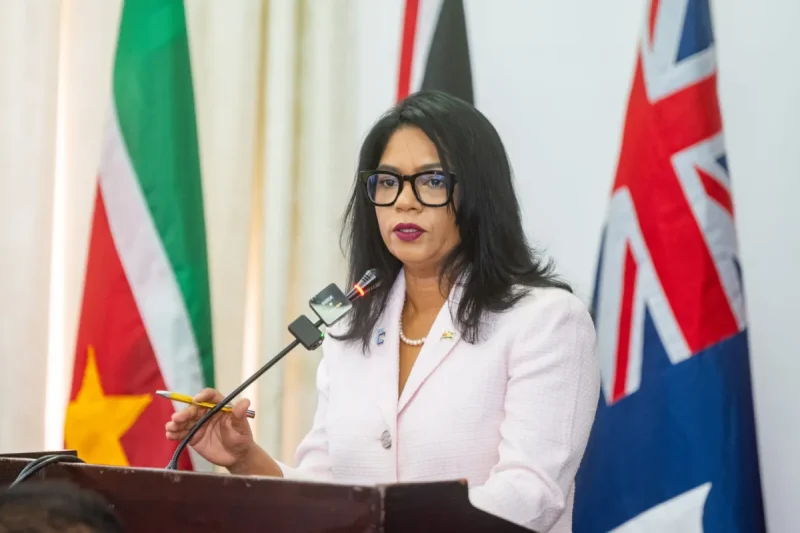
This assertion was made on Wednesday by Minister of Education, Sonia Parag, as she addressed the opening of the 52nd Meeting of the CARICOM Council for Human and Social Development (COHSOD) on Education at the Arthur Chung Conference Centre (ACCC) in Liliendaal.
She said the country’s economic and social transformation, coupled with the emergence of new industries and expanding employment opportunities, is placing greater demands on the education and skills system.
For Guyana, Minister Parag said the focus must therefore extend beyond traditional academic pathways to include technical and vocational education, apprenticeships, industry-based training and talent development.
“Our education and skills ecosystem must respond to the different talents, aspirations, and circumstances of our people. We must be able to create wholesome, well-rounded Caribbean citizens,” Minister Parag said.
She also identified foundational literacy and numeracy as critical to the country’s long-term education outcomes, noting that strong mathematical skills are essential for academic achievement, as well as science, technology, technical training, financial literacy and participation in the modern workplace.
Minister Parag highlighted Guyana’s experience with the Caribbean Development Bank’s mathematics intervention programme. She said the local implementation has already had a notable impact on grade six assessment results.
The education minister expressed optimism about the country’s upcoming Caribbean Secondary Examination Council (CSEC) results.
The minister further stressed that strengthening the teaching profession remains central to education transformation, with teachers requiring continuous professional development, appropriate tools and supportive working environments.
Further, she noted education reform must also begin early, with greater attention to nursery, primary and secondary education, while strengthening partnerships among parents, teachers and school leadership.
Minister Parag said Guyana’s approach is ultimately about creating an education system that prepares citizens for employment, as well as to adapt to a changing world, discover their purpose and contribute to national development.
DPI