The administration of the Enmore Regional Hospital has pushed back sharply against criticism from Opposition Leader Azruddin Mohamed over the treatment and transfer of a critically ill newborn, arguing that the case demonstrates Guyana’s referral system working as designed. But the circumstances surrounding the transfer also raise legitimate questions about the availability and geographic distribution of specialised neonatal care across the public health system.
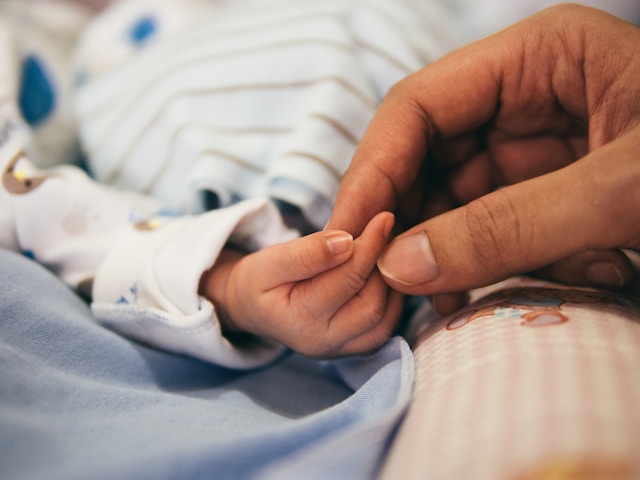
The controversy centres on a newborn who was reportedly treated initially at Bath Regional Hospital on the West Coast of Berbice in Region Five, before being transferred to Enmore Regional Hospital on the East Coast of Demerara in Region Four, and subsequently moved again to West Demerara Regional Hospital at Vreed-en-Hoop in Region Three for ventilator support and neonatal intensive care.
The sequence means that a critically ill newborn was moved across three administrative regions in search of the required level of specialised care.
Mohamed seized on the case to question whether the Government’s investment in new hospitals is translating into sufficient specialist services and equipment where patients actually need them. His criticism has now drawn an unusually forceful response from Enmore administrator Dr Badyel Bakhsh.
Bakhsh accused Mohamed of attempting to turn a medical referral into a political crisis and rejected any suggestion that Enmore lacked neonatal ventilators.
“Enmore had neonatal ventilators. At the time, they were being used to care for other critically ill babies.”
According to Bakhsh, the medical team stabilised the newborn, determined that another public facility had available capacity and arranged the transfer. The child, he said, is alive and well.
“The medical team stabilised the newborn, identified available capacity elsewhere in the public health system, safely transferred the child, and the child is alive and well.”
There is an important distinction, however, between saying that the referral system functioned and asking whether the system has sufficient capacity in the first place.
A referral system can successfully move a patient from one hospital to another while simultaneously exposing shortcomings in the distribution of specialised services. In this case, the geography is difficult to ignore: Bath in Region Five, Enmore in Region Four and Vreed-en-Hoop in Region Three.
For a newborn requiring urgent specialised care, the necessity of multiple transfers across regions raises questions about whether neonatal intensive-care capacity is sufficiently available at regional hospitals, particularly outside Georgetown and the more heavily equipped facilities.
Bakhsh maintains that no hospital can reasonably be expected to have unlimited intensive-care capacity.
“No serious person should expect every hospital to have unlimited intensive-care capacity at every moment.”
That is a reasonable principle. But it does not, by itself, settle the larger public-policy question raised by Mohamed: what level of critical-care capacity should a modern regional hospital have, and how quickly should a critically ill patient be able to access it?
The issue is especially relevant because the Government has invested heavily in expanding hospital infrastructure and has repeatedly presented new facilities as part of a transformation of Guyana’s healthcare system.
Bakhsh cited Enmore’s performance since its opening in July 2025, reporting 33,331 outpatient visits, 25,359 emergency visits, 4,337 admissions and 556 deliveries. The hospital has also performed 125 Caesarean sections and 218 general surgeries, alongside 51,583 laboratory tests, 19,073 X-rays, 2,329 CT scans and 6,035 ultrasounds.
“These are not slogans. These are patients treated, mothers delivered, emergencies managed, surgeries performed and diagnostic services provided.”
Those figures demonstrate significant activity at Enmore, but they do not necessarily answer the question of whether the facility had sufficient neonatal capacity when this particular child needed it.
Nor does the fact that the child ultimately received care elsewhere erase the concern raised by the family’s experience.
Bakhsh accused Mohamed of deliberately presenting a successful referral as evidence of systemic failure.
“Deliberately presenting a successful clinical referral as evidence of systemic failure is not accountability; it is political theatre.”
The political criticism, however, is unlikely to disappear simply because the referral was completed successfully. Public accountability also requires asking why a critically ill newborn originating in Region Five had to move first to Region Four and then to Region Three before reaching the level of care required.
Bakhsh warned that negative political narratives could undermine confidence in doctors, nurses and other healthcare workers. He also acknowledged that Guyana’s healthcare system is not perfect.
“Guyana’s healthcare system is not perfect, and no responsible government should pretend otherwise.”
That concession is important because the central issue is not whether Enmore’s staff acted appropriately. The hospital says they did. The broader question is whether the Government’s healthcare expansion has kept pace with the specialised needs of a growing population—and whether patients in Regions Three and Five should have to cross regional boundaries to obtain critical neonatal care.
Bakhsh ended his response with a direct rebuke of Mohamed:
“Mr Mohamed can manufacture a narrative. He cannot manufacture away the record.”
But the record also includes the baby’s journey: Bath in Region Five, Enmore in Region Four, and Vreed-en-Hoop in Region Three.
That journey deserves scrutiny on its own terms.
The debate, therefore, should not be reduced to whether the Enmore referral was medically appropriate. The harder question is whether Guyana’s public healthcare system has enough specialised capacity, distributed strategically across the regions, to ensure that a critically ill newborn can receive lifesaving care without being shuttled across the country in search of an available bed or ventilator.