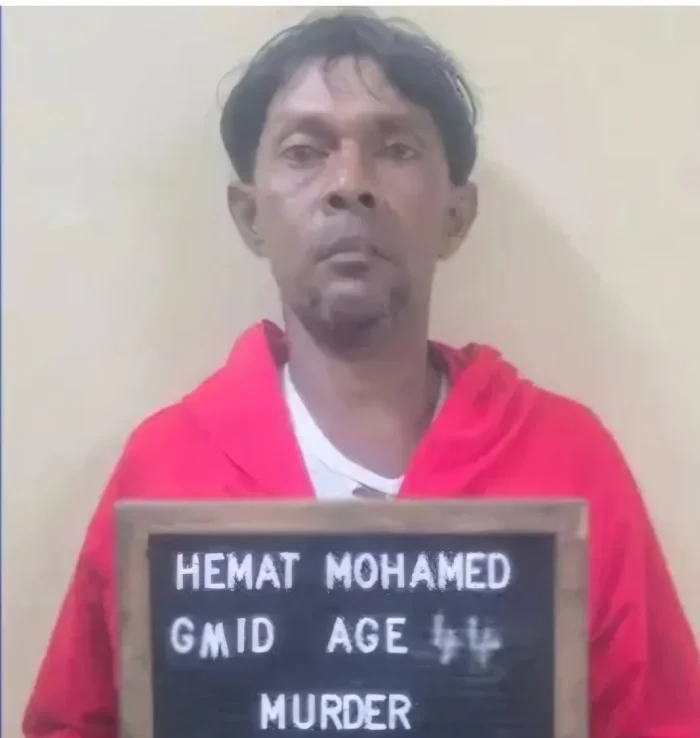
By Mark DaCosta- A community has been plunged into mourning following the grim discovery of Shavannie Hanoman’s remains in a West Coast Demerara canal, a tragedy that concluded with the apprehension and subsequent admission of guilt by her husband, Hemat Kumar Mohamed. This episode underscores a recurring, fatal trend of intimate partner violence, highlighting that despite official narratives regarding falling crime figures, the sanctity of life within our households remains under a persistent and dangerous threat.
The heartbreaking timeline began when the forty-six-year-old homemaker, a resident of De Groot-en-Klien, was reported missing by her family after she failed to return home on Wednesday June 24. By the following afternoon, her lifeless body was reclaimed from the stagnant waters of a local trench. Forensic observations initially pointed to lethal trauma to the neck, an assessment that soon crystallised into a criminal inquiry. Detectives moved swiftly to take the forty-four-year-old spouse into custody.
The suspect, under interrogation, provided a harrowing account of a domestic disagreement that spiralled into a lethal frenzy. He detailed how, in an act of horrific violence, he utilised a blade to end his wife’s life before disposing of her person in the nearby waterway. This incident, while confined to the tragic scope of a single family, mirrors the deep-seated failings of our social fabric.
It is difficult to reconcile the government’s lofty pronouncements on safety with the reality faced by our citizens on the ground. While the administration points to selective statistical downturns, the structural rot of domestic tyranny persists largely unchecked. The Ministry of Human Services and Social Security often brandishes figures — such as the claimed success of their toll-free assistance lines and substantial budgetary injections into outreach — as evidence of progress.
Yet, for those residing in rural districts like Uitvlugt, such digital or bureaucratic measures appear largely performative, failing to permeate the wall of silence and patriarchal control that traps women in cycles of abuse. Data suggesting a one-third decline in domestic fatalities during 2024 offers little comfort to those whose relatives were lost to a system that remains stubbornly incapable of pre-empting the next assault.
The prevalence of what our elders term “machismo” — the toxic belief that male dominion over a partner is a right rather than a scourge — is nurtured by an economic climate that leaves many in a state of perilous financial stagnation. Our people are not merely suffering from personal failings, but from a wider environment where the lack of genuine intervention strategies, beyond superficial marketing campaigns, allows the volatile mix of substance abuse and unchecked aggression to fester.
Domestic violence remains one of Guyana’s most persistent social challenges despite increased government spending and legislative reforms. According to the World Bank’s Gender-Based Violence Country Profile: Guyana, more than half of women between the ages of 15 and 64 have experienced at least one form of violence during their lifetime, while four in ten have suffered physical or sexual violence at the hands of an intimate partner. The report also notes that Guyana has one of the highest rates of domestic violence in the Commonwealth Caribbean and the region’s highest rate of women killed by current or former intimate partners.
While the administration of the People’s Progressive Party is quick to tout legislative tweaks like the 2024 Family Violence Act as panaceas, these appear to be little more than window dressing. Such laws lack the muscular enforcement necessary to dismantle the status quo.
A state that fails to protect its most vulnerable members is a state failing in its primary obligation. As the police force continues its processing of the case against Mr. Mohamed, the populace is left to reflect on the myriad missed opportunities for safeguarding Mrs. Hanoman. Until the authorities transition from a culture of hollow rhetoric to one of substantive, grassroots policing that genuinely dismantles the socioeconomic chains binding victims to their oppressors, these brutal headlines will inevitably continue to circulate.
True reform requires more than mere spending; it demands an abandonment of the hubris that claims victory over violence while the blood of our women still darkens the canals of our villages. For all the glossy presentations regarding public security, the tragic narrative of Shavannie Hanoman remains a sobering indictment of a policy framework that values optics over the actual safety of our citizenry.