The Road to July 18th: Linden’s Economic Struggle, Political Awakening and the Fight for Inclusion.
History rarely begins on the day tragedy strikes.
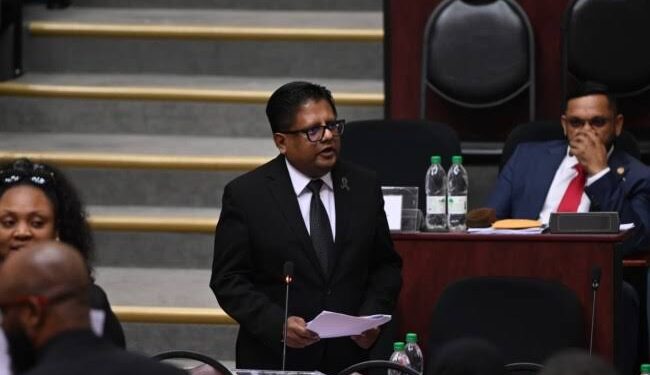
By Sharma Solomon MP (APNU)- The story of July 18, 2012, did not start on the Mackenzie-Wismar Bridge. It did not begin with tear gas, snipers on roof tops, officers with live ammunition, barricades, or protests. It began years earlier, in the homes of ordinary Lindeners struggling to survive in a town that showed oblivious signs of neglect and abandonment, without being fitted into successive national development agendas.
To understand why thousands of citizens took to the streets in 2012, one must first understand the state of Linden before the protests.
For generations, Linden was the industrial heartland of Guyana. The town built on the strength of bauxite. Linden supplied employment, created opportunities, sustained businesses and provided a sense of dignity and purpose for thousands of working-class families. Welcoming many more Guyanese from all walks of life to come and share in its prosperity. In the early days, the town with about eighteen thousand residents (18,000), the bauxite industry employed five thousand (5,000).
But by the early twenty-first century, the fortunes of the town had dramatically changed. Today, the bauxite company employs just about 600 workers, in a town of thirty-five thousand (35,000) residents.
The near collapse, contraction and retrenchment within the bauxite industry left deep scars. Employment opportunities significantly declined. Young people increasingly migrated in search of work and better opportunities. Small businesses struggled, with many having to close their doors.
Many households depended on remittances from relatives overseas, making it one of the communities, most dependent on support from abroad. Public and private investment lagged behind and what residents believed was necessary to revitalize the community. For these reasons, Linden inherited the title of “depressed community”, resulting in the EU’s intervention with the Linden Economic Advancement Programme (LEAP).
By 2011, many citizens saw and felt the economic neglect of the town. While new development projects were emerging elsewhere across Guyana, residents questioned why similar levels of investment were not reaching Region Ten.
The economic realities were visible everywhere.
Former workers of the mining sector faced uncertain futures. Youth unemployment remained a serious concern. Community organizations repeatedly raised concerns about the lack of sustainable economic opportunities. The town’s economy remained heavily dependent on a shrinking industrial base while diversification efforts moved slowly. With LEAP, not sufficient to leapfrog the community out of its economic misfortune.
Against this backdrop a new political generation emerged.
The General and Regional Elections of 2011 represented more than a contest between political parties. In Linden, they represented a growing demand for representation, accountability, and change.
A wave of younger leaders entered the political arena. Community activists, trade unionists and emerging political figures energized public discourse. Leaders who became associated with a renewed spirit of political engagement. Working alongside established national figures within the opposition movement, all helped mobilize a constituency increasingly determined to have its voice heard.
The results of the 2011 elections helped to reshape Guyana’s political landscape. For the first time since 1992, the governing People’s Progressive Party found itself with a minority government. Donald Ramotar assumed the Presidency but the opposition secured a one-seat majority in the National Assembly.
For Linden, the election results carried particular significance. Only five years earlier, in 2006, the PPP, for the first time Region 10, gained a seat causing the opposition serious setbacks in several areas. By 2011, Linden had reasserted itself as a critical political force, helping to restore parliamentary strength to the opposition and contributing to the emergence of a National Assembly in which government no longer held unchecked legislative dominance.
Many residents believed they had sent a clear democratic message.
They had participated in the electoral process. They had voted. They had exercised their constitutional rights. They expected that decisions affecting their lives would now involve consultation and engagement.
Instead, what followed became one of the most contentious policy decisions in the town’s modern history.
The announcement of substantial increases in electricity tariffs sent shockwaves throughout the community. A 900% increase. With old bills in some cases moving from G$1,500 to G$12,000.
For Lindeners, electricity was never simply another utility.
The town’s electricity system possessed a unique history rooted in the development of the bauxite industry. For decades, residents had benefited from an arrangement that reflected Linden’s role as an industrial center and the historical relationship between the community and power generation infrastructure. Some workers even deferred their wages, so as to receive this in electricity and other benefits in the future.
Consequently, many residents viewed the proposed increases not as a routine adjustment but as a fundamental alteration of a longstanding social and economic arrangement.
Families already struggling with unemployment and rising living costs saw the proposed increases as unbearable.
Business owners warned that higher electricity costs would threaten their survival.
Community leaders argued that the decision failed to account for Linden’s economic realities.
Most importantly, citizens questioned how such a major policy decision could be imposed without meaningful consultation.
In many ways, the debate transcended electricity. It became a debate about democracy itself.
Article 13 of the Constitution of Guyana speaks to the inclusion of citizens and their organizations in decision-making processes, particularly those affecting their well-being.
Lindeners argued that before implementing a measure with such profound economic consequences, the government should have engaged the people, heard their concerns, examined alternatives and sought consensus. The community did not initially call for public protests.
The leadership called for dialogue. The community called for engagement. Our representatives called for parliamentary discussion and negotiation.
We believed there was still room for reason, compromise and understanding. In several correspondence to Dr. Roger Luncheon, we received none.
Yet as tensions mounted, many residents increasingly saw that their concerns were being dismissed.
To some, the tariff increase appeared not merely insensitive but punitive. A few months after a national election, where the community was instrumental in a PPP minority government.
Whether justified or not, a growing perception emerged that Linden was being asked to bear a burden disproportionate to its economic circumstances.
What emerged was a charged and frustrating atmosphere of uncertainty and resistance.
Meetings were held. Statements were issued. Appeals were made. The people organised.
As the weeks progressed, the gap between government policy and public acceptance widened.
What began as a dispute over electricity rates was steadily transforming into a larger struggle over participation, representation and respect for citizens’ rights.
The stage was being set for one of the most defining moments in Linden’s modern history.
Next Week: Part II The Protest Movement Emerges: Negotiations, Resistance and the Road to the Mackenzie-Wismar Bridge.
Hon. K. Sharma Solomon
Member of Parliament