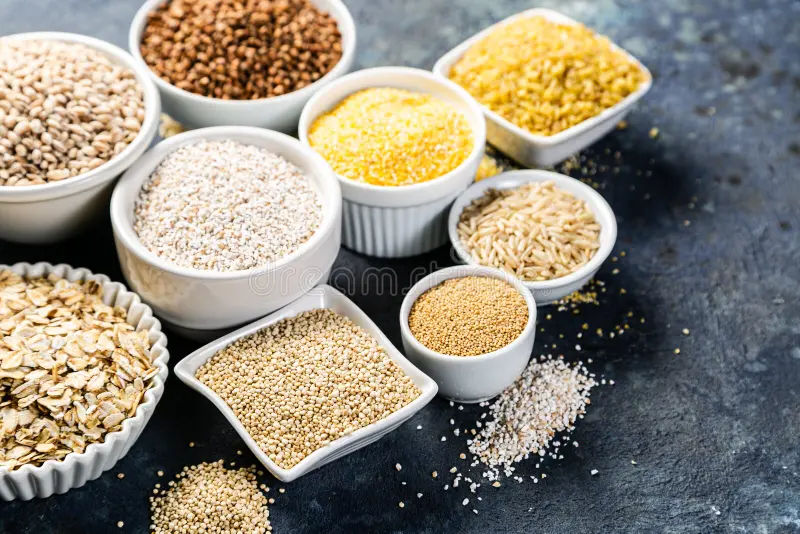
(Today) Protein may be getting a lot of attention these days, but fiber is the underrated macronutrient we should all be prioritizing, according to experts.
Fiber is best known for its digestive benefits, but it can also support cardiovascular health and lower the risk of chronic diseases and certain cancers. Eating a high-fiber diet has even been linked to a longer lifespan.
Despite this, Americans are not getting nearly enough fiber from their diets. How bad is the fiber gap? An estimated 95% of adults in the United States do not meet the recommended intake of fiber, research shows.
If you’re looking to get more fiber, skip the supplements. The healthiest way to increase your intake is by eating more fiber-rich plant foods, including fruits, vegetables and whole grains.
Among these, grains are probably the most accessible, but Americans aren’t eating enough of these either.
We spoke to dietitians about how to get more fiber from grains.
Are Whole Grains a Good Fiber Source?
Plant foods are one of the best natural sources of fiber, which includes whole grains.
“They are a great source of fiber, providing at least 3-5 grams of fiber per serving,” Julia Zumpano, a registered dietitian with the Cleveland Clinic’s Center for Human Nutrition, tells TODAY.com.
Whole grains are the edible seeds from cereal grasses, per the Whole Grains Council. In order for a grain to be whole, it must contain all three parts of the seed kernel: the bran, germ and endosperm. If it’s missing any of these, it’s a refined grain.
“Most whole grains have high levels of soluble and insoluble fiber,” Sibylle Kranz, Ph.D. registered dietitian and spokesperson for The Obesity Society, tells TODAY.com.
Soluble fiber dissolves in water to form a gel, says Kranz, which helps slows digestion. The insoluble fiber in whole grains mostly comes from the bran and outer layers around the kernels, says Kranz. It consists of cellulose, an insoluble fiber which the body can’t digest, so it adds bulk to stools.
Benefits of Fiber from Whole Grains
The fiber in whole grains feeds the good bacteria in our gut, says Zumpano, which contributes to a more diverse microbiome.
Because fiber cannot be digested or absorbed in the small intestine, it travels to the large intestine (colon) mostly intact. There, it becomes food for the beneficial microbes, which ferment the fiber and release short-chain fatty acids, says Kranz.
“These compounds have been found to be beneficial for human health, especially cardiovascular and mental health,” Kranz adds.
The insoluble fiber whole grains provide adds bulk to stool, which makes it easier to pass, improves gut motility and alleviates constipation, Kranz adds. This supports overall colon health and lowers the risk of colorectal cancer.
The soluble fiber in whole grains can help reduce cholesterol by binding to the bile in our gut, says Zumpano, so the cholesterol gets excreted before it enters the bloodstream. Lowering bad (LDL) cholesterol may reduce the risk of heart disease.
“Fiber helps regulate blood sugars by slowing down the rate of glucose in the bloodstream,” Zumpano adds.
It also helps you feel fuller for longer and suppresses appetite, says Kranz, which aids with weight management.
The Dietary Guidelines for Americans (2025-2030) recommend prioritizing fiber-rich whole grains over refined carbohydrates.
How Much Fiber Do You Need Daily?
The amount of fiber you need to eat every day varies depending on your age and sex.
Most adults should aim to get 25 to 38 grams of fiber per day, the experts note. The fiber math boils down to about 14 grams of fiber per 1,000 calories consumed, Kranz adds.
You can achieve this by eating a variety of foods, including fruits, vegetables, legumes and grains. The Dietary Guidelines for Americans recommend eating at least two to four servings of whole grains per day.
The Highest-Fiber Whole Grains
All whole grains will provide some fiber, but some pack more of this gut-healthy nutrient than others.
It’s important to read the nutrition facts and ingredients closely, as labeling of grains can be misleading, experts note.
The first (and only) ingredient should read “whole” before whatever grain you’re eating, or look for a “100% whole grain” stamp from the Whole Grain Council.
“A simple rule for identifying high-fiber grains is to look for grains that have the hulls, rather than refined versions, where the bran (hull) has been removed,” says Kranz.
Here’s which grains provide the most fiber per serving:
Bulgur Wheat
If you’re looking to get more fiber, try adding bulgur wheat to your diet. According to the Whole Grains Council, bulgur contains the highest percentage of fiber of any grain.
One cup of cooked bulgur contains about 8 grams of fiber for 150 calories, per the U.S. Department of Agriculture database.
Bulgur is an inexpensive, easy to cook source of fiber, providing nearly 30% of the daily value in one serving.
In addition to fiber, bulgur also has some plant protein and is a good source of manganese, a mineral that help supports a healthy metabolism and immune function.
It’s a staple in Middle Eastern and Mediterranean cuisines. Mix bulgur into a salad with herbs and tomato (tabbouleh) or make patties with bulgur and spiced ground meat called kibbeh.
Barley
Barley is another underrated whole grain that’s loaded with gut-healthy fiber.
One serving of cooked, pearled barley has about 6 grams of fiber and 190 calories.
Barley is a nutritional powerhouse, full of prebiotic fiber to feed the good bacteria in our gut, according to dietitian and TODAY.com nutrition editor, Natalie Rizzo.
It’s especially rich in a type of soluble fiber called beta-glucan, which is “clinically proven to reduce cholesterol,” says Kranz. Barley also has protein to support muscle growth, B vitamins and magnesium, which supports a healthy heart and blood pressure.
Barley is a delicious addition to salads or substitute for rice in a hearty risotto.
Oats
If you’re looking to increase your fiber intake, oats are a no-brainer. This versatile and nutrient-dense whole grain is one of the healthiest staples to keep in your pantry.
One half-cup serving of dry, rolled oats, (which cooks into one cup of oatmeal) provides about 4 grams of fiber for 150 calories.
Oats are a favorite grain among dietitians due to their benefits for heart health, blood sugar and weight management.
They’re rich in both insoluble and soluble fiber, including cholesterol-lowering beta-glucan, says Kranz. Plus, eating oatmeal regularly can help with constipation.
Enjoy a bowl of oatmeal topped with berries for breakfast, prep overnight oats or add oats to nutritious muffins.
Buckwheat
Buckwheat — which is technically a seed but considered a whole grain or a “pseudograin” — is another fiber-rich option. It’s hardy, nutty and loaded with nutrients.
One serving of cooked buckwheat grouts has about 4.5 grams of fiber for 150 calories.
The fiber in buckwheat can help aid with digestion, support a healthy gut microbiome and promote satiety, the experts note.
Buckwheat is a “super grain” that’s rich in resistant starch, a type of complex carbohydrate which acts like fiber and stabilizes blood sugar, says dietitian Frances Largeman-Roth. It’s also a good source of complete protein, vitamins, minerals and antioxidants.
Despite its name, buckwheat isn’t a type of wheat, so it’s 100% gluten-free.
You can find buckwheat in cuisines all over the world, from kasha in Eastern Europe to soba noodles Japan. Enjoy buckwheat in a salad, porridge or add it to soups.
Other Healthy Whole Grains
Additional healthy high-fiber whole grains include spelt, millet and teff, which can be eaten in their whole grain (berry) form but are commonly used ground into a flour.
Spelt and millet are often enjoyed as hardy porridge or added to breads. Teff is used to make injera, a spongy, tangy fermented flatbread that’s a staple in Ethiopian and Eritrean cuisines.
Amaranth and quinoa are other “pseudograins” which offer impressive amounts of complete protein, along with fiber.
Popcorn is also considered a whole grain and packs around 3–4 grams of fiber per serving, making it a healthy, gut-friendly snack.