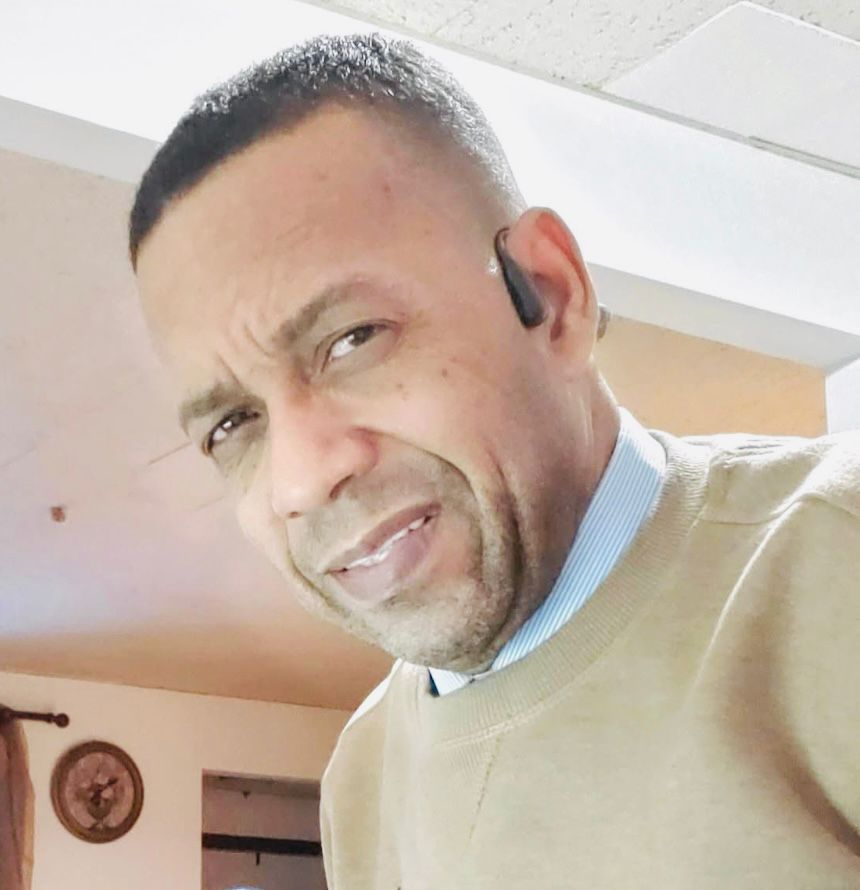
Social activist, broadcaster and host of Straight Up with Mark Benschop, Mark Benschop, has called on Guyana’s parliamentary opposition to move beyond press conferences and parliamentary speeches and mount a sustained grassroots campaign against what he views as a Government operating with minimal accountability and little effective resistance.
Speaking with Village Voice News, Benschop said the country’s political opposition must urgently place “boots on the ground” and engage citizens directly if it hopes to challenge a governing administration that continues to secure billions of dollars in public spending with limited scrutiny.
“Those members of parliament in the opposition need to do more to confront the P[People’s Progressive Party] PPP regime,” Benschop declared.
“If it cannot be done in Parliament, then let it be done in the people’s parliament, which is the streets. They have to talk with their boots. They just cannot talk by issuing press releases on these things.”
His comments came days after the Government returned to the National Assembly on June 5, ending a hiatus of more than 100 days, to seek approval for an additional GY$54.89 billion through Supplementary Financial Paper No. 1 of 2026.
The request followed the passage of the GY$1.558 trillion National Budget on February 14—the largest in Guyana’s history—and brought total approved expenditure for the year even higher amid an unprecedented flow of oil revenues into state coffers.
For Benschop, the parliamentary sitting reinforced concerns that the National Assembly is no longer serving as an effective check on executive power.
“There was a call the other day, and rightfully so, for Parliament to be reconvened,” he said.
“Parliament reconvened and only to spend less than three hours. And what the PPP walked away with [was] almost $55 billion more.”
The veteran activist questioned whether the brief sitting delivered the accountability many Guyanese expected after months without parliamentary debate.
“And right after Parliament, those who were calling for Parliament to be reconvened remained silent,” he observed.
“It seems as though the purpose of the parliamentary reconvening is to hand almost $55 billion to the PPP regime. And that’s it.“
His remarks tap into a broader national conversation about governance and oversight during an era of unprecedented public spending.
Since first oil production in December 2019, Guyana has generated billions of U.S. dollars in petroleum revenues and royalties, financing record national budgets and an ambitious programme of infrastructure development. Yet concerns about transparency and accountability have persisted.
Auditor General reports in recent years have repeatedly highlighted issues including overpayments on public contracts, missing supporting documents, weak procurement practices, unreconciled transactions and shortcomings in financial controls across government agencies and regional administrations.
Against that backdrop, Benschop said many citizens are left wondering whether adequate scrutiny is being applied to the expenditure of public funds.
“The question is, where has the money gone? What is the PPP doing with the people’s money?” he asked.
He argued that the scale and frequency of supplementary spending demand more rigorous public explanation and debate.
His sharpest criticism, however, was reserved for the opposition.
Benschop argued that parliamentary interventions alone are insufficient in a political environment where the Government commands a majority and can routinely secure approval for its legislative agenda.
“The people on the ground need proper representation,” he said.
“Those opposition parliamentarians have to hit the streets. They have to have boots on the ground in order to have change in the country.“
The comments reflect a growing view among sections of civil society that political engagement must move beyond Georgetown and into communities where citizens are grappling with rising living costs, concerns about public services and questions about whether the country’s oil wealth is translating into tangible improvements in their daily lives.
Benschop suggested that the current parliamentary configuration leaves little room for meaningful challenge to executive decisions.
“Parliament is a farce. It’s just a masquerade. It’s a puppet show,” he said.
He also questioned whether the country’s democratic institutions are functioning in a manner that adequately protects citizens’ interests.
“So, I’m not sure that democracy is alive and well in Guyana. I’m not sure that the people’s interests are being adequately represented.“
The concerns emerge amid wider public debate about the frequency of parliamentary sittings, the effectiveness of legislative oversight and the functioning of accountability mechanisms during a period of rapid economic transformation fueled by oil revenues.
For Benschop, the issue extends beyond one supplementary budget or one parliamentary sitting.
He believes Guyana is witnessing the concentration of enormous financial and political power at a time when the institutions responsible for scrutinizing that power appear increasingly ineffective.
In those circumstances, he argues, the responsibility falls on opposition parties to build a visible presence among citizens and create pressure from outside the parliamentary chamber.
“Change based on the composition of this Parliament cannot come about,” he said.
“The people cannot get change. They cannot get democracy. They cannot get their constitutional rights respected in this current makeup of Parliament.“
His warning amounts to a challenge not only to the Government but also to those elected to oppose it: in a country experiencing an unprecedented oil-fueled transformation, accountability will not emerge automatically. If Parliament is unable or unwilling to provide it, Benschop argues, then the battle for transparency, representation and democratic governance must be taken directly to the people.