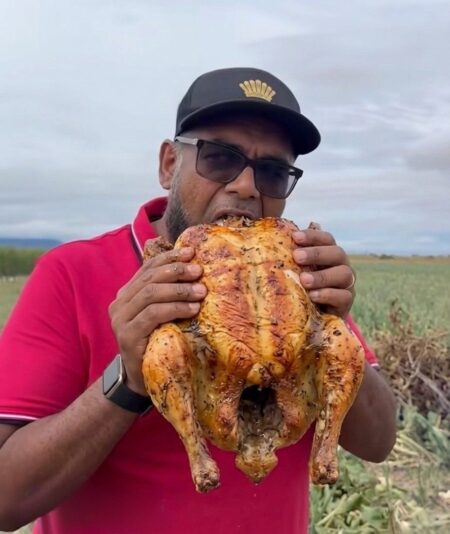
A social media image of President Irfaan Ali biting into a whole roasted chicken has triggered a wave of public criticism, as citizens highlight the stark contrast between displays of abundance and the daily struggles faced by many Guyanese.
Among the reactions, citizen Rudolph Gonsalves wrote, “Kids are going to bed hungry and this guy is doing a photo shoot of himself biting down on a roast chicken,” a comment that has resonated widely and reflects growing public frustration.
The controversy comes against the backdrop of Guyana’s rapidly expanding oil economy. Since production began in late 2019, the country has earned approximately US$8 to US$8.5 billion in government revenue from oil and gas, marking one of the fastest economic transformations in the region.
Despite this surge in national income, recent data suggests that the benefits have not been evenly felt. According to the 2025 Inter-American Development Bank report, Ten Findings about Poverty in Latin America and the Caribbean, an estimated 58% of Guyanese live below the poverty line, surviving on less than US$6.85 per day. The report reflects Guyana’s updated status as a middle-income country, which raised the poverty threshold from US$5.50 to US$6.85 per day.
Additionally, 32% of the population is classified as living in extreme poverty, subsisting on less than US$3.65 daily—placing Guyana among the countries with the highest poverty rates in the region despite its oil-driven growth.
The image of the president has fueled debate over leadership optics and sensitivity, particularly at a time when many households continue to face economic hardship. Critics argue that such public displays risk reinforcing perceptions of inequality and disconnect, while supporters have urged that the reaction be viewed in broader context.
As Guyana continues to navigate its oil wealth, the incident has added to ongoing national discussions about how economic gains are distributed and how public leadership is perceived during a period of significant transformation.