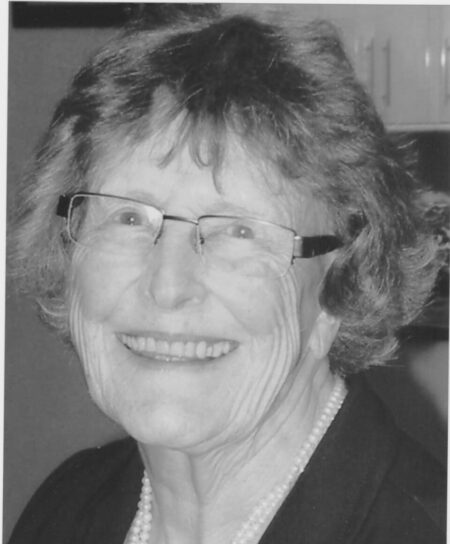
With Guyana observing Women’s History Month, the spotlight turns to Dr. Patricia “Pat” Rose—a pioneering physician whose decades of service not only transformed the treatment of Hansen’s disease (leprosy) but also confronted and dismantled the deep-seated stigma that once condemned patients to isolation and neglect.
Though widely known as Guyana’s First Lady between 1966 and 1969 through her marriage to the late Governor-General Sir David Rose, her most enduring contributions came in the years that followed—within clinics, hospitals, and communities across the country.
Born in 1923 in Worcestershire, England, Dr. Rose pursued her medical training at the Royal Free Hospital School of Medicine in London. She migrated to then British Guiana (Guyana) in 1949, where she entered the public health system and began what would become a lifelong commitment to medicine in the Caribbean.
Her early years in Guyana coincided with a period when Hansen’s disease—commonly known as leprosy—was both poorly understood and heavily stigmatised. Patients were often isolated at the Mahaica Leprosy Hospital, cut off from their families and communities.
Dr. Rose would go on to challenge that model.
Serving for nearly two decades at the Mahaica institution and later leading the country’s Leprosy Control and Dermatology Unit, she helped shift the approach to care from institutional isolation to community-based treatment. Patients were increasingly treated within their own communities, a move that significantly reduced stigma while improving access to care.
Her most significant contribution came during the 1970s and 1980s, when she led efforts to introduce multidrug therapy (MDT) in Guyana. Under her guidance, Guyana became the first country in the world to implement the treatment on a national scale—an achievement that dramatically improved recovery rates and reduced transmission of the disease.
Medical professionals who worked alongside her have credited Dr. Rose not only with advancing treatment protocols but also with mentoring generations of Guyanese healthcare workers, particularly in dermatology and infectious disease management.
Following her years of service in Guyana, Dr. Rose continued her work internationally with Lepra, a global organisation dedicated to the fight against leprosy. In that capacity, she served as a clinical consultant and contributed to programmes in countries including India, Bangladesh, and Brazil, while also participating in research and editorial work for the journal Leprosy Review.
Beyond medicine, Dr. Rose’s contributions extended into literature and cultural reflection. After returning to England in 1988, she began writing stories and poetry inspired by her experiences in Guyana, maintaining a lasting connection to the country she served for nearly four decades. Her dual identity—as both a public figure and a physician working among society’s most vulnerable—gave her a unique voice in documenting Guyana’s social and medical history.
Despite her groundbreaking achievements, her work has often remained under-recognised in mainstream narratives of Guyana’s development. Yet her impact is clear: she introduced modern, effective treatment for leprosy, expanded outreach-based healthcare services, trained and mentored Guyanese medical professionals, and helped reduce the stigma associated with Hansen’s disease. Her nearly 18 years of service at Mahaica alone stand as one of the longest sustained medical commitments by a foreign-born physician in Guyana’s history.
As Women’s History Month highlights the contributions of women to national development, Dr. Patricia Rose’s legacy stands out as one of quiet but profound influence. Her work not only advanced medical practice but also restored dignity to countless patients, leaving an enduring mark on Guyana’s public health system.
Sources:
- Former Guyana’s First Lady Dr. Pat Rose: pioneering medic, doctor who cared for patients with Leprosy- Village Voice News
- Dr. Patricia Rose- Lepra
-
Dr Pat Rose, former First Lady of Guyana, marks 100th birthday- Hexman Courant
-
Lady Rose writing stories, poetry about here life here- Stabroek News
-
Lepra’s pioneering female scientists- Lepra
- World Wide Web