

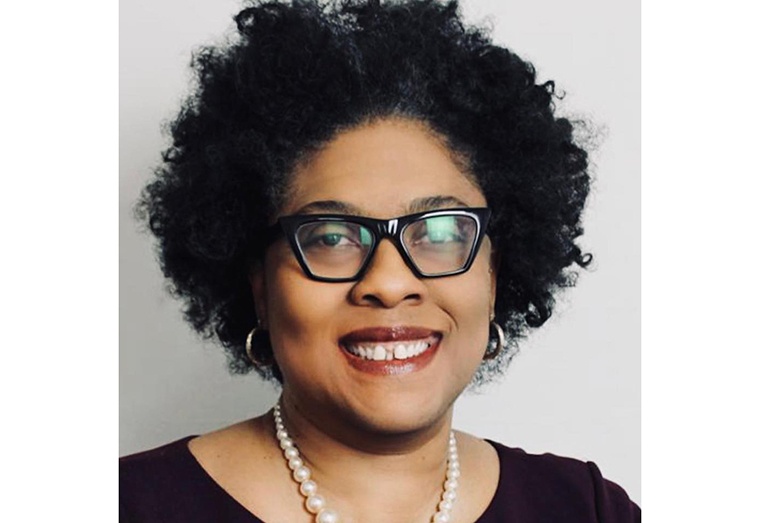
Education Technology doctoral candidate Karen Abrams is warning that many children begin falling behind academically long before upper primary school, stressing that early intervention at home and in classrooms is critical to reversing learning gaps.
In a recent op-ed published in Kaieteur News, Abrams said her dissertation research examines why students struggle, how early these challenges emerge and what strategies can effectively help them recover. She noted that while the message is urgent, some of the parents most in need of the information may face barriers such as limited literacy, economic pressures or lack of internet access.
“I write this week [January 4] knowing that many of the parents who most need these words may never read them. Some are still learning to read themselves. Some are busy surviving. Some have no data or device. If you are reading this, I ask you to share it,” Abrams wrote, adding that children are “falling behind early” and that waiting until Grade 6 to intervene makes recovery more difficult.
Abrams clarified that when educators describe students as being behind, it does not reflect intelligence but rather gaps in foundational skills such as recognising letters and sounds, blending words, understanding numbers and grasping basic concepts. These weaknesses often emerge in nursery and early primary years and intensify over time, leading to frustration, reduced confidence and disengagement.
Her concerns align with broader data on learning outcomes in Guyana. Studies suggest learning poverty stands at about 43 per cent, meaning many children struggle to read and understand a simple text by age 10. National assessments also point to persistent weaknesses in phonological awareness, vocabulary, decoding and number sense, with disparities more pronounced among learners in rural, hinterland and low-income communities where access to books, trained teachers and early education is limited.
Regionally, Guyana’s challenges mirror a wider learning crisis across Latin America and the Caribbean, where learning poverty rose sharply after the COVID-19 pandemic and international assessments indicate large proportions of students fall below minimum proficiency levels in reading and mathematics.
Abrams pointed to international research showing that learning disparities can begin even before formal schooling, particularly among children exposed to fewer words and conversations in early childhood. She noted that the gap widens once school begins, with strong readers practising more while struggling readers disengage, leaving many students facing significant challenges by Grade 4 when the curriculum shifts from learning to read to reading to learn.
Despite the concerns, Abrams emphasised that research clearly identifies effective solutions, including daily reading aloud, meaningful conversations, songs, storytelling, sound games and everyday counting activities. She noted that these interactions are simple yet powerful tools for strengthening foundational skills.
For students already struggling, Abrams stressed the importance of targeted support, including quick assessments to identify specific gaps and explicit daily instruction delivered through small groups or high-dosage tutoring. She also underscored the role of attendance, motivation and background knowledge in improving academic outcomes.
Abrams reflected on her own experience as a student, recalling how encouragement from a teacher helped change her trajectory. “I do not know where Ms. Blair, my Second Form French teacher at St Roses, is today, but I remember her clearly,” she wrote, recounting how the teacher’s confidence in her abilities motivated her to excel on a quiz.
At the policy level, Abrams said Guyana already has a framework for improvement, calling for stronger early childhood education, alignment of curricula with frequent formative assessments, expanded literacy and numeracy tutoring in early grades and timely remediation before students transition to secondary school.
She also recommended blended learning approaches where connectivity is limited and instruction that respects home language while supporting mastery of the language of schooling.
Addressing parents directly, Abrams emphasised that while children with fewer resources may start behind, simple daily interactions can make a significant difference. She encouraged reading aloud, engaging in sound games, counting during routine activities and asking questions that prompt children to explain their thinking.
Abrams also referenced targeted intervention programmes such as those offered through Pathway Online Academy, which she said use assessments and personalised lessons to address root learning challenges across Kindergarten to Grade 12 levels.
“We cannot wait for perfect internet or a shelf full of books in every home,” Abrams wrote. “We can start tonight with one story, one conversation, one small skill made solid.”
She concluded that early identification of gaps, combined with consistent support at home and in school, is essential to ensuring more children complete secondary education equipped to shape their own futures rather than be limited by early learning deficits.





![A container ship leaves Qingdao Port, Shandong province. [YU FANGPING/FOR CHINA DAILY]](https://villagevoicenews.com/wp-content/uploads/2025/04/67ee006ca3104d9fd1552d5d-120x86.jpeg)
