Yesterday, the world marked International Mother Language Day 2026. Guyanese scholar Dr. Terrence Blackman has used the occasion to urge a deeper national reflection on the fate of Indigenous languages, arguing that their erosion risks the disappearance of vital knowledge systems embedded in Guyana’s cultural and ecological heritage.
Posing the question, “What happens to the wisdom when the language that carries it disappears?” Blackman drew on an Amerindian maxim describing the four elements of true life — fresh air, pure water, sunlight and common sense — to highlight how ancestral knowledge has traditionally been transmitted orally across generations. He stressed that the issue is not merely cultural but practical, especially as Guyana navigates rapid economic transformation driven by oil production.
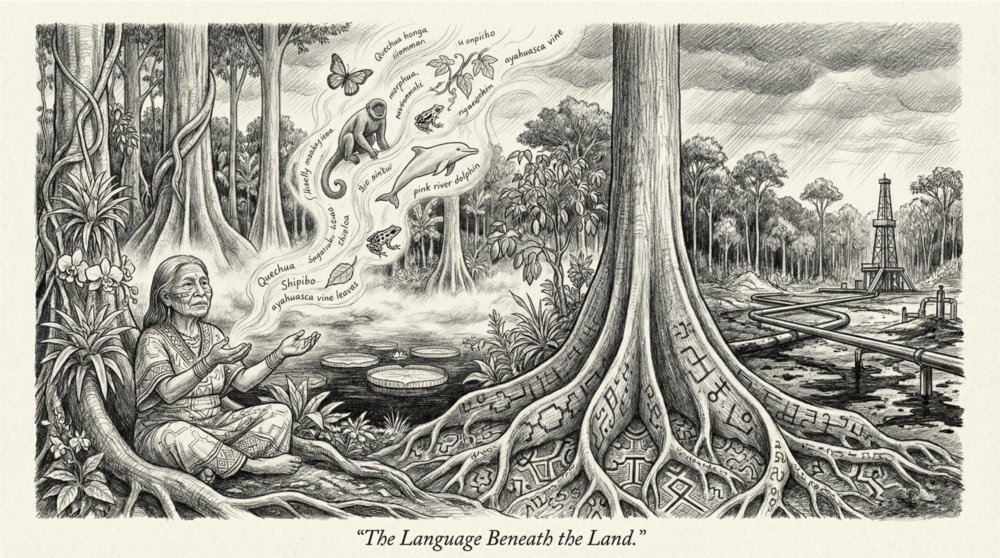
Blackman pointed to the stark contrast between the country’s booming oil economy and the fragile state of its nine Amerindian languages, including Macushi, Wapichan, Akawaio, Patamona, Wai-Wai, Lokono, Carib, Warao and Arekuna.
While oil revenues have expanded Guyana’s fiscal capacity, he argued that linguistic decline represents the loss of “operational knowledge” — environmental insight and lived experience accumulated over centuries of interaction with the forest and savannah.
Referencing earlier work with Sydney Allicock and Dr. Carolyn Walcott, Blackman acknowledged that language has often been framed as a barrier to Indigenous participation in economic opportunities. However, he said that perspective must be broadened to recognise language itself as a form of capital. A development path that prioritises resource extraction while allowing Indigenous languages to fade, he warned, risks undermining sustainable stewardship of Guyana’s natural environment.
Citing limited speaker numbers for some languages, including Lokono and Carib, Blackman described the situation as urgent and called for stronger policy attention, data collection and educational initiatives to preserve linguistic diversity. Ultimately, he argued that protecting mother languages is inseparable from safeguarding the knowledge, identity and ecological understanding they carry — a lesson Guyana must heed as it charts its development future.
For more on this story, read here