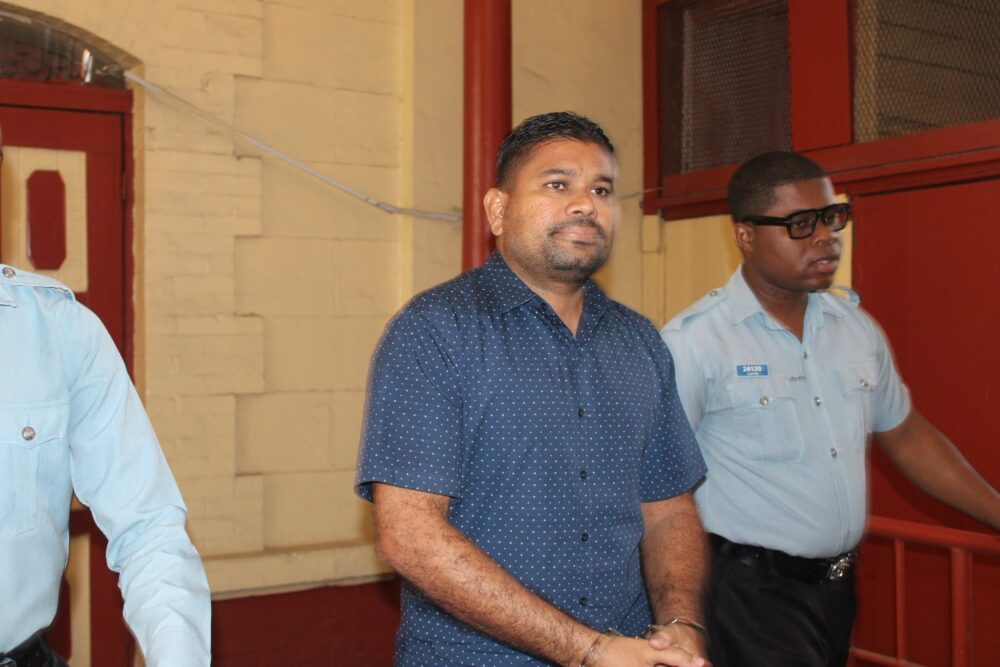
By Mark DaCosta- Oposition Leader Azruddin Mohamed will stay in prison after the High Court on Friday, 13 November, refused him interim bail. The court also moved his challenge to the remand decision onto a fast track, with a full hearing set for Tuesday, 17 November.
Justice Priscilla Chandra-Haniff reasoned that releasing Mohamed now would effectively give him the very outcome he wants decided after full argument. She chose to compress the timetable instead. The state must file its defence by 10:00 on Monday, 16 November, and the applicants must answer by 18:00 that evening. Each side will then have 45 minutes of oral argument, and lawyers may not recycle written points or raise fresh grounds. She also rejected the state’s attempt to have the case thrown out.
The case was brought by his mother, Bonita Mohamed, who is contesting the 30 October ruling of Magistrate Abigail Gibbs. The magistrate refused bail and remanded Mohamed and Police Constable Ryan Greene over the alleged illegal distribution of government surveillance footage. She said she feared both men might commit another offence if released. Both men pleaded not guilty. The charge falls under the Cybercrime Act, and the opposition APNU coalition has noted that it involves no violence. The judge described complaints about prison conditions as serious but disputed. She noted they arose after the magistrate’s decision, so they could not alone show that decision was unlawful.
Mohamed’s troubles extend beyond this case. The United States sanctioned him in June 2024 and seeks his extradition, and the Chief Magistrate kept his extradition bail in place in early November. The magistrate also weighed his existing criminal matters when refusing bail.
The ruling sets two principles against each other. Our constitution protects personal liberty and the presumption of innocence, and Mohamed has not been convicted of anything. Courts must also protect the integrity of proceedings and avoid granting final relief by a side door. By refusing interim bail while ordering a rapid hearing, the judge tried to honour both.
For our democracy, the stakes reach beyond one man. The Opposition Leader is the principal institutional check on government in our nation, and his confinement, whatever the legal merits, will shape how citizens view the fairness of the justice system. Public trust depends on cases involving political figures being decided swiftly, transparently and by the same standards applied to every other Guyanese. Tuesday’s hearing is a chance to show that those standards hold. Whatever Justice Chandra-Haniff decides, a clear, reasoned judgment will matter as much to confidence in our institutions as the outcome itself.