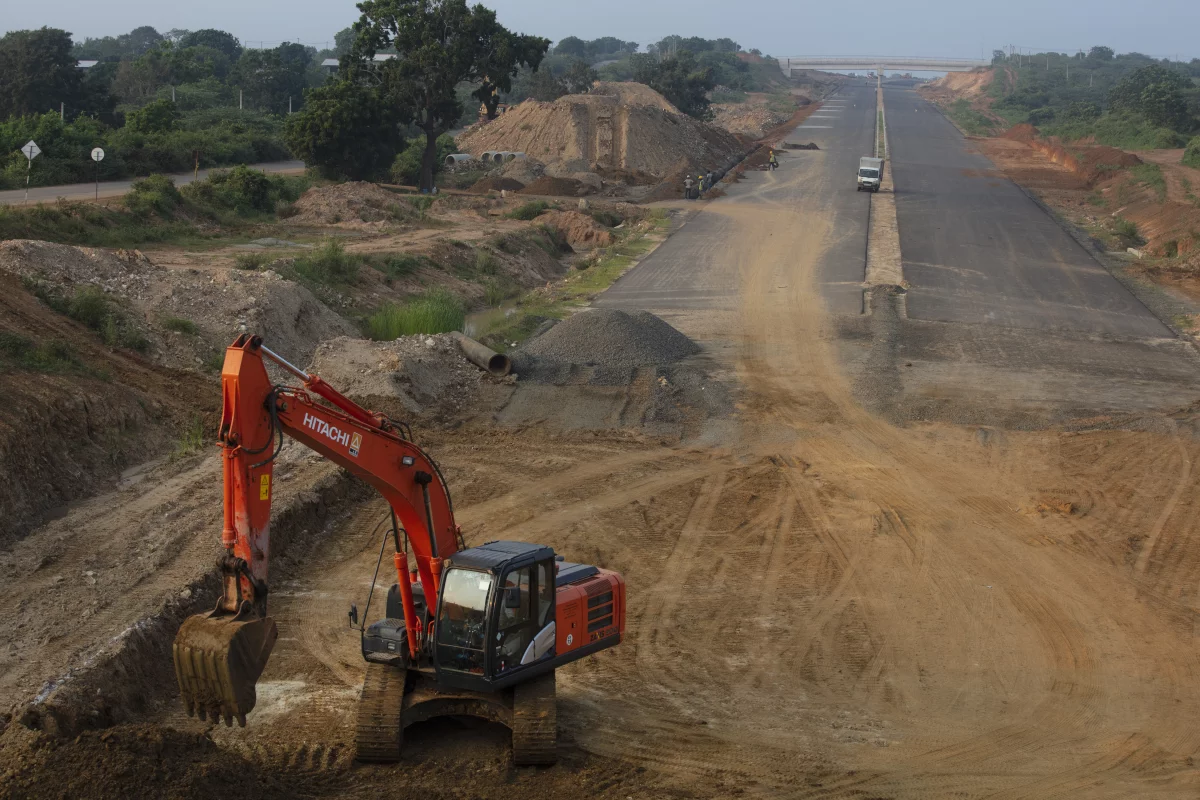
npr news – China has dramatically curtailed its lending in recent years. Now, it’s emerging as the largest debt collector for many of the world’s poorest nations — a shift that threatens to undermine poverty reduction efforts and fuel instability, according to a new report.
Lending for China’s Belt and Road Initiative — which includes funding for a massive series of new railways, ports and roads in the developing world — began winding down before the COVID-19 pandemic, according to Peak repayment: China’s global lending, released this month by Australia’s Lowy Institute, a foreign policy think tank. The report points to diplomatic pressure within China to restructure unsustainable debt and to recover outstanding debts from abroad for the change.
Skeptics have argued for years that China’s lending to the developing world is aimed at laying a debt trap for borrowing governments. But Deborah Brautigam, director of the China-Africa Research Initiative at the Johns Hopkins University School of Advanced International Studies, says it’s useful to view China’s lending as driven more by commercial logic than overt political leverage. She says lenders in China are in the process of learning from their past missteps.
“The Chinese are on a steep learning curve as far as debt restructuring goes,” she says. “We’re going to be seeing a transition: much more care about debt sustainability.”
Brautigam says the first phase of Chinese lending was led by the state-owned China Export Import Bank, but as those loans have tailed off, commercial banks have taken their place. “They were hit by the pandemic, by the difficulty some countries were having in repaying these debts, but they are still continuing to explore opportunities overseas,” she says.
As of 2023, more than a quarter of the external debt in developing countries was owed to China, the report says. Collectively, those countries are expected to pay at least $35 billion to Beijing this year alone. These include nations throughout Africa, South America and the Pacific Islands, as well as South, Central and Southeast Asia, the report says.
Not all countries who owe money have been affected by China’s retrenchment on lending: namely, some of China’s neighbors, and developing countries that possess critical minerals or battery metals seen as vital by Beijing, such as the Democratic Republic of Congo, with significant reserves of lithium and nickel. But for others that borrowed from Chinese financial institutions in the 2010s, debt servicing is now “crowding out the development spending,” according to the report. A 2023 Associated Press analysis of the dozen countries most indebted to China — including Pakistan, Kenya, Zambia, Laos and Mongolia — found debt servicing payments were consuming vitally needed tax revenue for schools, electricity, food and fuel.
“The burden from Chinese debts coming due is also part of a broader set of severe headwinds, particularly for the poorest and most vulnerable economies,” the Lowy Institute report says.
Those headwinds include the impact of U.S. tariffs, and the fact that “an increasingly isolationist United States and a distracted Europe are withdrawing or sharply cutting their global aid support,” the report says.
One big issue, according to Brautigam, is that U.S. foreign assistance has come by way of grants since the end of the last debt crisis. But China’s assistance is almost entirely in the form of loans.
Those loans typically had 3 to 5 year grace periods which began to expire in the early 2020s, the report says. “Without fresh concessional financing or coordinated relief, the squeeze on budgets [in debtor countries] will tighten further, deepening development setbacks and heightening instability risks.”
That squeeze has already had repercussions, particularly in Africa. For example, Chinese lending accounts for approximately 10% of external debt in Kenya, where a China-funded Nairobi-Mombasa rail line has come to be viewed by some as corrupt and underperforming, according to a working paper published in March by AidData, a research lab at William & Mary.
Chinese debt also became a key election issue there. William Ruto won Kenya’s presidency in part by employing populist appeals that stoked anti-China sentiment. The case of Kenya, “shows how foreign debt can affect the public in a debtor country and potentially influence domestic politics and international relations,” AidData’s working paper stated.
In 2022, Sri Lanka also faced the consequences of massive debt: On the verge of financial collapse, it defaulted on its external debt and was forced to restructure the $4.2 billion it owed to China, its largest lender. Such a default makes it harder for a country to borrow and can undermine confidence in the currency and economy.