A government has every right, and a solemn duty, to defend its people and its power grid from sabotage. When the head of state declares that intelligence reveals a conspiracy to destabilise our nation, and the public is asked to accept it largely on trust, the line between defending the republic and policing politics becomes dangerously thin. Our country needs vigilance without exaggeration, and firmness without the convenient conflation of dissent with danger.
The facts as they stand deserve a fair hearing. A petrol bomb was thrown at a Guyana Power and Light substation at Good Hope, East Coast Demerara, at about 22:45 on Tuesday 10 November 2026. The utility says CCTV captured two individuals, one of whom hurled the improvised firebomb into the energised switchyard. That is a serious crime against infrastructure on which every household and business depends, and no sensible citizen would argue otherwise. Two days later, in a national address, President Irfaan Ali said intelligence pointed to a centrally coordinated conspiracy to harm or intimidate people, damage property and disrupt essential services. He warned that the “intellectual authors” would be pursued, and that charges could include conspiracy and terrorism-related offences.
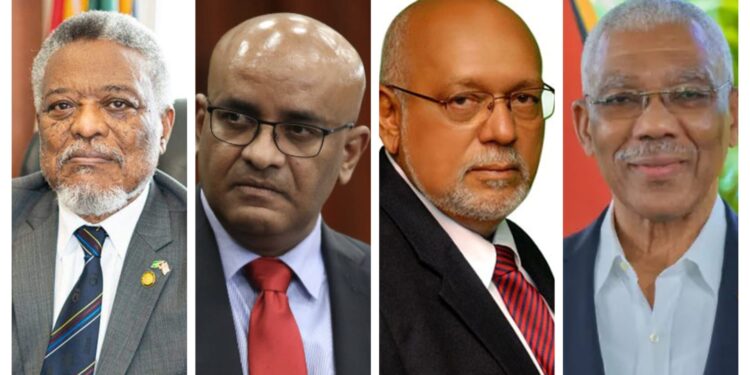
Here the editorial question begins. Terrorism is the gravest word in the statute book. It carries a weight of public fear and legal consequence that ordinary criminal charges do not, and that weight is precisely why it must be handled with discipline. Mr Ali did not name Opposition Leader Azruddin Mohamed, yet his remarks landed amid heightened tension over the legal proceedings against that opposition figure. When a presidential address threads together online incitement, ongoing court matters and physical sabotage, listeners are invited to draw a line between them. Whether that line exists is a matter for evidence, not insinuation.
The evidence, so far, is thin in public view. Six people have been charged with terrorism over the attack. Among them is a candidate of the We Invest in Nationhood party, which has denied any involvement and warned against tying the party to criminality. A magistrate granted all six bail on 18 November, and police promptly detained three of them again over an alleged school arson. The evidence in the terrorism case has not been made public. Bail is no verdict of innocence, and a re-arrest is no verdict of guilt. Both remind us that allegations are not proof, and that a nation watching this drama is entitled to see the case tested openly in court.
Nor should we ignore the broader climate. The President has previously warned that intelligence from Guyana’s partnerships had exposed criminal networks linked to destabilisation efforts in the region. The Venezuelan border controversy and the regional military posturing are real concerns, and Kaieteur News reports that the Good Hope attack has been linked to Tren de Aragua, a Venezuelan crime syndicate. If that is established, it is a matter of genuine national security. But a link to a foreign gang, a quarrel with the opposition and a political rally are three different things, and a responsible state keeps them apart.
The dangers of blurring them are not abstract. First, rhetoric inflates threats until every critic appears a saboteur, and citizens grow reluctant to protest, question or organise lest they be swept into a net cast for criminals. Second, overheated labels corrode the credibility of the security services. Every unproven claim of a plot makes the next genuine warning harder to believe. Third, terrorism charges that collapse under judicial scrutiny leave the accused stigmatised and the public cynical. Finally, a government that cries conspiracy while its opponents face prosecution invites the suspicion, fair or not, that the machinery of state is serving partisan ends.
To his credit, the President affirmed that peaceful assembly and dissent are protected rights, so long as they remain lawful. That distinction is correct, but pronouncements are cheap. It must be proven in practice: charges brought only where the evidence meets the statutory test, disclosures made in court rather than at podiums, and no hint that political opposition is itself a symptom of instability.
Guyanese deserve safe power, safe streets and a safe border. We also deserve a democracy in which an opposition leader can criticise the government without being cast as a threat to the republic. The state can secure both, but only if it shows its evidence, speaks with restraint, and remembers that national security belongs to all citizens, not to any one party. Until then, the public is right to demand proof before it surrenders its trust, and right to insist that the word terrorism never becomes a convenient weapon of politics.