By Mark DaCosta-
In a commentary by Lincoln Lewis, General Secretary of the Guyana Trades Union Congress, published 22 November 2026 in his weekly column, Eye On Guyana, veteran trade unionist expresses serious concerns.
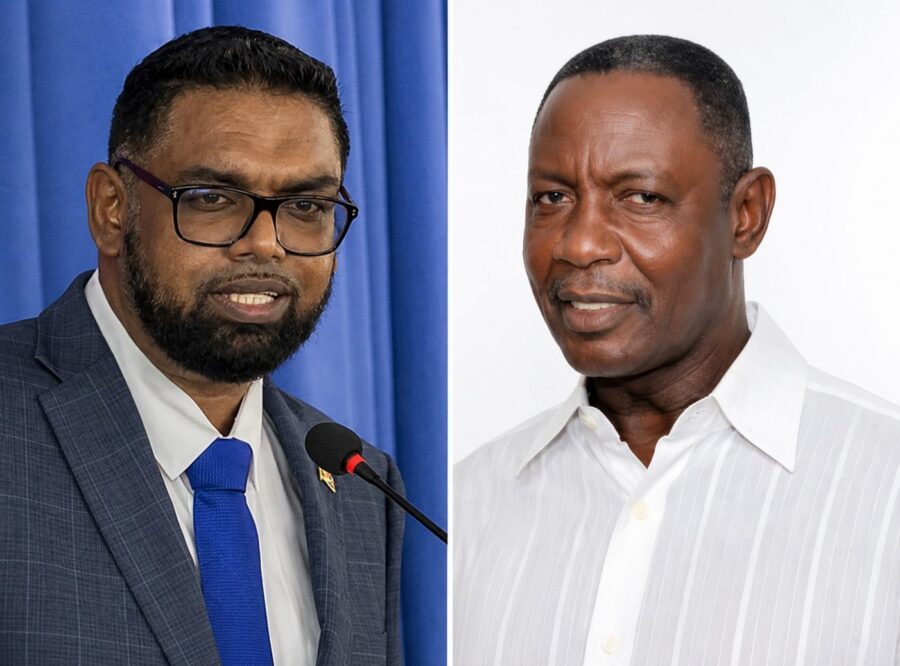
Lewis contends that President Irfaan Ali’s vow to “crush” those who would destabilise the country is a menacing signal that could be turned against lawful dissent. He links the pledge to a pattern he sees of shrinking democratic space, politicised institutions and a presidency that expects deference. In his view, the raid on an Opposition parliamentarian’s home confirms that Guyanese must defend their freedoms before they erode further.
The controversy began in mid-November. Mr Ali vowed to:
“Crush all actors who seek to destabilise and or harm our state or any citizen.”
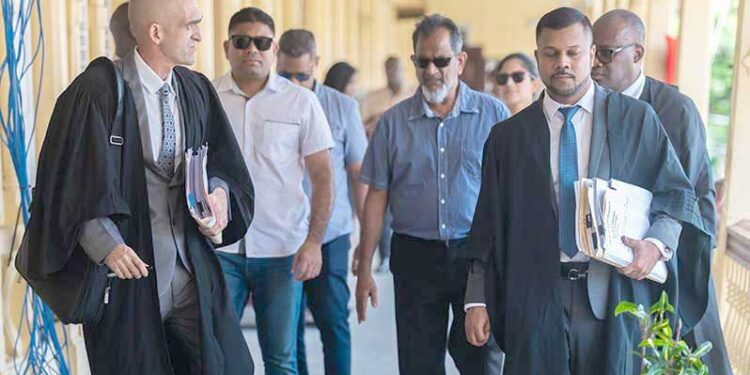
That declaration, on 13 November, came a day after he warned of a possible plot against the national grid. The Guyana Power and Light substation had been firebombed on 10 November. Police then searched the home of Opposition MP Natasha Singh, questioned her and released her. Six men, including her husband, were later charged with terrorism offences over the attack. Those men face a court process, and nothing in the public record so far establishes guilt.
Lewis, however, urges the public to weigh these events together rather than separately. To his mind, “crush” is a word that sits uneasily in a democracy. He calls it “ominous” and later describes it as “the language of oppressors.” His central grievance is vagueness. The President, he notes, has not said what counts as destabilisation or when such force would be authorised. That leaves open the possibility that anything the governing People’s Progressive Party finds inconvenient could be so labelled. He adds that no other sitting head of state in independent Guyana has issued a threat of this kind.
The unionist then turns to the President’s character, and here his language is at its sharpest. He recalls public episodes in which Ali appeared consumed by anger, including a confrontation with a crowd around the vehicle of then Minister Karen Cummings. He also cites an occasion on which the President was seen hauling a security officer from a crowd, and his insistence on being addressed by title. These incidents, Lewis argues, suggest “an outsized ego” and “a desire to command fear rather than earn respect.” The columnist insists that authority should flow from the dignity of the office rather than from intimidation.
Lewis extends the critique to governance. He asks whether the country is drifting towards a state that “governs by fiat rather than the rule of law,” and questions whether the judiciary, the legislature, the police, the prison service and the constitutional commissions can still resist political pressure. He says there is little tolerance for a robust Opposition, civil society or “independent thinkers.” Citing the remand of Opposition Leader Azruddin Mohamed, he asks whether any citizen could be held on charges they regard as politically motivated, even where bail is ordinarily available. He also says questions persist about the President’s past use of state resources and his academic credentials, though he offers no details in this column.
For the columnist, the search of MP Singh’s home on terrorism allegations is the moment the rhetoric acquired a target. Coming so soon after the President’s warning, he says, it cannot be waved away. He describes such conduct as “Machiavellian and Hitlerite tactics” that ought to trouble every freedom-loving citizen. He further alleges that:
“A few crumbs are thrown to others to purchase compliance,”
with some encouraged to look away and others drawn into complicity. In his words:
“This is how oppression takes root and sustains itself.”
He also asserts that Vice-President Bharrat Jagdeo remains the hand “pulling the strings” behind the President. That assertion is not substantiated in the column.
Authorities have cast their posture differently. Government officials have long argued that firm action is required against criminal networks and threats to national security, and the substation attack is plainly the kind of incident that invites a robust response. The tension Lewis identifies is therefore real. Security agencies must act against genuine violence, yet that mandate widens the scope for abuse when its limits are never stated. The courts will determine whether the allegations against Singh’s husband and the other accused are made out.
Lewis grounds his warning in history. He invokes the 1948 Enmore tragedy, in which colonial police confronted sugar workers who had stood their ground, and honours the “Enmore Martyrs” as proof that justice has always demanded sacrifice. He cites the Caribbean thinker Frantz Fanon to remind rulers that “violence begets violence,” and cautions that “repression does not extinguish resistance; it can intensify it.” The making of Guyana, he reminds readers, was shaped by slavery, indentureship and the long road to independence, each a chapter of domination met by defiance.
The closing passages are defiant. He urges citizens to “refuse to be intimidated,” to recognise the danger and to prepare to protect democratic institutions. He declares:
“His regime cannot crush all of us,”
and that:
“At least one of us will be left to tell the tale”
of what he calls “draconian measures.” He describes the present moment as a “clear and present danger” to rights, laws and the nation’s fabric, though he stops short of proposing any specific course of action beyond vigilance.
Whether his reading proves fair, the column has put a pointed question to the country. Where is the line between protecting the state and policing dissent? Until the Government spells out what it means by destabilisation, and until the courts test the cases now before them, that question will remain at the centre of Guyana’s political conversation.