By Mark DaCosta- A veteran Transport and Harbours Department official told the Commission of Inquiry on Thursday 26 November that cargo was still being hauled aboard the MV Barima hours before it sailed. She said the hatch had long been sealed, passengers were already on board, and the one person whose job was to supervise the wharf was not there. Her evidence, and her admission that she took no action herself, puts a hard question to the department. Did a system built on assumption, and on the vigilance of a few individuals, fail the people who boarded on 18 July?
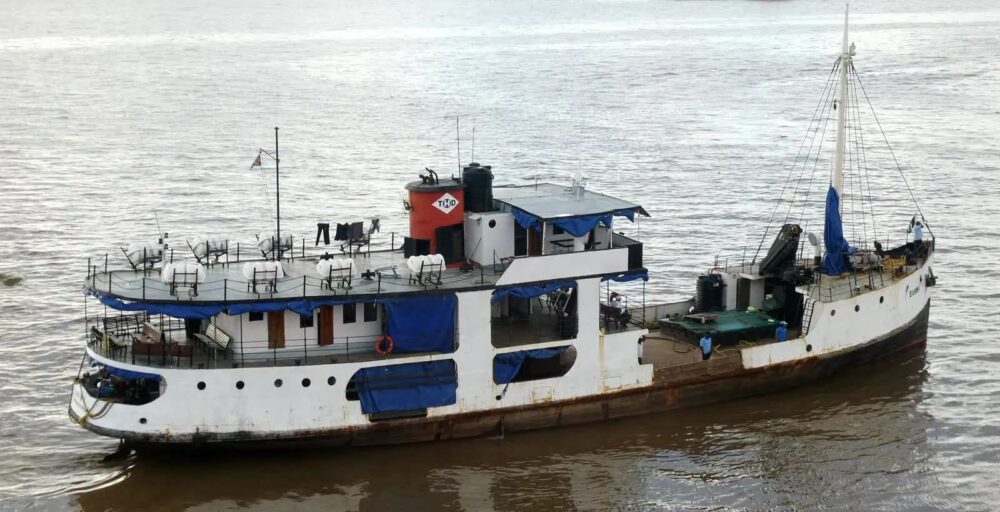
Michelle Reid, the department’s Assistant Traffic Superintendent, has served for 33 years. She appeared before the five-member commission, chaired by retired Justice Godfrey Smith, which is examining the loss of the ferry. The vessel capsised on its way to the North West District, in what has become the deadliest maritime disaster in our nation’s history.
Reid said the hatch had been shut since 16 July, packed with cargo that had been posted ahead of time. Yet when she reached the Goods Wharf at about 11:00 on the day of sailing, loading was still going on at the direction of the master, Captain Kevin Price. “When I arrived the hatch was closed; there was an ATV on top and they had other items packed on top of the hatch which I can’t particularly single out…there was a car and a pickup on the boat,” she recalled.
She could not board to carry out her routine inspection of the washrooms and the stages, because the gangways had been taken away. From the quay, she saw the vessel’s tarpaulin lowered over the stern on one side. She also made out bags on the middle deck, the area set aside for passengers. When she questioned the captain, she said, he told her he wanted weight at the back of the vessel and that the bags held fertiliser, which could not go in the hatch. Someone nearby added that potatoes were up there too.
Reid said she returned from an office on the wharf at around 14:30 to find passengers already aboard and loading still under way. She named PVC pipes, steel rods and more than five rolls of vinolay among the items being carried on. She also described a playground slide she believed was meant for the voyage, though she did not see it loaded. Earlier consignments included over 200 gas cylinders, nearly 100 cases of beverages, slings of cement and sacks of ground provisions.
Under questioning from Rear Admiral (Ret’d) Hayden Pritchard, she admitted she did nothing about the second round of loading. “I didn’t do anything. Because as the Captain of the vessel and they are responsible for loading, I assumed that they were doing what was necessary,” she said. She did, however, press Goods Wharf Superintendent Delon Grandison to come outside and take charge. As a former holder of that post, she said, she knew the day before and the day of departure demand constant presence. The Barima’s captain, first mate and the goods superintendent are on remand facing murder charges and are not expected to testify.
Her account of the vessel itself was striking. She walked through it, past cargo, and it “looked normal” to her. The commission noted that other witnesses had described a severely overloaded ship. She also said that letting non-passengers help with loading is common practice, and that passengers are now sometimes allowed to board while freight is still going on, which she would not permit. She did not check the load line, saying the tide was too low for her to see it.
Perhaps the most troubling disclosure concerned the lack of firm rules. Reid said there is no written policy on how much cargo the Barima may carry. Staff instead work from an informal guide of around 1,500 cases of beer and malt and another 1,500 of water and juices, and take less when cement, steel or sheeting is aboard. For a vessel that carries lives as well as goods, that is a thin safeguard.
She also spoke of the pressure staff face from a desperate public. Sailings to the North West can be a fortnight or a month apart, and she said people “would literally cry” and “would beg,” citing funerals and sick mothers. Some, she said, offered money. Questioned by the Chairman, she confirmed these were cash offers. Asked how to stop staff accepting them, she laughed and conceded it was difficult, stressing that the officer in charge must be present and watchful as departure nears: “you have to say no, you have to monitor.”
Her testimony exposes a gap between what the department says is critical and what happened on the wharf. It also shows how hinterland communities, dependent on a rare and overstretched service, can become part of the pressure on safety. The commission’s mandate includes recommending reforms. Written load limits, firm supervision rules and clear accountability for every officer who sees a danger will be tested against evidence like this. For families still mourning, these are not technicalities. Her evidence continues at the Arthur Chung Conference Centre.