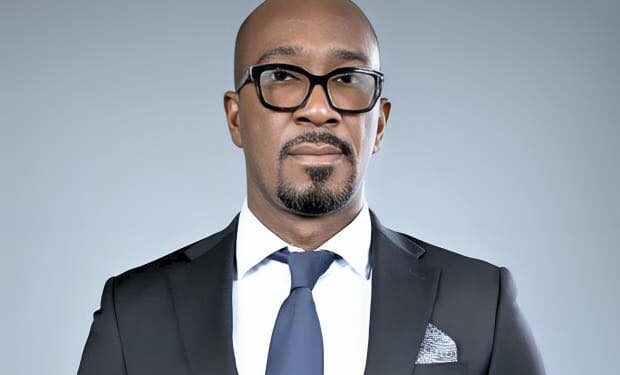
By Lincoln Lewis- Leader of the Opposition, the Hon. Azruddin Mohamed, is a political prisoner. He remains on remand on a bailable offence, despite having been granted bail in other, more serious matters before the courts. His passport has also been lodged pursuant to a court order, restricting his freedom of movement. Even more troubling, he has been denied the opportunity to attend and participate in the National Assembly, although he has not been convicted of an offence that would constitutionally disqualify him from performing his duties as an elected parliamentarian.
These circumstances raise grave concerns about the erosion of fundamental rights, the undermining of constitutional protections and the rule of law. When an elected representative can be deprived of his liberty and prevented from exercising his parliamentary responsibilities without a conviction, the danger extends far beyond one individual or political party. It strikes at the very foundations of democratic governance and the rights of every citizen.
This should concern every law-abiding citizen, particularly those elected to serve in the National Assembly. The issue is not whether one agrees with Mohamed politically or approves of his conduct. It is whether the Irfaan Ali/Bharrat Jagdeo regime can get away with curtailing the freedom of an elected constitutional office holder and what that means for the rest of society.
Guyanese must remember that, under the David Granger/Moses Nagamootoo APNU+AFC administration, then Opposition MP Irfaan Ali was charged on November 28, 2018, with 19 counts of conspiracy to defraud the State to the tune of $174 Million. He was not remanded but released on self-bail. In April 2017 then Opposition MP Anil Nandlall was charged with lawbook theft, he was not remanded but released on self-bail. Similarly, then Opposition Leader Bharrat Jagdeo was charged in May 2015 with inciting racial hatred. He too was not remanded but released on his own recognisance.
Both men were entitled to the presumption of innocence, as is every accused person. That same principle must apply to Mohamed. The question of equal treatment before the law cannot be dismissed because of political affiliation or personal differences.
What is particularly disturbing is the apparent willingness of some of fellow Opposition parliamentarians to treat this matter as though it is business as usual when their parliamentarian existence is tied to what is happening to Mohamed. Do they not appreciate the implications? Do they not understand that the same powers and institutional arrangements they appear prepared to overlook today could one day be turned against them? Their responsibility is not simply to occupy seats in the National Assembly but to defend the constitutional principles upon which their own freedom and democratic participation depend. Political differences must not be met with silence or other acts of complicity when fundamental rights are at stake.
The decision to keep the Opposition Leader and two police constables on remand raises serious questions about the rule of law and the extent to which sections of the Executive, Judiciary, Guyana Police and Guyana Prison Services can be used against those perceived as opponents or those who have crossed the administration.
Mohamed’s situation could be equated to a man being taken to the gallows on accusation and treated as though already convicted, without due process, including the disclosure of evidence.
The man came out and declared: ‘I am innocent. It is not I who tried to kill him, but he who tried to kill me.” Having expressed distrust in the police, he appealed to members of the public to provide information, at a cost, to prove his case.
Persons, whether motivated by money or civic responsibility, came forward with evidence. That evidence, he maintains, showed who the aggressor was. And rather dispassionately examine the evidence-in a court of law or otherwise-the alleged whistleblowers are now charged. In other societies these young men would be commended and release of the CCTV regarded as an act of civic responsibility.
Then another tape was revealed to the public, even more chilling than the first. The Director of Public Prosecutions (DPP) responded by warning the public against further dissemination of the recording, despite the questions and distrust surrounding the institutions involved.
The Ali/Jagdeo regime is doing its utmost to silence Mohamed’s voice. His activism and exposure since entering politics appear to have unnerved those who have things to hide and wish to continue riding roughshod over this nation. He has become a threat to those who would rather destroy persons they perceive as enemies than confront and correct their own errant ways.
Today, it is Mohamed and the two constables. One allegedly attempted to save his life by appealing for evidence to be made available to the public, while the two constables allegedly sought to salvage the integrity of the police force. They now face charges in circumstances that raise serious questions about the treatment of those who seek to uphold accountability and professionalism.
What is happening in Guyana should also concern the wider Caribbean. Our countries share common laws, legal traditions and constitutional frameworks. Practices tolerated in one jurisdiction can influence the conduct of governments elsewhere. If an administration can get away with restricting the liberty of an elected Opposition Leader under circumstances that raise questions about equal treatment and due process, no Opposition Leader in the region should consider himself immune. The domino effect is real.
The Ali/Jagdeo regime is setting a dangerous precedent in post-independent Guyana and the Caribbean. They are using the machinery of the State in ways that threaten the democratic principles upon which our societies are built. The consequences extend beyond politicians. When fundamental rights and the rule of law become vulnerable to political interests, every citizen is exposed. Today, it is Mohamed and the two constables. Tomorrow, it could be you.
In these dangerous times, silence is not an option. The Rev Dr. Martin Luther King Jr. warned us that a threat to one is a threat to all. We must speak up and speak out, regardless of who is targeted or what political opinions we may hold of that person. Our lives and those of future generations depend on it.