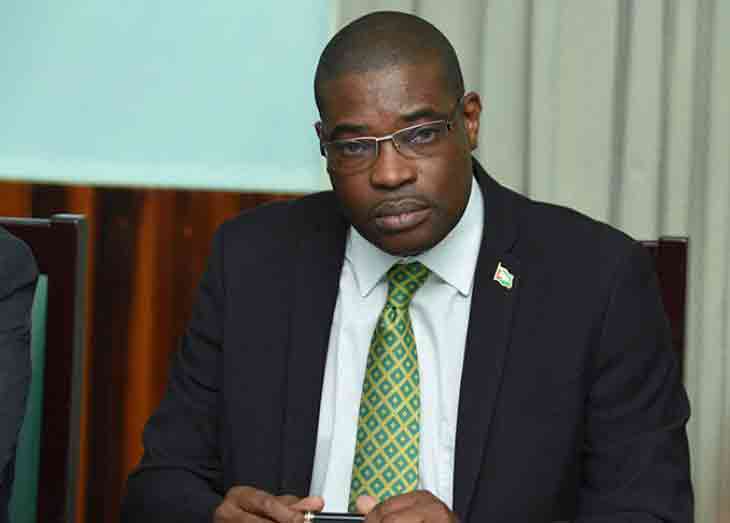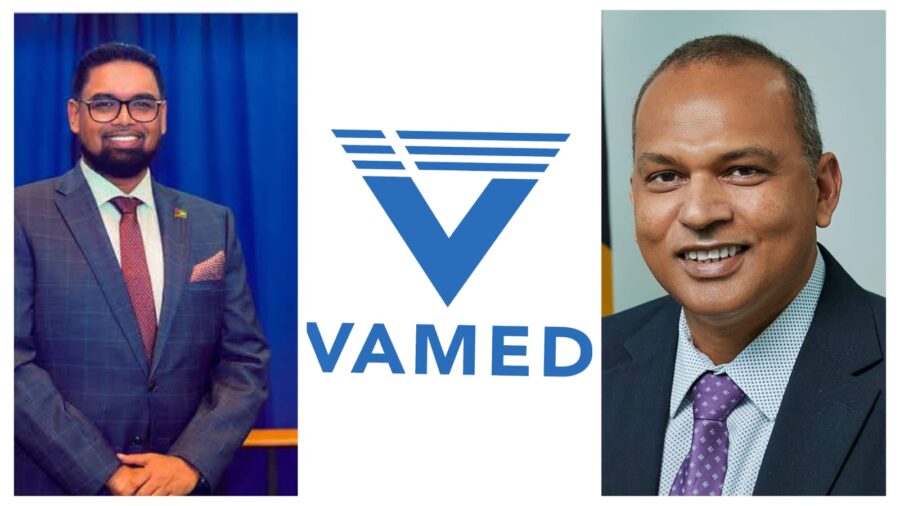
President Ali acknowledged that Guyana was unfamiliar with the international contracting system governing the two hospitals and called for training. VAMED is now questioning whether the Ministry and its appointed engineers ever acquired the expertise needed to manage the projects.
Austrian hospital developer VAMED Engineering GmbH is questioning whether Guyana’s Ministry of Health possessed the technical expertise and project-management capabilities required to oversee two of the country’s largest healthcare construction projects.
In a strongly worded statement issued on November 6, the company challenged the Ministry’s handling of the unfinished Georgetown Maternal and Paediatric Hospital and New Amsterdam General Hospital. VAMED accused government officials of withholding payments for certified work, refusing to authorise the release of critical construction materials held at Guyana’s ports and creating repeated bureaucratic obstacles.
However, the company’s latest criticism goes beyond the immediate contractual disagreements. It raises fundamental questions about whether government officials and the engineering consultants appointed to administer the complex international contracts were adequately prepared for the responsibility.
“I only wish the Ministry of Health had devoted as much energy to managing these complex hospital projects as it has to making unfounded allegations against the company hired to build them,” said Dr. João Pedro da Silva Teles, VAMED’s institutional representative in Guyana.
Praised Abroad, Stalled in Guyana
As part of its November 6 statement, VAMED presented testimonials from prime ministers and health ministers around the world, highlighting recognition received by its international hospital projects.
Among the endorsements were statements from senior government officials in neighbouring Trinidad and Tobago, where VAMED was involved in major healthcare developments.
At the 2014 commissioning of the 216-bed, US$115 million San Fernando Teaching Hospital, then-Prime Minister Kamla Persad-Bissessar described the facility, where VAMED undertook conversion and medical fit-out work, as:
“A leap forward in medicine, in academic medicine as well as in the practice of medicine in our land.”
A decade later, Trinidad and Tobago’s Health Minister Terrence Deyalsingh praised the 106-bed, US$125 million Sangre Grande Hospital Campus, describing it as offering “106 beds of pure excellence.”
VAMED also highlighted endorsements associated with hospital projects in other countries.
In Côte d’Ivoire, then-Prime Minister Patrick Achi described VAMED as a company of international renown at the 2022 inauguration of the 110-bed San Pedro Regional Hospital, crediting the Austrian developer with delivering a magnificent building.
In Bolivia, Health Minister María Renée Castro praised the quality of the 200-bed Villa Tunari Hospital, describing its facilities as first-class.
These testimonials provide a striking backdrop to the controversy in Guyana.
VAMED arrived in the country with more than four decades of experience, over 1,000 healthcare projects to its credit and a record of operating in 96 countries. The Guyanese Government had specifically sought an international hospital developer with extensive experience in the construction and development of healthcare facilities.
In February 2023, Health Minister Dr. Frank Anthony told the National Assembly that VAMED had undertaken more than 1,000 hospital projects worldwide. Seven months later, he publicly described the Austrian developer as a “reputable international company.”
That raises an important question: If Guyana went to such lengths to secure an internationally experienced hospital developer, what explains the extraordinary breakdown that followed?
Did the Ministry Understand the Contracts It Signed?
Both hospital projects were contracted under the 2017 FIDIC Yellow Book, an internationally recognised framework for complex design-and-build infrastructure projects.
The contractual framework establishes detailed responsibilities for contractors and employers, including payment certification, engineering decisions, approvals and contract administration.
President Irfaan Ali himself acknowledged that the framework was relatively new to Guyana. Speaking at the Georgetown hospital’s groundbreaking ceremony in July 2022, he emphasised the importance of familiarising local officials with the requirements of the FIDIC Yellow Book.
“It is important that we know what the FIDIC Yellow Book standards are; very, very high standards and those are the standards that we’re working with these days,” the President declared.
Ali also called for technical personnel to organise training to ensure that government officials and other stakeholders developed the necessary understanding of the contractual framework.
VAMED entered Guyana with experience managing complex international hospital construction projects. For the Ministry of Health, however, the FIDIC framework represented a new approach requiring specialised knowledge and preparation.
One of the company’s central contentions is that the Ministry failed to develop the contract-management expertise necessary to administer the projects effectively, contributing to payment disputes, delayed approvals and administrative obstacles that disrupted construction.
The Ministry’s leadership therefore faces legitimate questions about the arrangements made to supervise the projects.
Health Minister Dr. Frank Anthony and Permanent Secretary Malcolm Watkins were directly involved in monitoring the Ogle project. Both participated in a January 2024 site visit alongside VAMED and VIKAB representatives, which the Ministry described as an inspection of construction progress.
Were the Minister and Permanent Secretary adequately equipped to oversee two of Guyana’s most ambitious hospital construction projects? What steps were taken after the President acknowledged the country’s unfamiliarity with the FIDIC framework to ensure that ministry officials and appointed engineers received the necessary training?
These questions warrant public scrutiny, particularly given the scale of the investments and the importance of the facilities to the country’s healthcare system.
Questions Surrounding VIKAB’s Appointment
The Government’s selection of VIKAB, a Guyanese engineering consultancy, to oversee the projects also warrants closer examination.
Given President Ali’s public acknowledgement that the FIDIC Yellow Book framework was new to Guyana, what qualifications and previous experience did VIKAB bring to the administration of two major international hospital contracts?
What experience did the consultancy possess in managing projects under the 2017 FIDIC Yellow Book? Had its engineers received specialised training? And if the Government recognised that Guyana needed to develop expertise in this international contractual framework, why was an established international engineering consultancy with a demonstrated record of administering comparable projects not engaged?
The contrast points to a potentially significant gap: Guyana secured an internationally experienced hospital developer, but questions remain about whether the Ministry and its appointed engineers possessed comparable experience in managing the contractual demands of the projects.
The qualifications and experience of VIKAB’s personnel, as well as the Government’s reasons for selecting the firm, require further clarification.
‘The Ministry Stood in Our Way’
Dr. da Silva Teles delivered a pointed rebuke of the Ministry’s handling of the projects, alleging that administrative decisions prevented VAMED from completing its work.
“The Ministry stopped authorizing payments for certified work, critical materials remained held up at the ports, and bureaucratic obstacles continued to mount. Those decisions prevented us from completing the work we were hired to do,” he said.
He added:
“The Ministry’s actions have left two hospitals unfinished. The real question is why.”
The company maintains that its experience in Guyana was unlike anything it had encountered internationally.
“We have built hospitals in some of the most challenging environments imaginable, across Africa, Latin America, Europe and the Middle East. But in more than forty years, we have never experienced the degree of administrative obstruction that we encountered in Guyana,” Dr. da Silva Teles said.
The Ministry has previously rejected VAMED’s allegations, maintaining that construction delays, performance deficiencies and contractual non-compliance justified its actions.
The competing claims are now before international arbitration, where the contractual disagreements will have to be addressed.
VAMED Shows No Signs of Backing Down
One thing is becoming increasingly clear: VAMED does not appear prepared to retreat from the public dispute.
After months of accusations surrounding the unfinished hospitals, the Austrian developer is drawing on its international track record, endorsements from foreign government leaders and increasingly pointed criticism of the Ministry’s handling of the projects.
Its latest statement suggests that the company’s response is no longer confined to the arbitration proceedings. VAMED is also seeking to challenge the Government’s account in the court of public opinion.
“There is considerably more to this story than has been made public,” Dr. da Silva Teles warned. “And while we intend to respect the arbitration process, we will not allow our silence to be mistaken for agreement with a version of events that we fundamentally dispute.”
The message is unmistakable: VAMED intends to contest not only the contractual claims against it, but also the suggestion that an internationally experienced hospital developer was incapable of delivering the facilities Guyana commissioned it to build.
A Troubling Pattern for Guyana’s Infrastructure Ambitions?
Beyond the two unfinished hospitals lies an issue with potentially far-reaching implications for Guyana’s infrastructure ambitions: whether the Government’s capacity to supervise complex international contracts is keeping pace with the scale of the projects it commissions.
Billions of dollars are being committed to hospitals, energy facilities, roads and other major developments. Guyana is increasingly relying on foreign engineering and construction companies to deliver infrastructure on a scale rarely attempted in the country’s history.
But attracting international expertise is only half the challenge. Governments must also possess the technical, legal and administrative capabilities to manage the complex contracts governing these projects.
VAMED’s allegations place the Government’s contract-administration systems under scrutiny, particularly the training, specialist support and decision-making arrangements established for the hospital projects.
The VAMED dispute is not the only major international construction contract to become entangled in a costly disagreement.
The Government’s US$759 million Gas-to-Energy contract with Lindsayca/CH4 also became the subject of formal adjudication proceedings involving construction delays, site conditions and competing contractual claims.
In January 2025, a dispute adjudication board issued decisions that dissatisfied both parties, with each subsequently signalling an intention to pursue arbitration. The Government said in April 2026 that no arbitration ruling had been issued and denied reports of an undisclosed payment exceeding US$80 million to the contractor.
The adjudication decisions remain confidential, leaving the public with limited information about how the competing claims were assessed or what financial exposure, if any, might ultimately arise.
The parallels with the VAMED controversy warrant examination. In both cases, major international contractors became embroiled in disagreements with the Government over the administration of complex infrastructure projects.
Neither dispute, by itself, establishes mismanagement. Together, however, they underscore the importance of transparent contract administration, appropriately qualified oversight and public accountability when disagreements arise over major infrastructure investments.
For VAMED, the immediate priority remains finding a way to complete the Georgetown Maternal and Paediatric Hospital and New Amsterdam General Hospital.
“We came to Guyana to build two of the country’s premier healthcare institutions. We still believe those hospitals can be completed—and we remain ready to help make that happen,” Dr. da Silva Teles said.
Yet the implications may extend well beyond these two hospitals.
Will the VAMED dispute become another costly chapter in Guyana’s experience with international construction contracts? And if arbitration ultimately goes against the government, will the public receive a full accounting of what went wrong, who was responsible and how much Guyanese taxpayers will be required to pay?