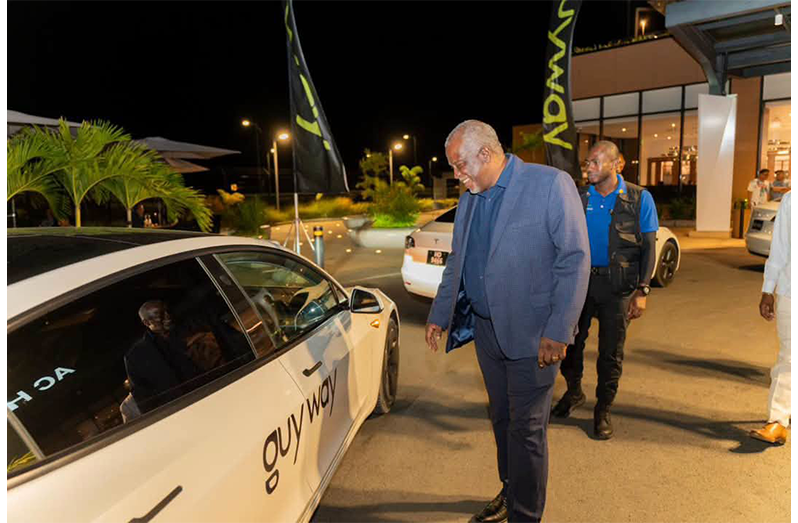
Guyana’s electric transportation sector has received a significant private-sector investment with the launch of GuyWay, a new ride service operating a fleet of 52 Tesla vehicles, even as questions remain about the country’s electricity reliability, charging infrastructure and capacity to maintain a growing number of electric vehicles.
Founded in 2025 by Peter Lorenzo, Michel Rheaume and Rico Ding, GuyWay will provide transportation services across Georgetown, including airport transfers. The company has also announced plans to introduce more than 100 additional vehicles as it expands its operations.
Prime Minister Brigadier (Ret’d) Mark Phillips welcomed the investment at Friday’s launch, describing it as an example of private-sector participation in Guyana’s expanding economy.
“The Government welcomes this active participation by the private sector. Our development programme creates room for enterprise, and we want investors to identify practical ways of meeting the country’s changing needs,” Phillips said.
He noted that more than 900 electric vehicles are already operating on Guyana’s roads. The Government is targeting 24 publicly accessible charging stations by the end of 2026, while electric vehicles benefit from zero import duties and taxes and businesses can claim a 50 per cent annual write-down allowance.
However, the expansion of electric transportation raises practical questions about whether the supporting infrastructure can keep pace.
Electric vehicles and an unreliable power supply
Guyana continues to experience electricity supply and distribution challenges. In September, Guyana Power and Light (GPL) reported that peak demand had climbed to approximately 257 megawatts, compared with 221 megawatts the previous year. The utility attributed recent outages to overloaded feeders and transformers, rising consumption and pressure on the distribution network.
GPL has announced an approximately US$800 million programme to modernise the grid, with improvements expected to ease some of the problems by mid-2027.
The expansion of electric vehicles will add another category of electricity consumption. While the 52-car GuyWay fleet is not, by itself, evidence of a significant additional burden on the grid, reliable charging arrangements will be essential to keeping the vehicles in service. Dedicated charging facilities, careful scheduling, backup arrangements and possible integration of solar energy and battery storage could help reduce exposure to interruptions.
Maintenance, spare parts and road conditions
Electric vehicles generally require less routine mechanical maintenance than conventional petrol-powered cars, but they are not maintenance-free. Tesla states that high-voltage battery systems must be serviced by trained technicians. Battery diagnostics, electrical components, software, tyres, brakes and other parts require appropriate expertise and servicing arrangements.
Guyana has been developing that capacity. The Guyana Energy Agency reported in September that 102 technicians had received training in electric and hybrid vehicle maintenance and repairs. Nevertheless, a fleet of this size will require dependable access to specialist equipment, replacement parts and technical support. Delays in obtaining components or resolving battery and electrical faults could take vehicles off the road and affect service reliability.
Road conditions also present operational considerations. Georgetown motorists regularly contend with potholes, uneven surfaces and water accumulation during heavy rainfall. These conditions can increase wear on tyres, suspension and wheels, making preventive maintenance and careful route management important for a high-use commercial fleet.
Phillips urged GuyWay to maintain high customer-service standards, develop local technical skills and explore partnerships with the tourism sector.
“Reliable transportation is an important component of the visitor experience and can contribute to Guyana’s attractiveness as a tourism and investment destination,” the Prime Minister noted.
The launch represents a notable step in Guyana’s electric mobility market. Its longer-term success, however, will depend not only on the number of vehicles purchased, but on whether charging infrastructure, electricity reliability, technical support and road conditions can sustain their daily operation.