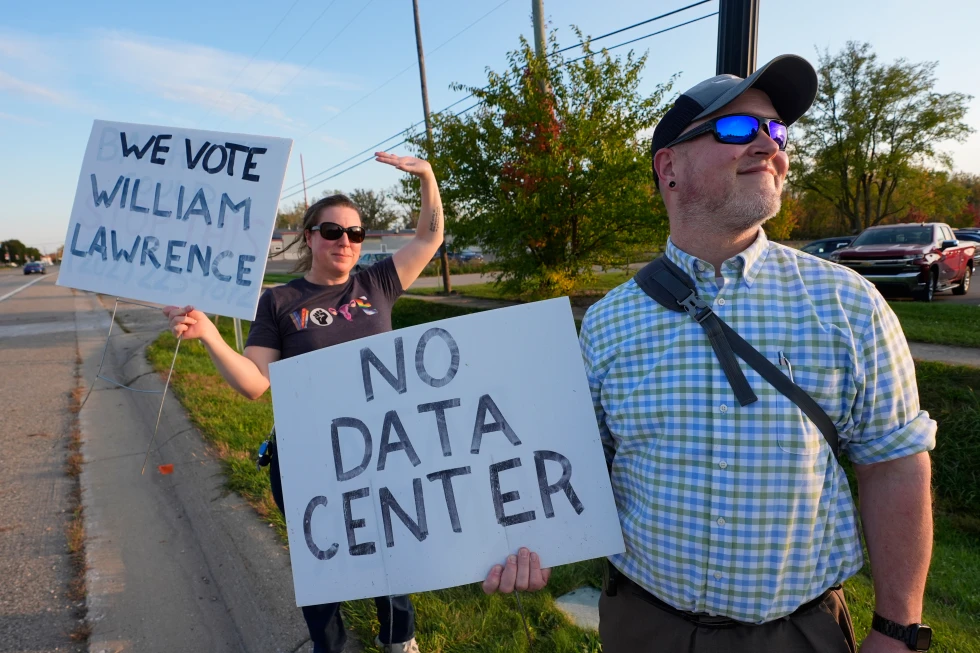
The United States technology industry is facing mounting political resistance following the November 3 midterm elections, with candidates campaigning against the rapid expansion of artificial intelligence (AI) data centres making significant electoral gains and voters overwhelmingly supporting restrictions on the energy-hungry facilities.
The results signal a potential regulatory reckoning for major technology companies, including those investing billions of dollars in AI infrastructure, as concerns over electricity costs, water consumption, environmental pressures and the financial burden on local communities increasingly become political flashpoints.
An Associated Press report published on November 6 said Democrats made opposition to data centre development a prominent feature of their campaigns, helping them secure victories in several states that have become major centres for the industry.
Among the most consequential outcomes were Democratic victories in Texas, Ohio, Georgia, Nevada and Iowa, where successful candidates had pledged stronger oversight of data centre construction.
The scale of the backlash was reflected in campaign spending. According to advertising data firm AdImpact, political campaigns spent more than US$380 million on television advertisements mentioning data centres, with Democrats outspending Republicans by more than three to one.
The resistance extended beyond congressional and gubernatorial contests. An analysis by polling and data science firm Redbud Consulting found that restrictions on data centre development were approved in 44 of 45 completed local referendums across 44 municipalities in 12 states.
The Associated Press Voter Poll also found that approximately three-quarters of American voters opposed having a new data centre constructed in their communities, indicating that resistance cuts across traditional political and geographic divisions.
“I would say data centers were on the ballot,” said Stephen Sanders, a Republican who co-founded a data centre protest group in Lubbock, Texas.
Electricity and water concerns fuel opposition
Much of the opposition centres on the enormous resources required to operate modern data centres, which house the computing infrastructure supporting artificial intelligence, cloud services and other digital technologies.
Their expanding electricity requirements have raised concerns about higher utility bills, pressure on power grids and whether ordinary consumers could ultimately subsidise infrastructure built primarily to serve wealthy technology companies.
Water consumption has also become a major concern, particularly in drought-prone regions.
In Texas, Clayton Tucker, the newly elected Democratic state agriculture commissioner, said opposition to data centre development was instrumental in his campaign, citing concerns among ranchers about the threat to already strained water supplies.
Texas is particularly significant to the industry, with commercial real estate firm JLL projecting that the state could overtake Northern Virginia as the world’s largest data centre market by 2030.
However, the election of Democrat Gina Hinojosa as governor represents a major setback for developers seeking unrestricted expansion. Hinojosa has pledged to block projects that do not provide a demonstrable benefit to Texans or give residents an adequate opportunity to participate in decisions.
In Wisconsin, Governor-elect David Crowley is considering measures requiring developers to disclose their energy and water consumption, demonstrate community support and protect taxpayers and electricity customers from additional costs.
Technology giants face regulatory uncertainty
The electoral results have also raised concerns among investors about the future of the multibillion-dollar AI infrastructure boom.
Morgan Stanley warned that stronger state-level restrictions could divide the United States into jurisdictions welcoming new data centres and others imposing significant barriers or delays.
The financial implications are considerable. AI infrastructure construction has become an important driver of economic activity, investment and industrial expansion. Restrictions could therefore affect construction projects, technology investments and associated employment.
Meanwhile, OpenAI published a framework on November 5 outlining commitments to communities where it develops data centres, calling for clear government rules that protect residents while ensuring the benefits of AI infrastructure are widely shared.
The Data Center Coalition has also acknowledged the need for developers to build greater public trust, although the industry warns that restrictions could deprive communities of investment, employment opportunities and tax revenues.
The political message emerging from the elections is nevertheless difficult for technology companies to ignore: communities increasingly want guarantees that the economic benefits of AI development will not come at the expense of affordable electricity, reliable water supplies and local control.
For an industry accustomed to rapid expansion and substantial political support, the midterm results represent a significant warning that technological progress cannot indefinitely override public concerns about its costs.
The battle over America’s AI future is no longer confined to Silicon Valley boardrooms and technology investment forums. It has become a question of household affordability, environmental sustainability and the extent to which powerful corporations should be allowed to shape the resources and future of local communities.