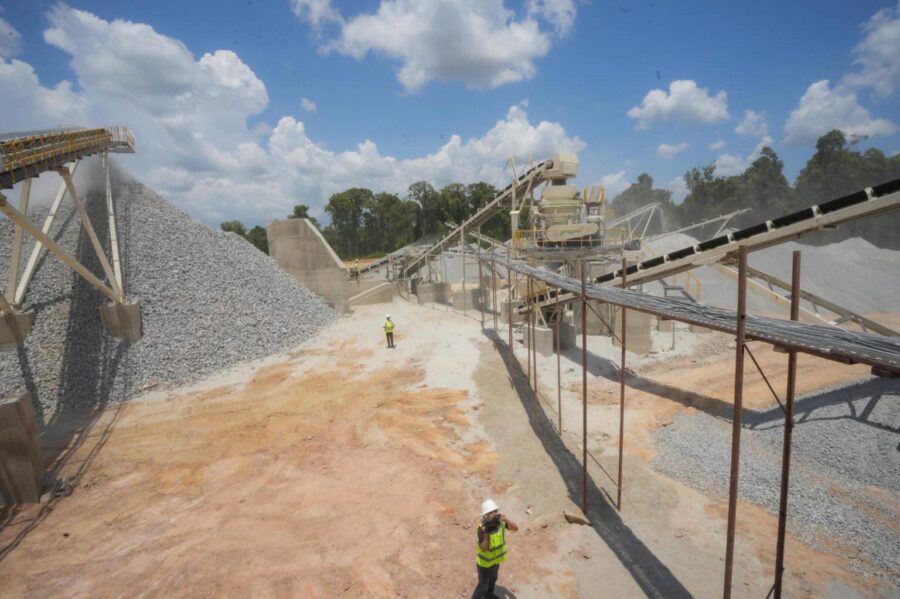
The Ministry of Labour and Manpower Planning has launched an investigation into allegations of abuse, poor working conditions, and possible labour violations involving Indian nationals employed at the EKAA HRIM Earth Resources quarry operation in Batavia Village, Region Seven, amidst growing concern over the treatment of foreign workers in Guyana’s rapidly expanding extractive sector.
The probe comes days after the reported death of an Indian worker at the quarry site on May 12, an incident that has intensified scrutiny of labour conditions in remote hinterland operations. While the company reportedly stated the worker died from a heart attack based on medical findings and a post-mortem examination, other workers subsequently raised allegations involving confiscated passports, poor living and working conditions, withheld wages, and inadequate access to transportation and medical care.
In a statement issued Monday, the Ministry said it acted over the weekend after receiving information concerning alleged labour and occupational safety and health violations involving foreign nationals attached to the mining company.
Against that backdrop, Minister of Labour and Manpower Planning Keoma Griffith met Monday morning with Acting High Commissioner of India to Guyana, H.E. Manoj Kumar, before engaging directly with thirty-eight Indian nationals employed at the company.
“The engagement served as a precursor to a general meeting with the thirty-eight Indian Nationals, who are attached to the mining company. This meeting held between the Ministry, aggrieved workers, and management of Ekaa Hrim provided an opportunity for the workers’ complaints to be made,” the Ministry stated.
One of the major issues raised involved workers’ passports.
“The issue of passports was raised and as a result of the intervention made by Minister Griffith, that matter has already been rectified and the passports have been returned to the workers,” the statement said.
The Ministry said allegations of “poor working conditions and unfair treatment” were leveled against the employer and that EKAA HRIM has been given twenty-four hours to respond.
“The Ministry’s investigation will continue and allegations relating to wages, working conditions, and the general welfare of the workers will be addressed. The Ministry is also aware of allegations concerning the reported death of a worker on May 12, 2026, which will form part of the ongoing investigation,” the statement added.
A joint team comprising officers from the Ministry of Labour, the Guyana Police Force, the Trafficking in Persons Unit within the Ministry of Home Affairs, and other relevant agencies has been mobilised to conduct further inquiries and assess the situation.
The investigation unfolds amidst increasing concern over whether Guyana’s labour and regulatory systems are keeping pace with the country’s rapid economic transformation since the 2015 discovery of offshore oil reserves. The oil boom has triggered an influx of foreign investment and imported labour across the mining, construction, oil and gas, and infrastructure sectors, particularly in remote interior regions where state monitoring and enforcement remain challenging.
Amidst the controversy, Guyana Trades Union Congress (GTUC) General Secretary Lincoln Lewis wrote Minister of Labour and Manpower Planning Keoma Griffith calling for a sweeping response to the allegations and the worker’s death.
Lewis called for:
- An immediate and independent investigation into the death at the EKAA HRIM Earth Resources quarry;
- A comprehensive review of labour practices involving foreign workers operating in Guyana;
- Full disclosure of the employment, immigration, and occupational safety arrangements under which these workers are engaged;
- Stronger enforcement of occupational health and safety standards across the mining and extractive sectors; and
- Parliamentary and public scrutiny of the State’s management of labour mobility and migrant worker protections.
Lewis warned that Guyana “cannot boast about economic growth and investment while workers—particularly foreign workers brought into this country—are potentially being placed in unsafe and exploitative conditions.”
The GTUC also expressed concern that weaknesses in labour oversight could undermine Guyana’s obligations under International Labour Organization conventions and CARICOM commitments relating to migrant workers and workplace protections.
Meanwhile, the Forward Guyana Movement has linked the controversy to broader governance concerns involving migration systems, labour oversight, and institutional accountability, warning against what it described as “loose, opaque, or politically convenient systems” surrounding migration and labour management.
The Ministry of Labour said it is “actively monitoring the matter” and will continue taking “all necessary steps to ensure compliance with the laws of Guyana,” while promising further updates as investigations continue.