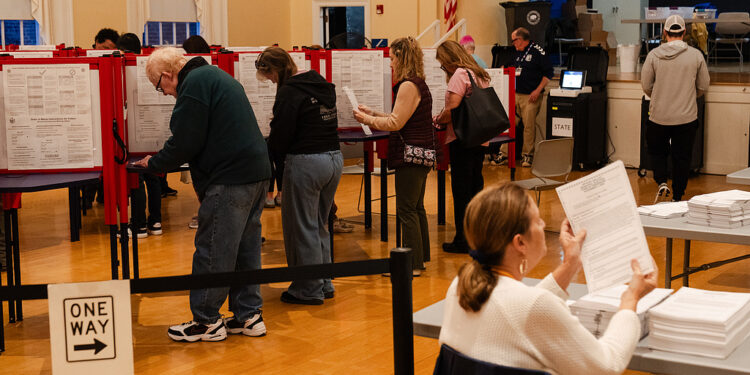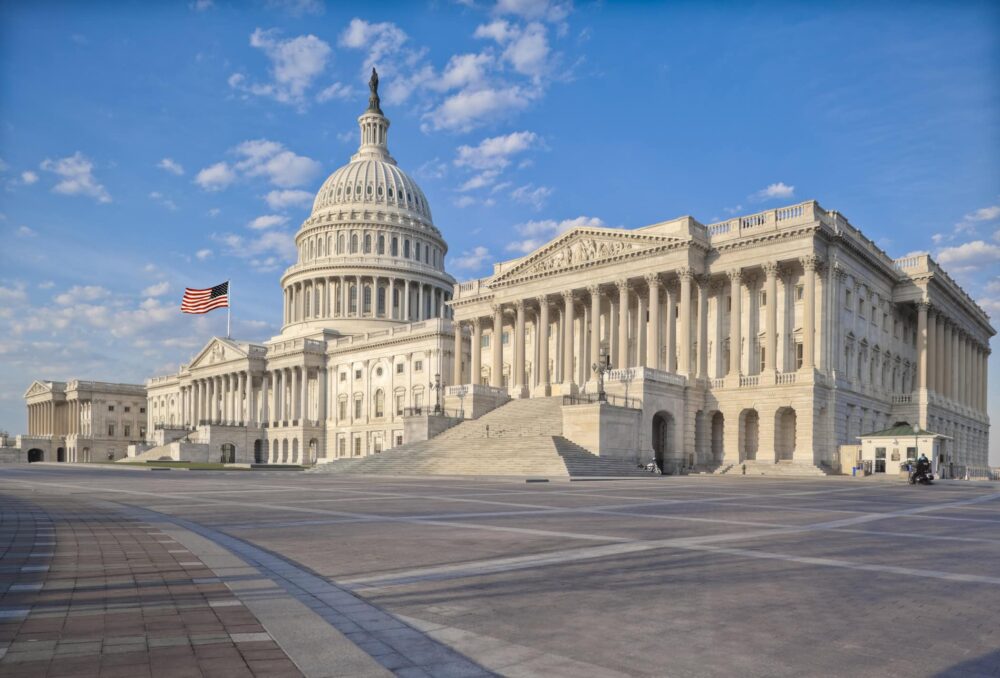
Democrats have captured control of both chambers of the United States Congress, delivering a sweeping electoral rebuke to President Donald Trump and the Republican Party in Tuesday’s midterm elections.
The victories represent a major political reversal in Washington, ending Republican control of Congress and giving Democrats the power to challenge the administration’s legislative agenda, intensify congressional investigations and scrutinise the President’s policies during the remaining two years of his term.
According to the Associated Press (AP) election results, Democrats secured at least seven Republican-held Senate seats, including victories in Kansas, Iowa, Texas, Ohio, Maine, North Carolina and South Carolina. In the House of Representatives, Democrats flipped more than two dozen districts, including several that supported Trump by double-digit margins in 2024.
The latest AP tally reported by Al Jazeera showed Democrats with 228 House seats against 139 for Republicans, with 78 races still uncalled. Democrats had already crossed the 218-seat threshold required to secure a majority in the 435-member chamber.
Before the election, Republicans held 220 seats in the House, compared with 215 for Democrats. The Democratic gains have therefore reversed the balance of power in the lower chamber.
The Senate results were equally significant. The latest preliminary figures showed Democrats and independents aligned with them holding 54 seats, compared with 42 for Republicans, while four races remained uncalled. Republicans entered the election with a 53–47 majority.
The victories in traditionally Republican states were among the most striking developments. Kansas elected its first Democratic senator in nearly a century, while Democrats secured historic victories in South Carolina and Texas, states that Trump carried comfortably in the 2024 presidential election.
In Texas, Democrat James Talarico defeated Republican Ken Paxton, marking a major breakthrough for Democrats in a state where Republicans have dominated statewide elections for decades.
In South Carolina, Democrat Annie Andrews defeated Republican Darline Graham, delivering another significant upset in a state Trump won by nearly 18 percentage points in 2024.
A sweeping rejection of Trump’s leadership
In its election analysis, Reuters reported that voter frustration over the unpopular war with Iran, rising living costs, tariffs and anger over alleged corruption contributed to the Republican losses.
The news agency said Democratic gains extended into conservative strongholds, including areas that had strongly supported Trump in his successful 2024 presidential campaign.
The results have been widely interpreted as a referendum on Trump’s presidency and the direction of his administration. The AP also reported widespread voter dissatisfaction with the country’s direction and the President’s performance, with concerns about economic conditions and the administration’s policies featuring prominently.
The scale of the Democratic victories exceeded expectations in several contests, with the party making gains beyond traditional battleground states and capitalising on dissatisfaction among voters who had supported Trump two years earlier.
A new balance of power in Washington
Democratic control of the House and Senate will significantly alter the political landscape in Washington.
The party will control congressional committee leadership, have greater authority to initiate investigations and issue subpoenas, and determine which legislation advances through the chambers.
The House can investigate government spending, executive decisions and alleged misconduct, while the Senate has considerable influence over presidential appointments, including Cabinet officials, ambassadors and federal judges.
Democrats are expected to use their new majorities to intensify scrutiny of the Trump administration. Their control of the Senate will also give them greater leverage over the confirmation of presidential nominees and the administration’s legislative priorities.
However, Democratic control of Congress does not give the party unrestricted authority. Trump retains his presidential veto power, and major legislation could face obstacles where broader bipartisan support is required.
The Republican Party now faces the challenge of defending the administration’s record while confronting an opposition-controlled Congress and preparing for the 2028 presidential election.
The new Congress is scheduled to take office in January 2027, when Democrats will formally assume control of both chambers.
The outcome represents one of the most consequential midterm reversals in recent American politics, placing a powerful legislative check on Trump’s administration and reshaping the political landscape ahead of the next presidential election.