The ashes of former Opposition Leader and Leader of the People’s National Congress Reform (PNCR), Robert Corbin are to be committed to the Demerara River between the mouths of Muraru Creek and Katapully Creek today, before being interred in the family plot at the Scottish Christian Church cemetery in Christianburg, Linden.
As Corbin is laid to rest, Guyana Trades Union Congress (GTUC) General Secretary Lincoln Lewis is remembering the late politician as a man who understood the value of respect and civility, even when confronted with political differences.
In an opinion piece published last Sunday in his Eye on Guyana column, titled “Robert Corbin: A Warrior Who Understood the Value of Respect,” Lewis reflected on his decades-long relationship with Corbin, who died on October 4.
Lewis said Corbin demonstrated that firm political convictions did not have to come at the expense of respect for others.
“In a political culture where disagreement is increasingly treated as disloyalty, where independent thought can invite personal attacks, and where too many confuse power with authority, Corbin demonstrated that one could hold firm convictions without surrendering the basic principles of respect and decency,” Lewis wrote.
Lewis recalled first meeting Corbin in Linden in 1968, when Corbin was campaigning to become general secretary of the youth arm of the People’s National Congress (PNC). Although they agreed on some issues and disagreed on others, Lewis said their differences did not prevent a relationship that continued over the years.
They met again in Kwakwani after Corbin had secured his position in the Young Socialist Movement. Lewis later contacted him on several occasions while Corbin served in the PNC government and subsequently as Leader of the Opposition.
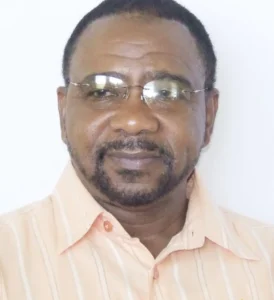
According to Lewis, one of Corbin’s defining qualities was his willingness to listen carefully before responding. He recalled discussions at the GTUC during which Corbin would sometimes suggest continuing their conversations in an informal and cordial setting rather than turning disagreements into public confrontations.
“Regardless of our differences, he would sit, listen intently to what was being said, and, when the appropriate time came, offer his response,” Lewis wrote, describing Corbin as a keen and intense listener.
Lewis said Corbin remained courteous in his dealings with the trade union movement, even when they disagreed on matters of national importance. He said Corbin did not treat independent positions as personal affronts or hold grudges simply because others expressed different views.
The GTUC general secretary placed those qualities within what he described as an earlier political tradition, in which disagreements with the government, opposition parties or other public figures did not automatically turn people into personal enemies.
He argued that the growing tendency to personalise political differences had weakened national discourse and made constructive engagement increasingly difficult.
Lewis also recalled his last telephone conversation with Corbin, during which they discussed concerns about Guyana’s declining conditions and what Lewis described as growing intolerance in national life.
According to Lewis, Corbin encouraged him to remain committed to the struggle for workers’ rights, social justice, dignity and accountability, despite the difficulties confronting the country.
“Those words resonated with me because the struggle for workers’ rights, social justice, dignity and accountability does not end when the political circumstances become difficult,” Lewis wrote.
While acknowledging that Corbin had human shortcomings and that they did not agree on every issue, Lewis said his tribute was based on his personal experience of the former opposition leader’s dealings with him and the trade union movement.
Corbin served as Leader of the Opposition from 2003 to 2012 and led the PNCR during a significant period in Guyana’s political history.
Lewis extended condolences to Corbin’s wife, Carol, his children, other family members and the PNCR.
As Corbin’s ashes are committed to the Demerara River and his remains interred in Linden, Lewis said his legacy should be measured not only by the political offices he held but also by how he treated others.
“Farewell, warrior,” Lewis wrote, expressing hope that Corbin would be remembered for demonstrating that political disagreement need not come at the expense of respect.