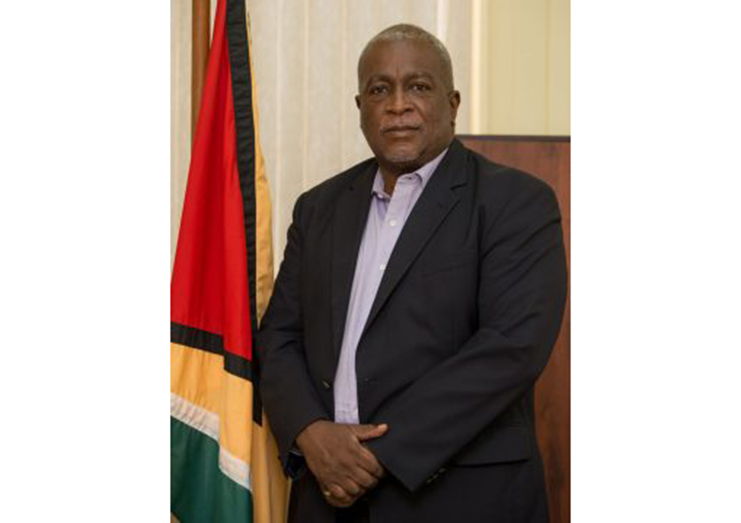
Political scientist and former People’s Progressive Party (PPP) government minister Dr Henry Jeffrey is calling attention to the forces reshaping the international system, arguing that Guyana must understand global shifts in power, technology and wealth if it is to have a meaningful say in determining its future.
Jeffrey, who served as a minister in the PPP government, sets out his analysis in his September 13 Future Notes column, “The World Today And Our Tomorrow,” published by Village Voice News. His perspective carries the weight of someone who has participated directly in government while continuing to examine Guyana’s political and economic development from outside office.
His analysis ranges from the changing balance between the United States and China to the growing influence of artificial intelligence, widening global inequality and the continuing importance of international cooperation.
Jeffrey’s message is not that Guyana should retreat from a changing world. It is that the country must understand the changes taking place and position itself to participate in shaping the future.
“It appears to me that a powerful moral and actual global reach is indispensable if, in general terms, our world is to be optimally managed, and small states such as Guyana play some meaningful part in what constitutes their destiny.”
Global power is changing
Jeffrey examines the shifting relationship between major economic and military powers, particularly the United States and China.
He points to the importance of alliances and collective strength in determining how major powers exercise influence. His analysis also highlights the significance of sovereignty and equitable participation in the international system.
The implications extend beyond Washington and Beijing. Guyana, as a small state with growing economic importance, must navigate relationships with major powers while maintaining the capacity to define and defend its own interests.
That requires more than diplomatic relationships. It demands knowledge, strategic thinking and institutions capable of converting Guyana’s growing economic weight into meaningful international influence.
AI brings a new challenge
Artificial intelligence occupies another significant part of Jeffrey’s assessment.
He raises concerns about the speed of AI development and the absence of sufficiently developed international rules governing its advancement. He points to calls for governments to cooperate on multinational arrangements capable of managing emerging risks.
The issue also presents an opportunity.
AI is already transforming areas such as education, healthcare, agriculture, finance and public administration. Guyana’s ability to develop the necessary skills, digital infrastructure and regulatory capacity will influence whether it participates actively in this transformation or remains dependent on technologies developed elsewhere.
Jeffrey’s broader point is that technological change cannot simply be observed. Governments and societies must understand it well enough to make informed choices about how it serves national development.
Democracy and economic power
Jeffrey connects political democracy to the distribution of economic opportunity, drawing on former U.S. President Theodore Roosevelt’s observation:
“There can be no real political democracy unless there is something approaching economic democracy.”
His argument comes against a backdrop of substantial global wealth concentration. Oxfam reported in 2024 that the world’s richest one per cent possessed more wealth than the bottom 95 per cent combined.
Jeffrey uses that disparity to examine the continuing tension between political freedom and economic power.
The question has particular relevance to countries experiencing rapid economic transformation. Guyana’s oil wealth has expanded the resources available to the state and created opportunities for investment, infrastructure, entrepreneurship, education and technological development.
The challenge is ensuring that economic growth translates into broad-based opportunity and greater national capacity.
Guyana must shape its future
Jeffrey’s analysis ultimately places responsibility on Guyana to become more deliberate about its place in the changing international order.
Global power will continue to evolve. Technology will continue to transform economies. Wealth will continue to shape political influence. None of these developments means that small states are powerless.
A country can increase its influence by strengthening its institutions, developing its human capital, understanding international trends and using its resources strategically.
Jeffrey’s analysis therefore presents Guyana with a question of national purpose: how can the country use the opportunities created by its growing economic importance to strengthen its sovereignty, expand opportunity and increase its capacity to shape decisions affecting its future?
Guyana’s size may limit some aspects of its influence, but it does not eliminate its agency.
The task is to understand the world as it is changing, identify where Guyana’s interests lie and build the capacity to act on them.
That, Jeffrey’s analysis suggests, is the real challenge of tomorrow: not merely adapting to a changing world, but preparing Guyana to participate in shaping it.