The long-running 2020 election fraud trial has returned to the spotlight with former GECOM Information Technology Manager Aneal Giddings acknowledging that he removed the Commission’s election server without authorisation, while former GECOM Public Relations Officer Yolanda Ward testified about the publication, replacement and removal of election declarations from the Commission’s website.
Their evidence has placed renewed focus on the handling and security of critical election records—including Statements of Poll (SOPs), election data and declarations of results—during one of the most contentious periods in Guyana’s electoral history.
The trial, before Principal Magistrate Faith McGusty, involves nine defendants facing 19 charges arising from allegations concerning the tabulation and declaration of the results of the March 2, 2020 General and Regional Elections. The accused have pleaded not guilty and the allegations remain to be determined by the court.
Those charged are Keith Lowenfield, former GECOM Chief Elections Officer; Roxanne Myers, former GECOM Deputy Chief Elections Officer; Clairmont Mingo, former Returning Officer for Region Four; Volda Lawrence, former Minister of Public Health and senior APNU+AFC political figure; Carol Smith-Joseph, former APNU+AFC Chief Scrutineer; and former GECOM employees Sheffern February, Enrique Livan, Michelle Miller and Denise Babb-Cummings.
The prosecution’s case centres largely on allegations surrounding the tabulation of votes in Electoral District Four, including claims that election figures were manipulated or improperly declared. The defendants have denied the allegations.
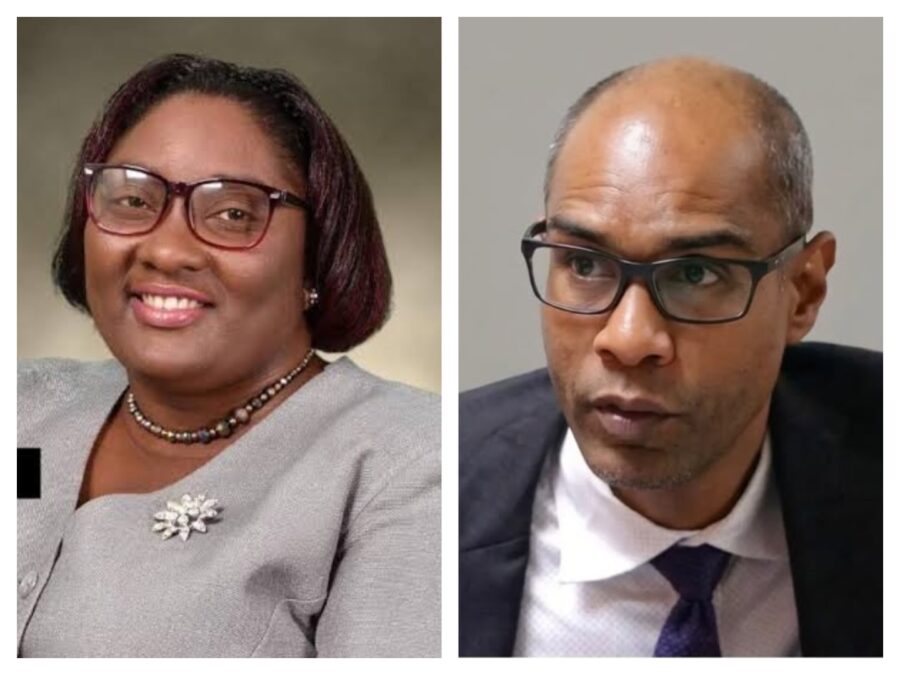
Giddings admits removing server
Giddings’ testimony has brought his own actions during the March 5, 2020 bomb scare under intense examination.
At the time, election officials were conducting the Region Four tabulation at the Ashmin’s Building in Georgetown when a bomb threat resulted in an evacuation.
Giddings told the court that he removed the GECOM server from the building and placed it in his personal vehicle, despite instructions from then Deputy Chief Elections Officer Roxanne Myers.
He kept the server in his vehicle for approximately two and a half hours.
Giddings maintained that he acted to protect GECOM’s information from the reported threat. Under cross-examination, however, he acknowledged that he did not have authorisation to remove the server and that the action breached the terms of his employment.
When defence attorney Nigel Hughes characterised the action as a serious breach, Giddings agreed.
“It was a gross violation.”
He nevertheless maintained that his motivation was to protect GECOM’s information resources.
Giddings and the SOPs
The testimony became more significant when Hughes confronted Giddings with video footage from the Ashmin’s Building.
After the Region Four tabulation was suspended and Myers instructed election personnel and party representatives to leave, Giddings acknowledged that he and GECOM Data Manager Paul Persaud remained inside the tabulation centre with SOPs.
Giddings confirmed that no party officials or scrutineers were present and that, apart from himself and Persaud, there were no other GECOM employees in the room.
He described their activity as:
“packaging and securing the SOPs”
But under questioning, Giddings acknowledged that he was acting on his own volition, rather than on an instruction from the Chief Elections Officer, Deputy Chief Elections Officer or the Elections Commission.
Hughes subsequently suggested that Giddings had an opportunity to switch, alter or remove SOPs while he and Persaud were alone with the documents.
Giddings agreed that such an opportunity existed, but did not admit to altering or removing any SOP.
The court also heard that Giddings and Persaud subsequently left the premises in Giddings’ vehicle. Giddings said he could not recall what an unidentified man handed him in the parking area when Hughes suggested it could have been a flash drive.
That exchange has added another layer to questions about the chain of custody surrounding election materials during the disputed tabulation process.
Ward’s evidence on changing declarations
Ward’s testimony has focused on GECOM’s public website and the publication and removal of election documents.
She told the court that she received election-related information from senior GECOM officials and transmitted documents to Giddings for publication.
Ward testified about the handling of declarations for the country’s 10 electoral districts, including instructions concerning the publication and subsequent replacement of District Four Form 24 declarations.
She also described instructions she received to remove election declarations from GECOM’s website on July 22, 2020, followed two days later by instructions to publish the gazetted declaration of results.
Ward said she contacted Giddings and received confirmation that the requested changes had been made.
Her testimony is significant because it establishes that election documents were being uploaded, removed and replaced on GECOM’s public platform during the highly contested post-election period.
During cross-examination, Ward also said she had no evidence that any of the nine accused persons colluded to defraud the electorate, rigged the election or forged election documents. She maintained that her role was administrative and communications-related and that she did not count ballots, tabulate SOPs or independently verify the declarations before publication.
Discrepancies in election figures
Giddings has also testified about differences he observed while comparing election documents.
He told the court that one updated document reflected approximately 400 fewer A Partnership for National Unity and Alliance for Change (APNU+AFC) votes and about 100 fewer People’s Progressive Party/Civic (PPP/C) votes, as well as changes in the number of spoilt ballots.
He also testified about differences between figures contained in election documents and those recorded during the subsequent national recount.
According to evidence reported from the proceedings, his comparison indicated an approximately 19,000-vote reduction for APNU+AFC and an increase of approximately 11,000 votes for the PPP/C between the figures being compared. The defence has challenged aspects of that evidence and requested that the underlying documents be produced.
The testimony from Giddings and Ward does not itself determine whether the accused committed the offences with which they are charged. But it has brought into sharp focus the security, custody, publication and alteration of election records during the 2020 electoral crisis.
For a trial centred on whether the official election results were manipulated, the court is now examining not only the actions of those charged, but also how election information and physical election documents were handled by GECOM officials during the process.
The trial remains ongoing, with Giddings facing further cross-examination and additional documentary and video evidence expected to be examined by the court.