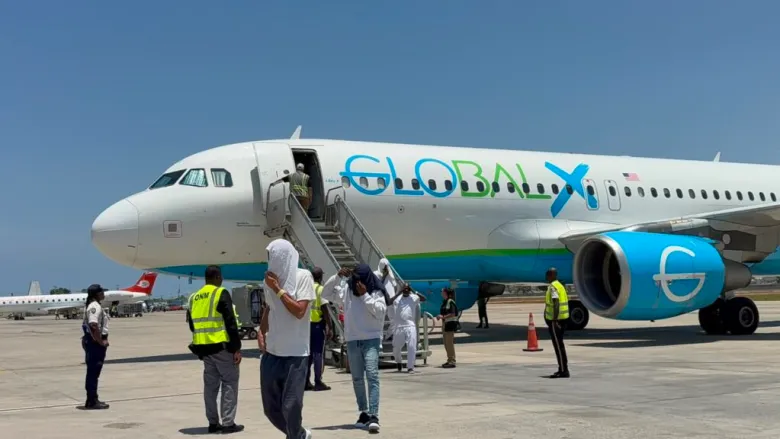
The United States has deported another 101 people to Haiti, intensifying a controversial deportation programme even as Haiti remains gripped by widespread gang violence and a humanitarian crisis that has displaced nearly 1.5 million people. The latest flight arrived Thursday in Cap-Haïtien after departing from Alexandria, Louisiana, and stopping in Miami. It was the third consecutive Thursday deportation flight to Haiti, marking a shift from the monthly schedule previously used, according to Human Rights First’s ICE Flight Monitor. More than 200 people were deported to Haiti on two flights in late August.
Nicolas Mardochée, a coordinator with Haiti’s Ministry of Foreign Affairs, confirmed that 101 deportees were aboard the latest flight. Among them was Renan Hédouville, the former head of Haiti’s Office of Citizen Protection, who is accused of corruption, according to the Associated Press. But the expanding deportations have drawn sharp criticism from human-rights advocates, particularly over the return of Haitians who had Temporary Protected Status and had been legally living and working in the United States. The controversy is unfolding against the backdrop of a security crisis that has dramatically reshaped daily life in Haiti.
Gangs control an estimated 70 percent of Port-au-Prince and significant areas of the country’s central region. The United Nations estimates that nearly 1.5 million Haitians have been displaced by the violence, while more than 3,050 people were reported killed between January and June this year.
The security situation is so severe that deportation flights are landing in northern Haiti rather than Port-au-Prince. The capital’s main international airport is considered too dangerous for the flights to operate there. The latest removals come as Washington has increased the frequency of deportation flights, raising questions about how people returning to Haiti will survive once they leave the airport. For deportees arriving without secure housing, employment or family support, the challenges are compounded by the country’s broader collapse in security and public services.
The United States has continued its immigration enforcement programme despite those conditions, while Haitian authorities are receiving increasing numbers of people from a country where large sections of the capital remain under armed-group control. The issue places Washington and Haiti at the centre of a difficult regional debate: how to enforce immigration laws while returning people to a country struggling to provide basic security.
For Haiti, every new flight means more people arriving at a time when the country is already struggling to cope with mass displacement, killings and territorial control by gangs. And for those stepping off the planes, deportation is not simply a change of immigration status. It can mean returning to a country where the normal systems of safety and stability have broken down.