Opposition leader Azruddin Mohamed was arrested twice Thursday night and released, in a dramatic police operation near President Irfaan Ali’s private residence that has raised fresh questions about the government’s treatment of its most formidable political opponent.
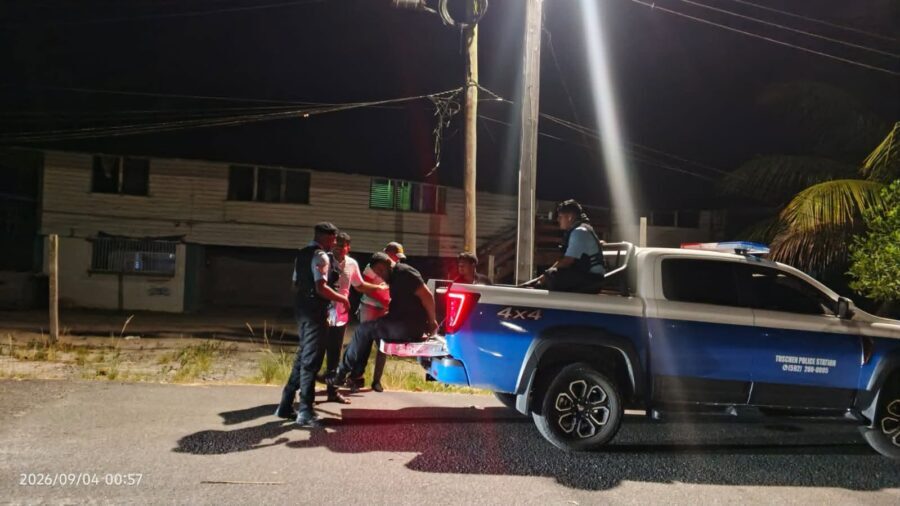
The extraordinary episode unfolded after police intercepted two heavily tinted vehicles near Ali’s Leonora residence, reportedly following concerns raised by Presidential security personnel. Mohamed and several associates were taken to the Leonora Police Station for questioning amid an investigation involving an alleged drone operation near the President’s home.
But by Friday morning, the central question was not simply what a drone was doing in the area. It was whether the Ali administration’s handling of Mohamed represents yet another escalation in a long-running campaign of official pressure against a political rival who has repeatedly accused the government of targeting him.
Mohamed has denied operating the drone and said the device found in one of the vehicles did not belong to him. Police have not charged him in connection with the alleged drone activity. According to reports, 25-year-old technician Dwayne Ross admitted owning the drone and told investigators that his operating licence had expired in 2023.
Mohamed was initially released on self-bail following questioning, only to be arrested again later Thursday night. He was subsequently released, although police reportedly retained his mobile phone.
Several We Invest In Nationhood (WIN) parliamentarians who were also detained were released without charge.
The government’s explanation of the incident centres on presidential security and alleged unauthorised drone activity. But the extraordinary circumstances have inevitably intensified scrutiny of the authorities, particularly because Mohamed and Ali have been locked in an increasingly bitter political and personal confrontation.
Mohamed is the leader of We Invest in Nationhood (WIN), which emerged from the 2025 General and Regional Elections as a major opposition force, winning 16 of the 29 parliamentary seats allocated to the Opposition in the 65-seat National Assembly. His rise has transformed him from businessman to Ali’s most prominent political challenger.
His political ascent has coincided with mounting legal and regulatory pressure. In 2024, the United States sanctioned Mohamed and his father, Nazar Mohamed, over alleged corruption involving Guyana’s gold industry. They have denied wrongdoing. Mohamed and his father are also fighting extradition proceedings arising from a U.S. indictment alleging fraud, money laundering and bribery.
Mohamed has consistently portrayed the legal action against him as politically motivated persecution, while the Guyanese government has denied targeting him. The U.S. sanctions and indictment themselves originated with American authorities, an important distinction.
Nevertheless, the broader political environment has fuelled Mohamed’s allegations of government harassment. His criticism of Ali has become increasingly public, including questions about the President’s property and wealth. Ali has rejected allegations of wrongdoing.
Now, with Mohamed twice arrested in a single night after being intercepted near the President’s private residence, the confrontation has taken a more troubling turn.
The government’s position is that presidential security cannot be compromised and that the police have a duty to investigate suspicious activity around the Head of State’s residence. That principle is not in dispute.
What deserves scrutiny is whether the machinery of the state is being deployed proportionately—and whether an opposition leader is being subjected to extraordinary police attention in circumstances that remain far from fully explained.
The optics are particularly damaging for the administration. Mohamed was not charged with flying a drone. He was released. Other opposition figures were released without charge. Yet the police operation placed the leader of the country’s principal opposition movement at the centre of a dramatic security investigation involving the President’s home. That is precisely why the incident cannot be viewed solely through the lens of a drone.
It comes amid a widening political struggle in which Mohamed has accused the government of using state institutions against him, while Ali’s administration has faced growing questions over whether its response to Mohamed has been driven by legitimate law enforcement concerns or political rivalry.
As of Friday morning, Mohamed remains free and no charge has been announced against him over the drone incident. The investigation continues. But politically, the damage may already have been done. A government that says it respects democratic opposition must be able to demonstrate that police powers are being exercised because of evidence—not because the person under investigation happens to be one of the President’s fiercest political enemies.
Thursday night’s events have therefore created a new test for the Ali administration: not simply whether Mohamed broke any law, but whether the government can convince a deeply divided Guyanese public that the state is enforcing the law impartially.