The Caribbean Community (CARICOM) Secretariat will partner with the Caribbean Agricultural Health and Food Safety Agency (CAHFSA) and COLEAD to examine how the region can strengthen its agricultural systems against the growing risks posed by climate change.
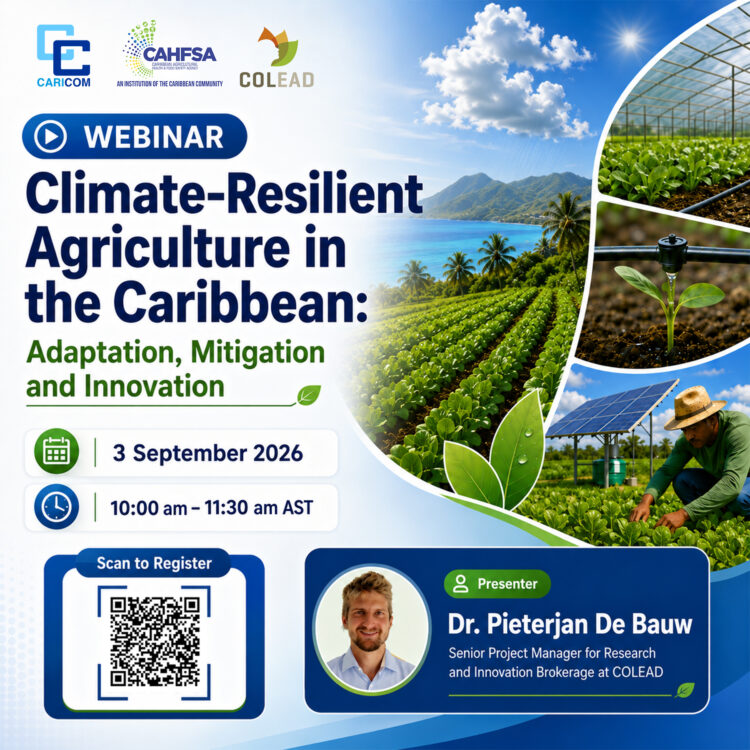
A 90-minute webinar, titled “Climate-Resilient Agriculture in the Caribbean: Adaptation, Mitigation and Innovation,” is scheduled for September 3 at 10:00 a.m. AST.
The session will focus on the fundamentals of climate change and the adaptation and mitigation measures available to the agricultural sector, with particular attention to approaches that can strengthen food production and resilience across the Caribbean.
The webinar will be led by Dr. Pieterjan De Bauw, Senior Project Manager for Research and Innovation Brokerage at COLEAD.
De Bauw holds a PhD in Bioscience Engineering (Agronomy) from KU Leuven in Belgium and has extensive experience working on sustainable agriculture and food systems in Europe and Africa.
At COLEAD, he coordinates research focused on sustainable crop production, integrated pest management, soil and plant health, and horticultural value chains. His work also includes overseeing field trials, developing sustainable agricultural practices suited to African, Caribbean and Pacific contexts, and contributing to scientific publications and technical guidance.
The discussion comes as CARICOM intensifies efforts to reduce the region’s dependence on imported food and increase the resilience of local agricultural production.
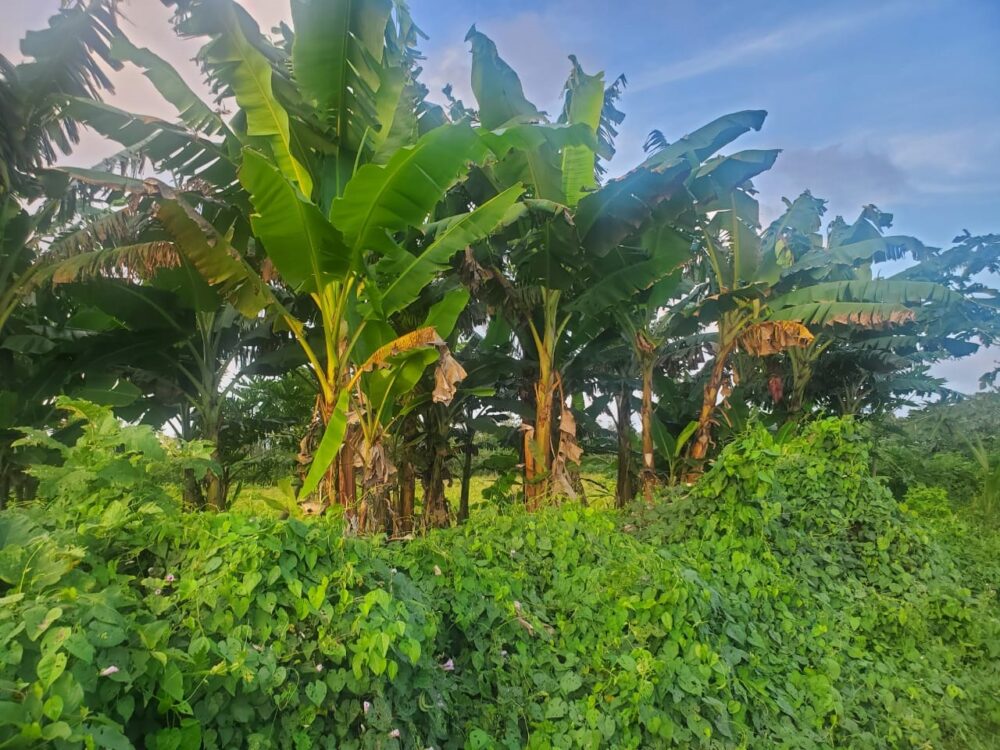
The region is pursuing the Vision 25 by 2025 + 5 initiative, which aims to reduce CARICOM’s food import bill by 25 per cent by 2030. Climate-smart agriculture has been identified as an important component of that effort as Caribbean countries face increasing pressures from extreme weather, changing rainfall patterns, rising temperatures and other climate-related threats to food production.
The strategy is designed to go beyond simply increasing agricultural output. It seeks to improve regional food security, expand trade among CARICOM countries and create new economic opportunities for farmers, producers and businesses.
Vision 25 by 2025 + 5 is being implemented through a partnership involving CARICOM Member States, the private sector, regional institutions, producer organisations, development partners and civil society.
The initiative is spearheaded by Guyana’s President Irfaan Ali, and guided by a special CARICOM Ministerial Task Force on Food Production and Food Security.
The upcoming webinar is expected to provide participants with practical insight into how climate adaptation and mitigation can be incorporated into agricultural production while supporting the region’s broader food-security ambitions.
The emphasis on innovation also reflects growing recognition that Caribbean agriculture cannot rely solely on traditional production methods as climate risks intensify.
Farmers and policymakers are increasingly being challenged to improve productivity while protecting soil and water resources, strengthening crop resilience and reducing the vulnerability of food systems to climate shocks.
CARICOM said persons interested in participating in the online session can register through the webinar registration link provided by COLEAD.
The discussion comes at a critical time for the region, as Caribbean governments seek to reduce the billions of dollars spent annually on food imports while building an agricultural sector capable of feeding a larger share of the region’s population.
The webinar registration is available here.