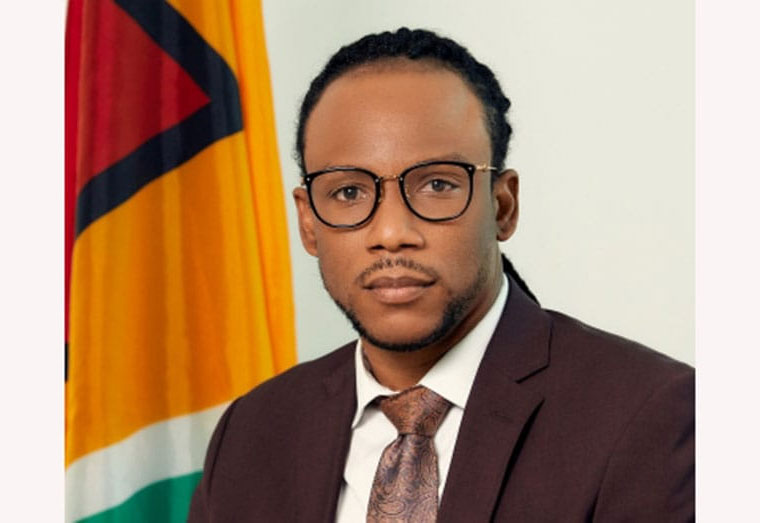
Residents and businesses in Region One are facing mounting transportation and economic pressures following the July 18 MV Barima tragedy, with limited freight capacity, expensive alternative travel and an unfinished Port Kaituma waterfront project compounding the difficulties, according to A Partnership for National Unity (APNU) Member of Parliament Sherrod Duncan.
Duncan made the assessment following a visit to Mabaruma and Port Kaituma, where he said he spoke with residents, business operators, commuters and other stakeholders about the impact of the vessel’s removal from service.
The MV Barima was the principal maritime link between Georgetown and Port Kaituma before it capsized on July 18. The Government has since launched a Commission of Inquiry into the disaster, while criminal investigations are also under way. The tragedy has intensified scrutiny of the region’s transportation network and the Government’s failure to bring the newer MV Ma Lisha into service on the Port Kaituma route.
Duncan said the immediate impact is being felt by businesses that depend on maritime transport to move goods.
Government has reportedly made a pontoon available for the movement of cargo at no cost, but business operators told Duncan that its capacity is insufficient to handle the volumes previously transported by the Barima.
“They are unable to bring in their usual quantities of goods and are increasingly dependent on private operators and whatever alternative capacity is available.”
Duncan warned that reduced cargo capacity could have consequences beyond individual businesses, affecting the availability of goods and placing upward pressure on prices.
Passenger transportation presents another problem.
During his journey from Mabaruma to Port Kaituma, Duncan said commuters described the additional costs and logistical difficulties created by the loss of the Barima and limited airline capacity.
Passengers travelling from Mabaruma to Georgetown who cannot secure a flight from Mabaruma may have to travel by boat to Port Kaituma before taking a flight from that location, he said.
According to commuters with whom Duncan spoke, the boat trip between Mabaruma and Port Kaituma can cost about G$20,000, in addition to the cost of an air ticket.
Passengers travelling in the opposite direction can face similar difficulties, while delays between boat and air connections may force travellers to spend a night in Mabaruma or Port Kaituma, adding accommodation and food costs.
“These are not hypothetical scenarios; these are circumstances described to me directly by people travelling within the Region.”
Duncan said the situation highlights a longstanding problem with domestic airfares. President Irfaan Ali has previously acknowledged concerns about the high cost of domestic flights, but Duncan argued that recognition has not translated into meaningful relief for passengers.
With the Barima no longer operating, he said Region One residents have become even more dependent on air travel, despite limited capacity and high fares.
“It is not enough for the administration simply to acknowledge that fares are too high. Government must say what practical measures it intends to take to increase capacity, improve competition and bring transportation costs within the reach of ordinary residents, particularly now that the principal maritime option has been removed.”
The crisis has also renewed scrutiny of the G$1.4 billion Port Kaituma waterfront project, which was designed to accommodate the MV Ma Lisha and improve maritime access to the North-West District.
The project began in January 2023 and was originally scheduled for completion by April 2024. In March 2024, the Government reported that the project was 85 per cent complete, with the main stelling at 80 per cent.
The facility, however, remains unfinished. Public Works Minister Juan Edghill has said significant movement of the surrounding soil caused structural problems and forced the reconstruction of a section of the wharf. The Government is now reviewing contracts connected to the project as part of its wider response to the Barima tragedy.
The MV Ma Lisha, acquired at a cost of about US$12.7 million, has been operating on the Georgetown-Kumaka route but has not made its planned maiden voyage to Port Kaituma because of the wharf problems.
Duncan said residents he met reported that there had been no meaningful progress at the project for more than a year.
He is calling on the Government to produce an immediate transportation plan for Region One covering freight, passengers, fares and completion of the waterfront.
“Government must urgently present a credible interim transportation plan for Region One: adequate freight capacity, sufficient passenger alternatives, relief from escalating travel costs and a firm, credible timeline for completing the Port Kaituma waterfront.”
Duncan said the consequences of the Barima tragedy are therefore continuing to affect residents long after the vessel was removed from service.
“The consequences of the MV Barima tragedy did not end when the vessel went out of service.”
He said residents are now paying the price through higher transportation costs, disrupted supply chains and additional expenses associated with travelling between communities.
“Residents are now paying for this failure every time goods have to be transported, every time a flight cannot be secured, every time an additional boat journey becomes necessary and every time a passenger is forced to find somewhere to sleep because the connections simply do not work.”