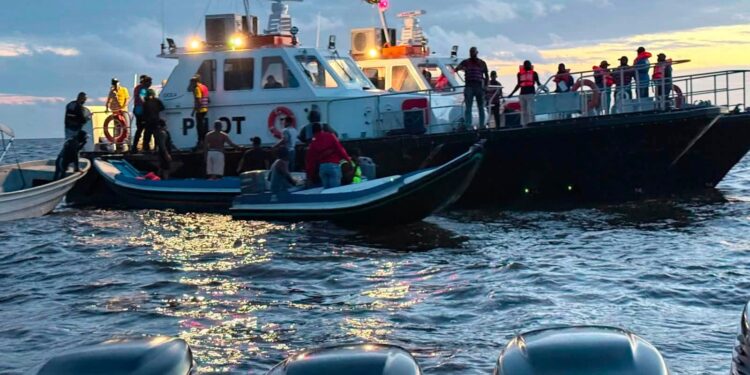
The MV Barima disaster did not end when the vessel disappeared beneath Guyana’s waters. For the families left behind, the survivors who escaped death, the children who lost parents and the communities that depended on those who never returned, July 18, 2026, may remain a dividing line between the life they knew and the life they must now learn to live.
That is the stark warning from Dr. Deborah London, a licensed clinical psychologist, whose letter published today by Village Voice News argues that Guyana is confronting a second crisis beneath the national grief—a potentially long-lasting psychological and social wound that cannot be addressed through mourning ceremonies alone.
As of July 30, 73 deaths had been confirmed, 30 people remained unaccounted for and 76 passengers and crew had been rescued, according to the figures cited by London. But she insists that these numbers tell only part of the story.
“Behind every number is a person whose absence has altered a family, a workplace, a school, a village and, ultimately, the nation.”
The human consequences will continue long after the Commission of Inquiry completes its work and public attention moves elsewhere. Families must confront empty chairs at dinner tables, lost incomes, disrupted households and, in some cases, the agonising uncertainty of not knowing whether a loved one is dead or alive.
For survivors, escaping the sinking may have been only the beginning.
London warns that survivors may experience nightmares, panic, intrusive memories, emotional numbness, irritability, difficulty concentrating and an intense fear of returning to boats. Ordinary sounds and situations—waves, darkness, crowded vessels or an approaching departure date—could trigger memories of the disaster.
Some may also struggle with survivor guilt.
“Someone who shared a life jacket, lost hold of another passenger, or was unable to save a relative may replay the event and imagine actions that might have produced a different outcome.”
But London cautions against treating every expression of grief as mental illness. Many Guyanese will demonstrate resilience through family, faith, community and cultural traditions.
The danger, she argues, lies in assuming that time alone will heal everyone.
Families caught between hope and grief
For families of those still missing, the psychological burden is particularly cruel.
London describes their experience as “ambiguous loss”—a state in which relatives simultaneously cling to hope while fearing the worst.
“This uncertainty can freeze a family psychologically between searching and mourning.”
That uncertainty can make it difficult to conduct funerals, reorganise households, make financial decisions or even permit oneself to grieve.
And when the missing are parents, the consequences can be devastating for children.
Children may become fearful, withdrawn, angry or clingy. Others may develop sleeping problems, lose concentration at school or experience unexplained physical complaints. Adolescents may withdraw or attempt to appear unaffected while carrying profound private distress.
The loss of a parent can also leave children confronting a second crisis as surviving caregivers struggle with grief, financial hardship and the responsibilities of rebuilding broken households.
Region One cannot be forgotten
London places particular emphasis on Region One and Indigenous and hinterland communities, where river and coastal transportation is not a luxury but a lifeline to education, healthcare, employment and family connections.
A disaster of the Barima’s magnitude can therefore tear through an entire community.
“Households lose caregivers and earners, schools lose pupils or parents, workplaces lose colleagues, and villages lose people who carried cultural knowledge and community responsibilities.”
Yet access to specialised psychological care is often more limited outside Georgetown.
London argues that Guyana cannot respond with a short-lived counselling programme that disappears once the cameras leave.
Support must reach the affected communities and be culturally responsive, involving local leaders, teachers, health workers, faith communities and Indigenous representatives.
Answers are part of healing
Perhaps the most powerful argument in London’s letter is that accountability itself has psychological significance.
The circumstances surrounding the Barima, including questions about its condition, passenger records, operational decisions and emergency response, are now subject to criminal proceedings and the Commission of Inquiry. London cautions that allegations must not be presented as established facts.
But she makes equally clear that families cannot be expected to heal in an environment of uncertainty and distrust.
“Families need more than sympathy; they need credible answers.”
Delayed, inconsistent or defensive official communication can deepen feelings of abandonment and betrayal. Transparent investigations, respectful communication with families and visible improvements in maritime safety, she argues, can help restore a sense of security and agency.
The response must therefore extend beyond counselling. London calls for long-term support encompassing mental-health services, financial assistance, educational support, legal guidance, housing and medical care.
She also calls for support for those who participated in the rescue and recovery effort, including responders who may themselves experience traumatic stress, exhaustion, guilt or moral injury.
Mourning must become action
Guyana cannot allow the Barima tragedy to become another anniversary marked by speeches, wreaths and photographs before attention shifts elsewhere. The psychologist is challenging the nation into action.
A national recovery framework is needed. Survivors and bereaved families must be followed up over time. Children must be protected. Region One must not be forgotten. First responders must receive care. Official information must be accurate and compassionate. And the findings of investigations must translate into measurable reforms.
Most importantly, remembrance must be accompanied by action.
“Our obligation is not merely to mourn this tragedy, but to remember responsibly, support consistently, investigate transparently and reform decisively.”
The MV Barima may have disappeared beneath Guyana’s waters, but its human consequences remain painfully visible—in grieving families, traumatised survivors, disrupted communities and children growing up without parents, siblings or loved ones who never returned home.
Guyana now faces a defining responsibility. July 18 must not become merely another date of mourning. It must become a lasting national commitment to truth, accountability and reform—where every life lost demands answers, every survivor receives sustained support, and every lesson from this tragedy is transformed into action to prevent another family from suffering the same loss.