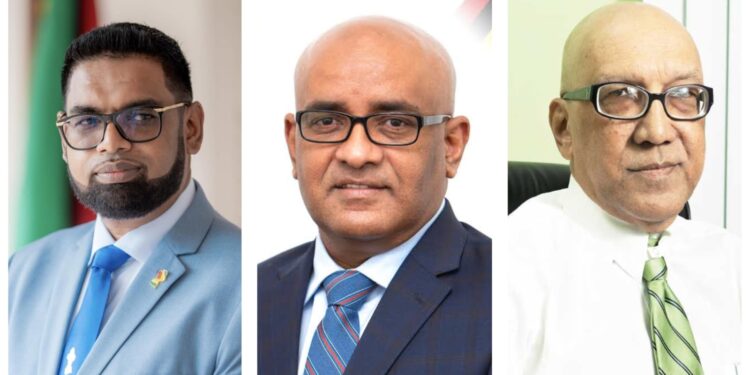
A bitter internal dispute over the leadership, finances and administration of the Guyana Sanatan Dharma Maha Sabha has escalated into a legal battle, with the High Court granting a temporary injunction on August 11, 2026, restraining the spending of Maha Sabha funds on disputed works at the organisation’s Ashram.
The court intervention comes amid mounting questions about the Interim Management Committee (IMC), its mandate and the authority of its members to undertake financial and administrative decisions while the organisation remains without its elected governance structure.
The dispute centres in part on Geeta Chandan Edmond and Mahendra Mookram, who were appointed to the IMC on the recommendations of different Maha Sabha office bearers. Information provided to Village Voice states that Chandan Edmond was recommended by General Secretary Mahadai Lalu, while Mookram was recommended by Organising Secretary Premwattie Sahadeo.
The IMC’s mandate originated from an October 2025 court order and was intended to address fundamental organisational issues: preparing an accurate membership list, auditing the Maha Sabha’s financial records and presiding over elections to restore its elected administration.
Critics now contend that approximately nine months later, those central objectives remain outstanding, while significant attention and resources have instead been directed toward proposed capital works at the Maha Sabha Ashram.
$21 million at centre of dispute
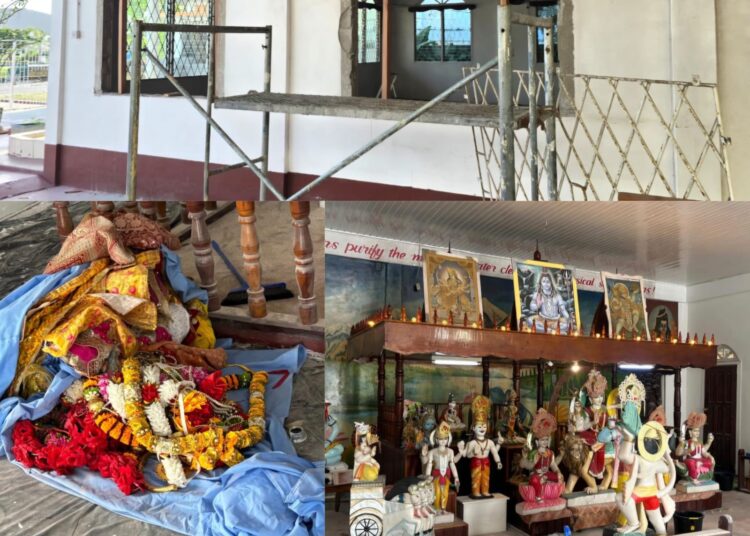
A major point of contention is an alleged $21 million withdrawal for capital works at the Ashram.
According to information supplied to Village Voice, members and devotees questioned how the funds were spent but were not satisfied with the explanations provided.
It is further alleged that more than 500 letters were circulated seeking financial assistance for proposed works estimated at approximately $30 million, with the letters reportedly carrying the signatures of Chandan Edmond and Mookram.
Questions have also been raised about the selection of contractors and other personnel for the proposed works, with critics alleging that the process lacked an established procurement procedure and meaningful consultation with the wider membership and devotees.
Those allegations have not been determined by the court and remain subject to judicial consideration.
High Court puts spending on hold
The dispute eventually brought Pandit Ubraj Narine and five other Maha Sabha members before the High Court seeking injunctive relief.
On August 11, the court granted a temporary injunction preventing Chandan Edmond and Mookram from spending Maha Sabha funds in connection with the disputed activities.
The substantive matter has been adjourned to October 16, 2026, when the court is expected to consider the wider issues raised by the parties.
The proceedings could prove significant in determining the limits of the IMC’s authority, particularly whether it has the legal power to undertake major expenditure and capital projects while its original mandate remains incomplete.
Calls for changes to IMC
The controversy has also triggered attempts to change the composition of the interim committee.
Village Voice understands that General Secretary Mahadai Lalu has approached the court seeking Chandan Edmond’s removal from the IMC and her replacement by another individual.
Narine has separately asked the court to consider adding Pandit Vishnu Panday, a longstanding Maha Sabha pandit, to the committee. According to Narine, Panday’s inclusion would provide additional religious and organisational oversight at a time when confidence in the management of the Ashram is under strain.
Narine rejects payment allegations
Narine has also rejected claims that he received a substantial sum of money from the Maha Sabha.
He explained that the Maha Sabha office provides $20,000 each week for the Ashram’s ordinary operations. According to Narine, the funds are handed to an Ashram sub-committee comprising approximately 12 members and devotees, which manages expenditure and subsequently submits financial statements to the Maha Sabha office.
Narine maintained that the arrangement has provided financial oversight of the Ashram’s routine operations since the 1990s.
Ashram closure adds to concerns
Another contentious issue is the reported closure of the Maha Sabha Ashram for approximately five months.
Information provided to Village Voice alleges that Chandan Edmond and Mookram moved operations and effectively shut the facility during the dispute. The claim has generated concern among devotees who regard the Ashram as an important place of worship and religious activity.
The dispute has also generated questions about the organisation’s security arrangements, salaries and appointments.
Information supplied to Village Voice states that Organising Secretary Premwattie Sahadeo has received approximately $80,000 per month for about 15 years. It is also alleged that Chandan Edmond and Mookram appointed a secretary at a monthly salary of $130,000 and later engaged a consultant at the same monthly remuneration.
Members and devotees who raised concerns questioned the authority for those appointments, the selection process and the justification for the expenditure.
Again, these claims have not been established by the court.
Religious affiliation questioned
Information provided to Village Voice has also raised questions about Chandan Edmond’s religious affiliation, stating that she identifies with the Arya Samaj tradition rather than the Sanatana Dharma tradition represented by the Maha Sabha.
While the two traditions share Hindu philosophical foundations, they have differences in religious interpretation, ritual practice and institutional traditions. The issue has become part of the broader debate over leadership and religious administration within the organisation.
October hearing could prove pivotal
What began as an interim effort to address administrative problems has now developed into a much wider dispute involving governance, financial accountability, capital expenditure, religious administration and control of the Ashram.
The original October 2025 mandate was intended to establish the membership, audit the organisation’s finances and pave the way for elections. The failure to complete those objectives, coupled with the allegations surrounding major financial decisions and the Ashram’s operations, has intensified tensions among members and devotees.
The October 16 High Court hearing will therefore be closely watched.
Until the court rules on the competing claims, allegations concerning financial misconduct, improper expenditure, procurement, appointments or abuse of authority must remain allegations rather than established facts.
But the legal action has already underscored the seriousness of the crisis: the future governance of the Maha Sabha and the management of one of its important religious institutions are now firmly before the courts.