The deadly MV Barima disaster and a separate national sporting embarrassment are not isolated failures, but symptoms of a deeper political crisis rooted in “dominance and fear,” according to political scientist Dr. Henry Jeffrey.
In his Future Note column published in Village Voice News on August 2, 2026, the former People’s Progressive Party (PPP) minister argues that both events expose the consequences of what he describes as unaccountable governance in Guyana.
“The passengers on the MV Barima and many others are daily the victims of the politics of dominance and fear that is the political reality in Guyana,” Jeffrey wrote, linking the maritime tragedy to broader systemic dysfunction.
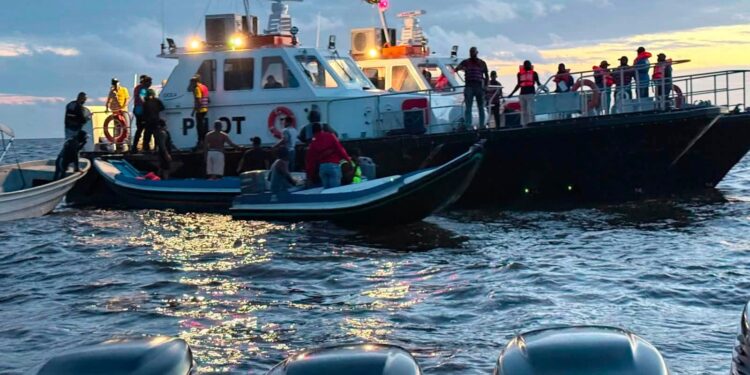
The MV Barima disaster, which claimed dozens of lives and triggered national mourning, unfolded almost simultaneously with what Jeffrey described as a less visible but equally troubling failure: Guyana’s boxing team being unable to compete at the 2026 Commonwealth Games due to administrative lapses.
“Both issues have resulted from the corrosive nature of unaccountable governance,” he stated, adding that despite emancipation and independence, Guyana has yet to fully realise “their potentials for human development and freedom.”
Jeffrey situates these failures within what he terms the “politics of fear”—a system in which ethnic division and weak institutions allow political elites to maintain control despite poor governance outcomes.
He described a context where “autocratic politicians are extracting enormous unjustifiable personal wealth,” while “ethnic cronyism” and patronage-driven policies persist, and supporters remain loyal out of fear of an alternative that may be “equally inefficient and venal.”
The column draws a direct connection between this political culture and the failure of state systems, pointing to the boxing debacle as an example of administrative incompetence. Despite having a year to comply with new international testing requirements, Guyana’s athletes were ruled ineligible after results were not returned in time.
“On what should have been a simple issue… it was still acting on ‘a belief,’” Jeffrey wrote, noting the crushing disappointment for athletes who had trained for years only to be sidelined.
While the Barima tragedy has sparked public calls for accountability—particularly for Public Works Minister Juan Edghill—Jeffrey cautions against focusing solely on individual blame, arguing instead that the political system itself limits meaningful accountability.
“Thus, we should understand that the notion of ‘responsibility’ attached [to] the Bishop… is essentially conceptual,” he said, suggesting that structural weaknesses prevent real consequences at the highest levels.
Jeffrey was nonetheless sharply critical of Edghill, citing past statements he believes exemplify political and ethnic patronage.
He recalled that the minister once suggested that if Jesus visited Guyana, “he would vote for the PPP,” and more recently implied that communities must support the ruling party to receive proper infrastructure.
At the core of Jeffrey’s argument is the absence of genuine political accountability in Guyana. He contends that constitutional provisions alone are insufficient without institutions capable of operating independently in practice.
“For the Constitution… to say that an institution is ‘independent’ does not make it independent if there is nothing in place to ensure that the institution is in an operational framework that facilitates its independence,” he wrote.
He argues that Guyana’s political system concentrates power in the executive, allowing a party to control the presidency, parliament, and key state institutions with only a plurality of votes, thereby weakening checks and balances.
“Both in theory and practise, political accountability in Guyana is absent at the highest political levels,” Jeffrey asserted.
The column also raises concerns about the ongoing Commission of Inquiry into the Barima tragedy, which Jeffrey said risks lacking credibility due to how it was constituted. He suggested that Edghill should recuse himself to avoid any perception of interference.
Looking beyond the immediate crisis, Jeffrey warns that meaningful progress will remain elusive unless structural reforms are undertaken to address ethnic division and strengthen institutions.
“Freedom, nationhood, democracy and accountability, will not materialise in Guyana if the political elites do not accept” the need for stronger institutional constraints and inclusive governance mechanisms.