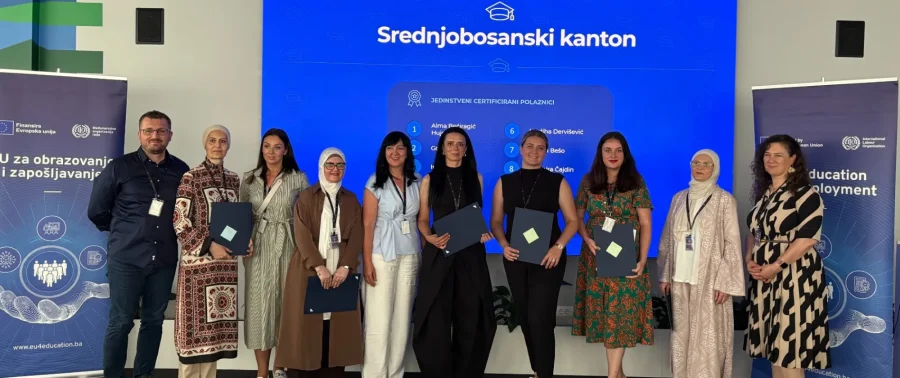
More than 170 vocational teachers from across Bosnia and Herzegovina have completed an intensive five-month training programme aimed at modernising classroom instruction and strengthening digital learning, as the country moves to align education with evolving labour market demands.
The initiative, delivered under the EU4Education and Employment project and implemented by the International Labour Organisation (ILO) with funding from the European Union, focused on equipping teachers with the tools and techniques needed to engage students in an increasingly digital world.
At the core of the programme was the Digital Content Creation Programme, which trained educators to design and use their own digital teaching materials. Participants developed videos, presentations, quizzes and interactive learning tools, while also learning how to integrate these resources effectively into their lessons.
The training combined self-paced online learning, practical assignments and mentoring support, helping teachers refine their instructional methods and adopt a more learner-centred approach. By the end of the programme, teachers had piloted their newly developed materials in real classroom settings, reaching at least 800 students in vocational and technical schools.
Feedback from those pilot sessions indicated a strong positive response from students, who found the lessons more engaging and accessible.
“Students really liked this approach,” said Lejla Kobiljak Vrabac, a vocational teacher from Sarajevo. “When teaching content is prepared in an innovative way that is close and understandable to them, learning becomes more attractive and they engage more easily in the learning process.”
The programme also introduced educators to key topics shaping modern education, including digital-era teaching strategies, interactive learning design, the use of Microsoft 365 tools and the responsible application of artificial intelligence in the classroom.
For Ana Šutalo, a mathematics teacher from Mostar, technology enhances — rather than replaces — the role of the teacher.
“Technology can help us offer students better ways to learn and understand the subject matter through content that is closer to them,” she said. “But nothing will ever replace the teacher — their role, support, understanding, and ability to encourage students to believe in themselves.”
The initiative culminated in a Sarajevo event titled Teachers Leading the Digital Transformation of VET Education, where participants showcased their work and shared experiences with policymakers, education authorities, EU representatives and ILO officials.
Stakeholders at the forum emphasised that meaningful digital transformation extends beyond the adoption of technology. Continued investment in teacher training, institutional support and opportunities for professional development were identified as critical to sustaining progress.
The EU4Education and Employment project forms part of broader efforts to modernise vocational education and training in Bosnia and Herzegovina, ensuring that graduates are better equipped with the skills required in a rapidly changing economy.
With teachers now better prepared to deliver dynamic, technology-driven lessons, the programme marks a significant step toward reshaping vocational education and strengthening the link between classrooms and the workplace.