South Africa’s president uses a Silicon Valley stage to tell the world’s richest man that Starlink enters on Pretoria’s terms, or not at all.
MONTEGO BAY, Jamaica, By Calvin G Brown, November 20, 2026 — Elon Musk can land a rocket upright on a barge in the middle of the ocean. What he cannot do, it seems, is land an internet service in the country of his birth. South African President Cyril Ramaphosa says the reason is not red tape, not corruption and not hostility to investment. It is that Musk will not accept the rules.
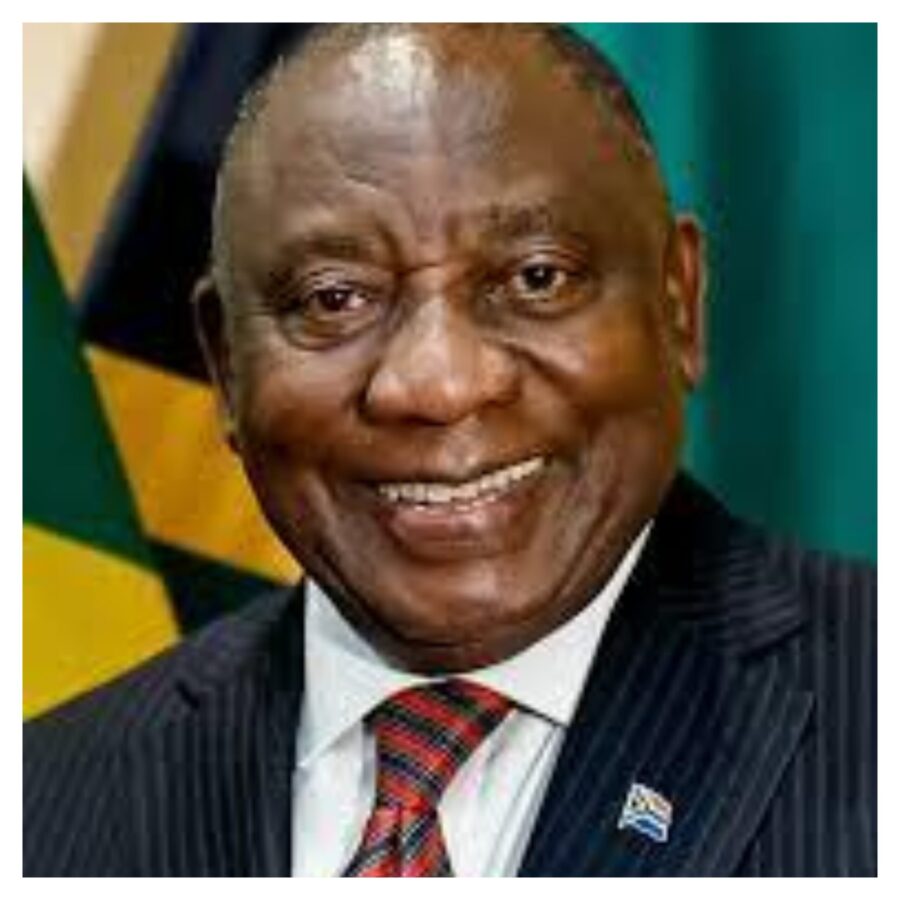
Seated across from ABC News correspondent Jonathan Karl at Semafor’s Silicon Valley & The World gathering in California on Monday, Ramaphosa laid the Starlink stalemate squarely at the billionaire’s door. Musk’s failure to grasp South Africa’s Black empowerment policy, he said, is the main thing keeping the satellite network out of Africa’s most industrialised economy.
“All countries have policies in terms of how they admit companies to operate,” the president said. America does the same, he added, and any company that wants in must sign up to the terms of the host nation.
It was a rebuke delivered in the tech industry’s own backyard, and it was aimed at one man.
The rule Musk will not swallow
At the centre of the fight is a requirement that holders of South African telecommunications licences be at least 30 per cent owned by historically disadvantaged groups. The rule is one plank of Black Economic Empowerment, the framework built to repair an economy that apartheid engineered to shut the Black majority out of ownership, capital and opportunity.
Musk, who was born in Pretoria and raised under that system, has branded the policy racist and blamed it for Starlink’s absence. SpaceX has refused to part with a stake in its local operation.
Ramaphosa was having none of it. He told the audience that Musk has never properly reckoned with what apartheid did to Black South Africans, and he reached for a number to make the point: the old regime spent twelve rand educating a white child for every one rand it spent on a Black child.
Then came the personal appeal, with an edge. A man shaped by South Africa, the president argued, owes it something. Musk should “give back to this country.”
A fight bigger than one billionaire
Ramaphosa’s framing is tidy. The ground beneath it is not.
Musk is far from the only party pressing against the 30 per cent rule. Communications Minister Solly Malatsi issued a policy direction in December 2025 that would let foreign operators satisfy empowerment obligations through equity-equivalent investment programmes, such as funding skills and small-business development, instead of selling shares. In May the regulator, ICASA, said it could not give full effect to that direction unless Parliament amends the law.
That standoff is now before the courts. On November 9 the business lobby Sakeliga asked the High Court in Pretoria to set aside ICASA’s position. Telkom, the partly state-owned operator, has separately told the regulator that its ownership rules go further than empowerment legislation requires and may have discouraged network investment.
The regulator, meanwhile, has hardened its stance. Malatsi confirmed to Parliament this month that ICASA served SpaceX with a formal notice of non-compliance on October 14, ordering it to stop providing unauthorised Starlink service inside the Republic.
And there is a rival already through the door. Amazon’s Leo satellite service has entered the market by partnering with Herotel, a licensed local provider. That is the uncomfortable fact for Musk: a lawful route exists, and a competitor has taken it.
The temperature has not been lowered by Musk’s own conduct. In April he alleged that Starlink had repeatedly been invited to bribe its way to a licence by installing a Black figurehead. Pretoria’s head of public diplomacy, Clayson Monyela, called the claim a lie and said no such request ever came from the government.
Washington’s long shadow
None of this is happening in a vacuum. Musk became one of the most powerful unelected figures in American politics after Donald Trump returned to the White House in January 2025, serving as a government adviser and driving the dismantling of USAID, Washington’s main overseas aid agency.
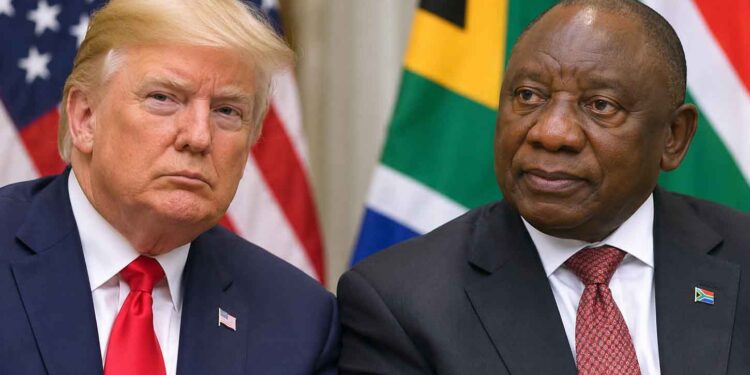
Relations between Pretoria and Washington have curdled since. The Trump administration has demanded changes to the empowerment framework and attacked South Africa’s stance on Israel. When Ramaphosa visited the Oval Office in May 2025, Trump confronted him with claims of a white genocide, an allegation that has been widely discredited.
Ramaphosa has since called that encounter an ambush. In California he said the two presidents have not spoken since, and he voiced disappointment that a false narrative appears to be steering American policy toward his country.
Locked out of Miami
The feud has now spilled into the world’s premier economic forum. South Africa is a founding member of the G20 and hosted its leaders in Johannesburg only a year ago, a summit Washington boycotted. Days after it closed, Trump declared on his Truth Social platform that Pretoria would receive no invitation to the 2026 gathering, which the United States hosts at his own Doral golf resort near Miami on December 14 and 15. The participant list Washington has since published leaves South Africa off and adds Poland.
Trump justified the ban by repeating the discredited claims of persecution of white Afrikaners, and by alleging that South Africa refused to hand the G20 presidency to a US embassy official. Pretoria says it did hand over, at its foreign ministry, because Washington had chosen to send nobody to the summit.
Ramaphosa’s reply has been blunt: South Africa sits in the G20 in its own name and right, by the will of all its members, and not at the pleasure of whichever country is hosting. No member has ever before been shut out of a summit.
Musk’s fingerprints are harder to prove than to suspect. He amplified the white genocide narrative to his vast following on X while serving at Trump’s side, and analysts argue that he and a circle of wealthy South African expatriates shape the president’s view of the country more than any diplomat does. But the same analysts point to Pretoria’s ties with Russia, China and Iran as a separate source of American anger.
What is beyond dispute is the result. South Africa was the only African nation with a seat of its own. With it barred, more than 1.4 billion Africans are reduced, at most, to the single chair they share through the African Union, at a summit where their one national voice has been silenced.
Open for business, on terms
The president did not travel to California to slam doors. His schedule included talks with OpenAI, Anthropic, Microsoft and Google, and his government is openly courting data-centre investment to anchor South Africa in the artificial intelligence economy.
The message is deliberate. South Africa wants the capital, the infrastructure and the jobs. It does not want them on terms that leave the ownership map of the economy exactly as apartheid drew it.
The cost of holding that line is real. Rural schools, clinics and small businesses with no reliable broadband are the ones who wait while presidents and billionaires trade principles. Critics of the rule say that is too high a price. Its defenders say an economy that lets the powerful opt out of transformation will never be transformed.
The question for every small state
For the Caribbean and the wider Global South, this is not a distant quarrel. It is a test case for a question every developing nation now faces: when a technology giant arrives with a service people badly want, who writes the rules, the government or the company?
Ramaphosa has given his answer, and he gave it to Silicon Valley’s face. Whether the courts, the regulator and Parliament back him, bend the rule, or find a middle road will decide more than Starlink’s fate. It will show whether a sovereign state can still set the price of admission when the man at the gate is the richest on earth.
WiredJA