The name Cuffy is of Akan (Ashanti) origin from present-day Ghana, where it was traditionally given to a boy born on a Friday. In Guyana, however, the name has come to embody far more than its linguistic roots. It is forever linked to Cuffy (also spelled Coffy or Kofi), the enslaved African who led the 1763 Berbice Slave Rebellion against Dutch colonial rule, transforming the name into an enduring symbol of resistance, courage, freedom and the struggle for self-determination.
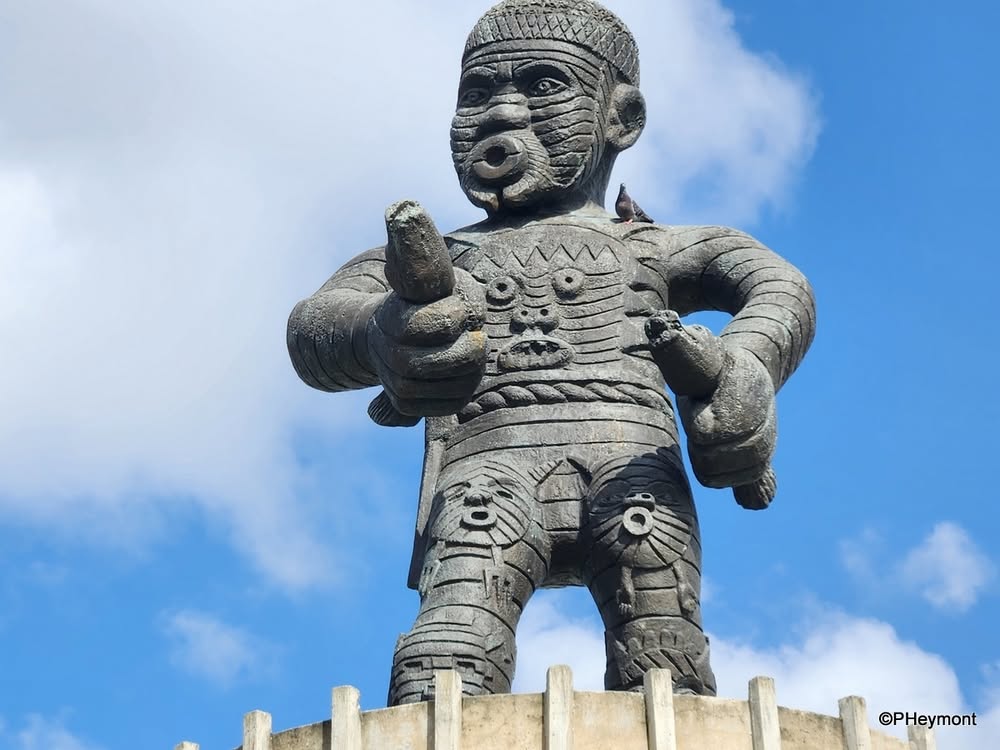
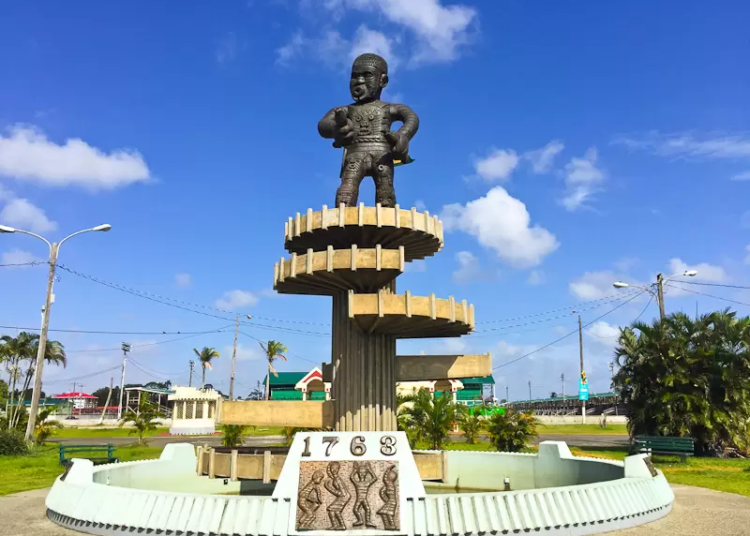
Standing majestically at the eastern end of Brickdam in Georgetown’s Square of the Revolution, the 1763 Monument, popularly known as the Cuffy Monument, is far more than a striking bronze sculpture. It stands as a powerful tribute to Cuffy and the thousands of enslaved Africans who dared to defy one of history’s greatest injustices. Their fight for freedom during the 1763 Berbice Slave Rebellion—one of the earliest and largest organised slave uprisings in the Americas—remains one of the defining chapters in Guyana’s history.
On February 23, 1763, enslaved Africans on Plantation Magdalenenburg in Berbice rose against the brutal conditions under Dutch colonial rule. The rebellion quickly spread across the colony, with Cuffy assuming leadership and organising thousands of enslaved men and women in their fight for freedom.
At its height, the rebellion involved more than 2,500 enslaved Africans and threatened Dutch control of the colony for more than a year. Although the uprising was eventually crushed, it forever altered Guyana’s history and established Cuffy as a national symbol of resistance against oppression.
Recognising his extraordinary contribution, Cuffy was later declared one of Guyana’s National Heroes. Today, February 23, the anniversary of the Berbice Rebellion, is observed as Republic Day in Guyana, linking the nation’s republican identity to the struggle for freedom and self-determination.
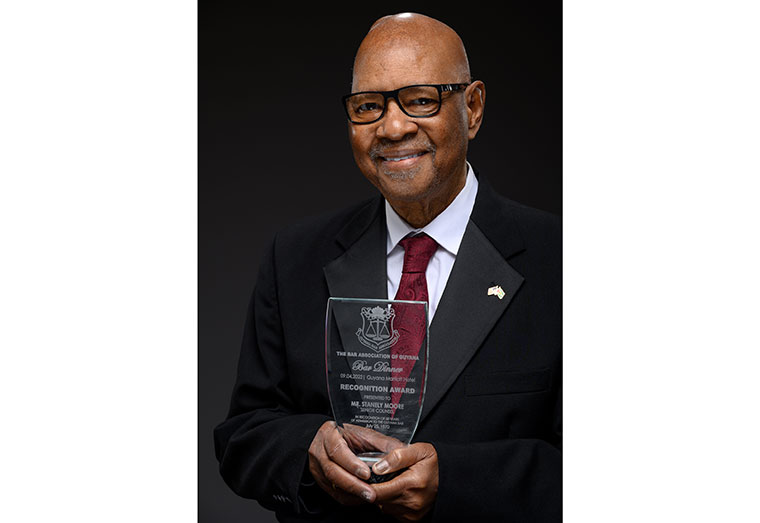
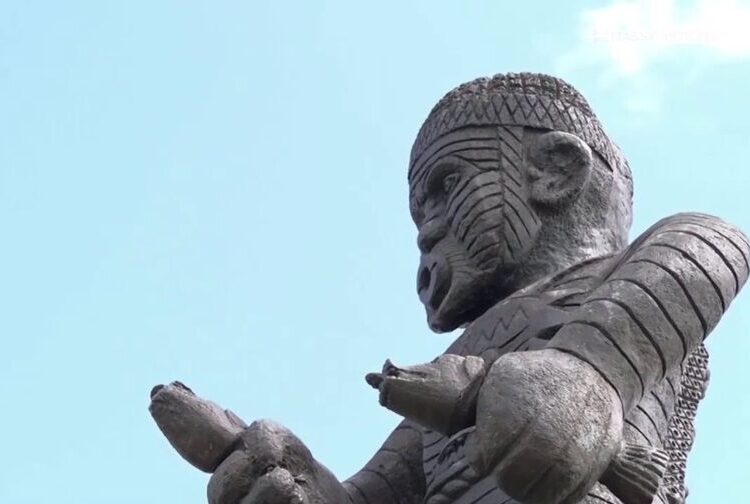
The monument itself is a masterpiece of Guyanese art. Designed by internationally renowned Guyanese sculptor Philip Moore, it was unveiled on May 23, 1976, during celebrations marking Guyana’s tenth anniversary of Independence.
The bronze sculpture, cast at the Morris Singer Foundry in England, stands approximately 15 feet (4.6 metres) high atop an elevated plinth, weighing about 2½ tons (2,267 kilograms).
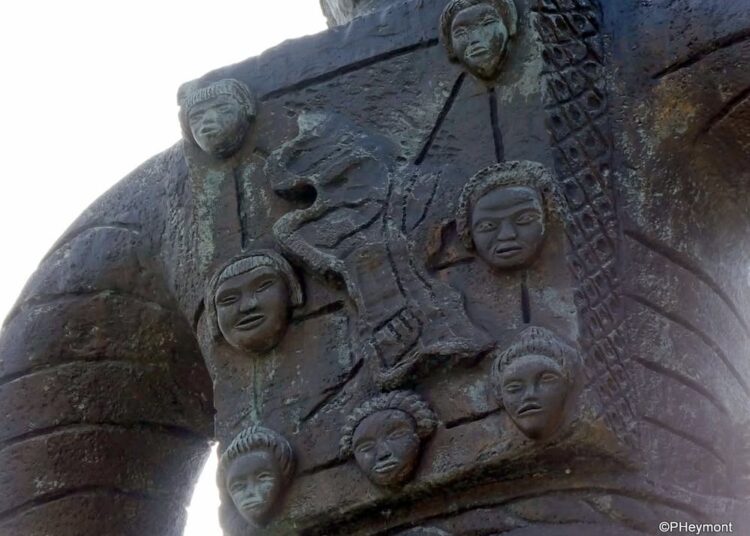
Every feature of the sculpture carries symbolic meaning. Cuffy’s protruding lips represent defiance against oppression. The shield-like face embedded on his chest symbolises spiritual protection, while the carved faces on his thighs represent revolutionaries throughout Guyana’s history. In his hands, he crushes a pig and a dog, symbolising ignorance, greed and lust—forces that have long enslaved humanity. Carved into the back of the monument is a map of Guyana, representing the unity and resilience of its people.
Over the past five decades, the Cuffy Monument has evolved into much more than a memorial to a national hero. It has become one of Guyana’s most important civic spaces and a living symbol of democracy in action. The Square of the Revolution has served as the gathering place for countless Republic Day and Emancipation Day celebrations, national commemorations, labour rallies, political meetings, candlelight vigils and peaceful demonstrations.
Trade unions, political parties, civil society organisations, religious groups, youth movements and ordinary citizens have repeatedly assembled beneath Cuffy’s towering image to advocate for democracy, constitutional rights, workers’ rights, social justice, equality, transparency and greater national inclusion. Throughout Guyana’s post-independence history, the monument has stood as a silent witness to the people’s demands for accountable governance and a more just society.
This enduring role is especially fitting. Cuffy’s struggle was never solely against physical bondage; it was a struggle for dignity, equality and the right of every human being to determine his or her own destiny. Those same ideals continue to resonate whenever Guyanese gather at the monument to raise their voices on issues affecting the nation.
Nearly three centuries after the Berbice Rebellion, Cuffy’s legacy remains as relevant as ever. His story reminds Guyanese that freedom is never bestowed—it is earned through courage, sacrifice and unwavering resolve.
His struggle transcends race, politics and generations, reminding Guyanese that the pursuit of justice, equality and human dignity requires courage, unity and perseverance. The monument bearing his name stands not merely as a tribute to one extraordinary leader, but as a lasting testament to an entire people’s determination to resist tyranny and to fight for the fundamental right to be free.
—————-
Sources
The Berbice Slave Rebellion of 1763– Ghanaian Museum (History Trends and Culture)
Coffy: The Enslaved African Who Led a Major Slave Revolt Against the Colonial Regime in Guyana in 1763. https://talkafricana.com/cuffy-the-enslaved-african-who-led-a-major-slave-revolt-against-the-colonial-regime-in-guyana-in-1763
Emancipation memorials honouring our freedom fighters- Department of Public Information